
One study, one walk — the universal FIRM format. The passage first and whole; then its world; then the Walk (Context · Observe · Genre · Terms · Entire Canon); the meaning taught straight; the AIM sentence; the misread exposed and answered; and the walk-out, where application has to pass the Transfer Tests before it reaches your week. The same skeleton serves a book, a chapter, a single verse, or a whole subject. In the early studies the moves are labeled as they happen. The labels fade as the walk becomes yours.
THE WEEK WITH THIS STUDY — six bites
Day 1 — Read the passage · Say It Plain · The World (§§1–2) · Day 2 — Observe · Genre (§§3–4) · Day 3 — Terms · Entire Canon (§§5–6) · Day 4 — The Meaning · the AIM Sentence · Say It Back (§§7–9) · Day 5 — The Misread · From Word to Walk (§§10–11 — add For Discussion, §12, if you're with others) · Day 6 — The Walk-Out · the Recap Card (§§13–14). Go Deeper (§16) any evening you want the basement.
BEFORE YOU READ — Open My Eyes
LORD of hosts, teach me to sanctify You and let You be my fear, so that no confederacy of earthly threats can rule my heart. While You hide Your face, teach me to wait upon You and look for You — and let me see the great light You have shined on people who walked in darkness. Open my eyes to what is actually here.
§ means “section” — the numbered parts of your lesson. Each bite above names the sections for that day.
1. READ THE PASSAGE — Isaiah 8:1–9:7 (KJV)
Read it all, slowly, before any teaching. In this course the passage always prints once, in full, at the head of the lesson. Everything after this is commentary — this is the text.
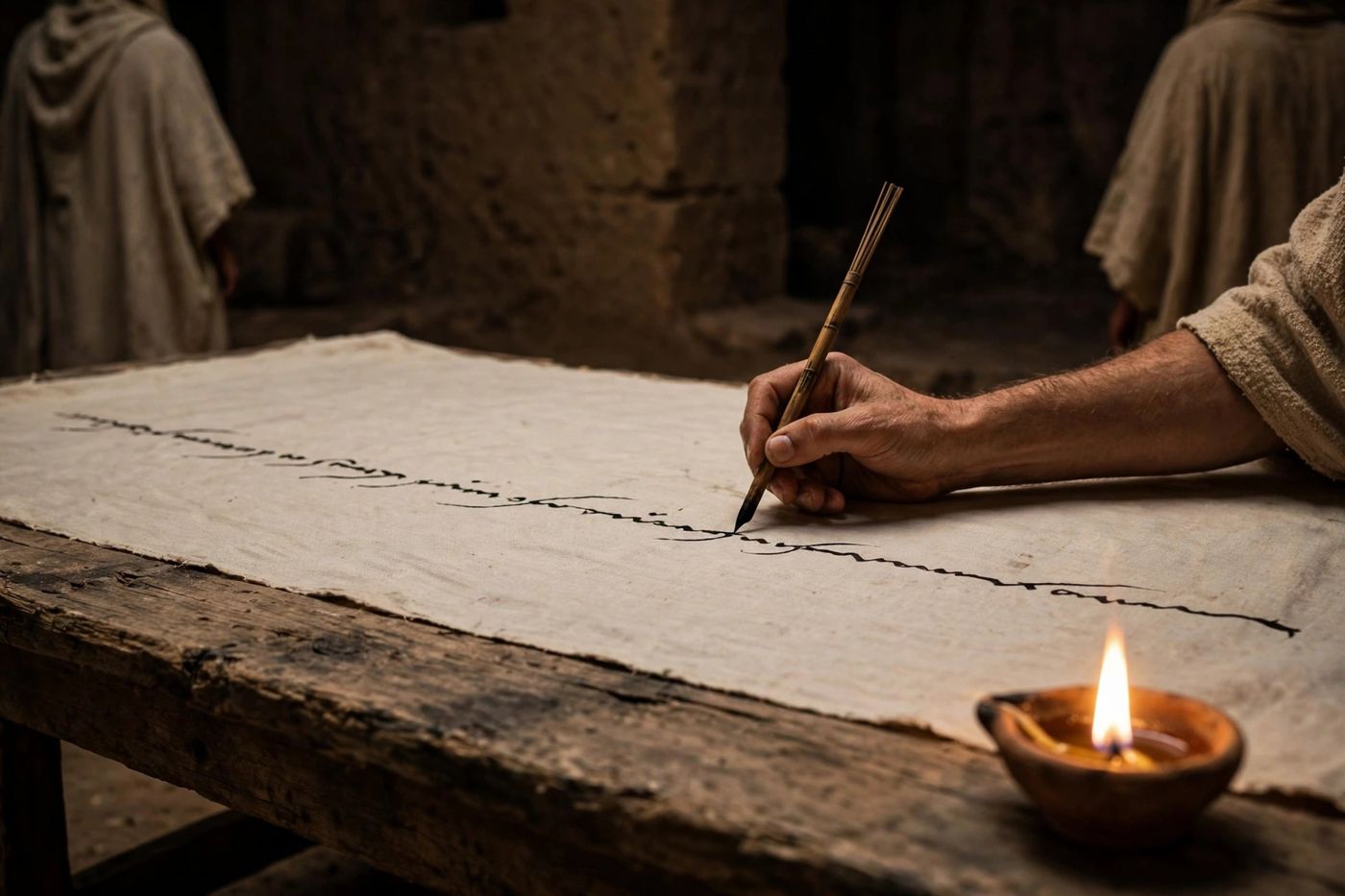
1 Moreover the LORD said unto me, Take thee a great roll, and write in it with a man's pen concerning Maher-shalal-hash-baz.
2 And I took unto me faithful witnesses to record, Uriah the priest, and Zechariah the son of Jeberechiah.
3 And I went unto the prophetess; and she conceived, and bare a son. Then said the LORD to me, Call his name Maher-shalal-hash-baz.
4 For before the child shall have knowledge to cry, My father, and my mother, the riches of Damascus and the spoil of Samaria shall be taken away before the king of Assyria.
5 The LORD spake also unto me again, saying,
6 Forasmuch as this people refuseth the waters of Shiloah that go softly, and rejoice in Rezin and Remaliah's son;
7 Now therefore, behold, the Lord bringeth up upon them the waters of the river, strong and many, even the king of Assyria, and all his glory: and he shall come up over all his channels, and go over all his banks:
8 And he shall pass through Judah; he shall overflow and go over, he shall reach even to the neck; and the stretching out of his wings shall fill the breadth of thy land, O Immanuel.
9 Associate yourselves, O ye people, and ye shall be broken in pieces; and give ear, all ye of far countries: gird yourselves, and ye shall be broken in pieces; gird yourselves, and ye shall be broken in pieces.
10 Take counsel together, and it shall come to nought; speak the word, and it shall not stand: for God is with us.
11 For the LORD spake thus to me with a strong hand, and instructed me that I should not walk in the way of this people, saying,
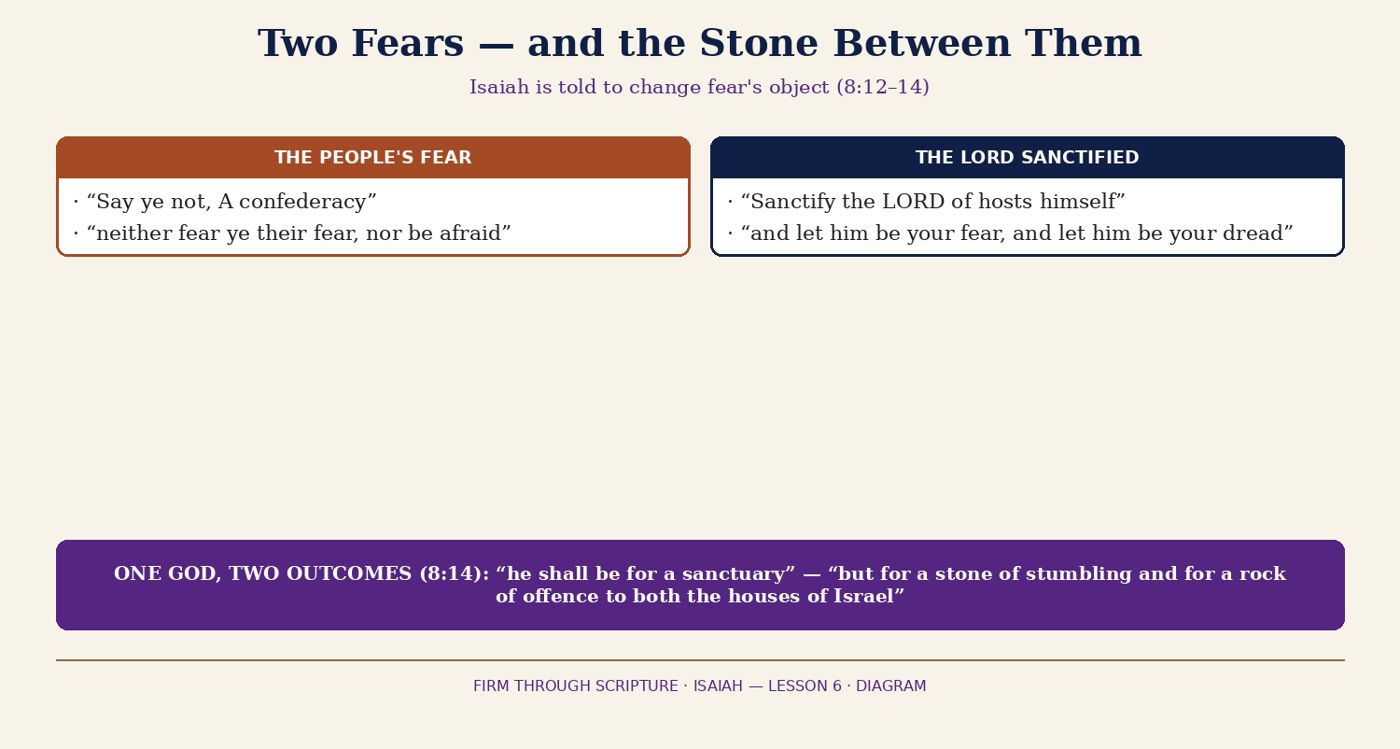
12 Say ye not, A confederacy, to all them to whom this people shall say, A confederacy; neither fear ye their fear, nor be afraid.
13 Sanctify the LORD of hosts himself; and let him be your fear, and let him be your dread.
14 And he shall be for a sanctuary; but for a stone of stumbling and for a rock of offence to both the houses of Israel, for a gin and for a snare to the inhabitants of Jerusalem.
15 And many among them shall stumble, and fall, and be broken, and be snared, and be taken.
16 Bind up the testimony, seal the law among my disciples.
17 And I will wait upon the LORD, that hideth his face from the house of Jacob, and I will look for him.
18 Behold, I and the children whom the LORD hath given me are for signs and for wonders in Israel from the LORD of hosts, which dwelleth in mount Zion.
19 And when they shall say unto you, Seek unto them that have familiar spirits, and unto wizards that peep, and that mutter: should not a people seek unto their God? for the living to the dead?
20 To the law and to the testimony: if they speak not according to this word, it is because there is no light in them.
21 And they shall pass through it, hardly bestead and hungry: and it shall come to pass, that when they shall be hungry, they shall fret themselves, and curse their king and their God, and look upward.
22 And they shall look unto the earth; and behold trouble and darkness, dimness of anguish; and they shall be driven to darkness.
— Isaiah 9 —
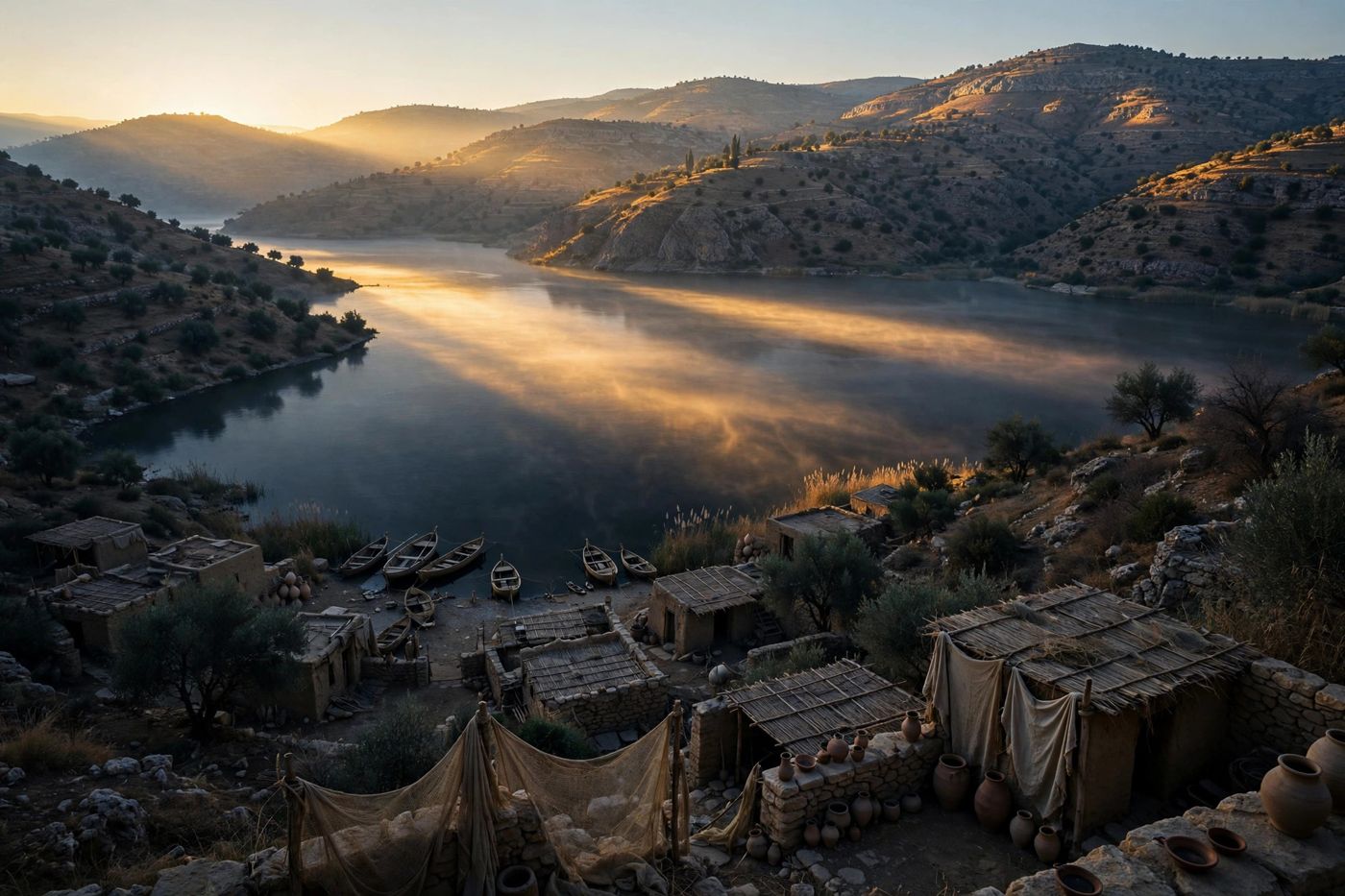
1 Nevertheless the dimness shall not be such as was in her vexation, when at the first he lightly afflicted the land of Zebulun and the land of Naphtali, and afterward did more grievously afflict her by the way of the sea, beyond Jordan, in Galilee of the nations.
2 The people that walked in darkness have seen a great light: they that dwell in the land of the shadow of death, upon them hath the light shined.
3 Thou hast multiplied the nation, and not increased the joy: they joy before thee according to the joy in harvest, and as men rejoice when they divide the spoil.
4 For thou hast broken the yoke of his burden, and the staff of his shoulder, the rod of his oppressor, as in the day of Midian.
5 For every battle of the warrior is with confused noise, and garments rolled in blood; but this shall be with burning and fuel of fire.
6 For unto us a child is born, unto us a son is given: and the government shall be upon his shoulder: and his name shall be called Wonderful, Counsellor, The mighty God, The everlasting Father, The Prince of Peace.
7 Of the increase of his government and peace there shall be no end, upon the throne of David, and upon his kingdom, to order it, and to establish it with judgment and with justice from henceforth even for ever. The zeal of the LORD of hosts will perform this.
SAY IT PLAIN — the passage in everyday words: God tells Isaiah to write one enormous name on a great roll — Maher-shalal-hash-baz, roughly "quick to the spoil, swift to the prey" — and then to give that name to his newborn son, because before the boy can say "my father," Assyria will carry off the wealth of Damascus and Samaria. Judah has refused God's gentle waters and chosen panic and alliance instead, so the great river of Assyria will flood up to her neck — and still the land is addressed as Immanuel's land, God with us. To a people crying "conspiracy!" at everything, God gives Isaiah a different fear: sanctify the LORD of hosts Himself and let Him be your fear, and He will be a sanctuary to those who trust — and a stone that both houses of Israel stumble over. Isaiah seals up the testimony among his disciples, says that he and his children are signs, and waits for a God who is hiding His face. The people, meanwhile, go whispering to mediums and wizards and are driven into darkness. And then — nevertheless — the very districts Assyria hit first, Zebulun and Naphtali up in Galilee, see a great light. Joy like harvest, the oppressor's yoke broken, war's bloodied garments burned — because a child is born, a son is given, whose names are Wonderful, Counsellor, The mighty God, The everlasting Father, The Prince of Peace, and whose kingdom, on David's throne, will never end. That's the whole passage. Everything after this teaches from it — nothing will change what you just read.
2. THE WORLD — C: Context & Audience
A text can never mean what it never meant — so before we ask what these verses mean, we stand where their first hearers stood.
Where we are. Lesson 05 left us in the Syro-Ephraimite crisis (about 735–732 BC): Syria — also called Aram, the kingdom north-east of Israel whose capital was Damascus, ruled by King Rezin — and the northern kingdom of Israel (often called Ephraim, after its largest tribe; capital Samaria, ruled by Pekah) had marched on Jerusalem to force Judah, the southern kingdom, into their alliance against Assyria, the empire based in what is now northern Iraq. Judah's king, Ahaz, refused the alliance — and instead of trusting God, bought help from Assyria itself. Chapter 7 gave him God's verdict ("it shall not stand") and God's sign (Immanuel). Chapter 8 shows the same crisis from inside Isaiah's own household, then widens the lens until it takes in the far north and the end of history.
A prophet's family was part of the preaching. Isaiah was married (his wife is called "the prophetess" in 8:3), and his sons carried sermons for names. You met the older boy in chapter 7: Shear-jashub, "a remnant shall return" — remnant is Isaiah's word for the faithful portion of God's people who survive judgment and come through it. Now a second son arrives, carrying the longest name in the Bible. In Isaiah's world a name was a statement, and God says plainly what this family is for: "I and the children whom the LORD hath given me are for signs and for wonders in Israel" (look at v. 18 again). Every time someone in Jerusalem called one of those boys in from the street, they heard a prophecy. [2, 11]
The empire in the room. Assyria's king in these years was Tiglath-pileser III, and its method was systematic: demand tribute, crush refusal, strip territory, deport populations. Its armies really did what 8:4 promises, on the child's timetable: Damascus fell in 732 BC and Rezin was killed, and in the same campaigns Israel was stripped of Galilee and the Transjordan and their spoil carried off — the full fall of Samaria city itself came a decade later, in 722. [11, 16] So Isaiah's flood and spoil-taker (8:4, 7–8) are not metaphors floating free of events; they are a forecast about a storm already on the horizon — and, the chapter insists, held in God's hand.
Two waters ran through Jerusalem's imagination. The waters of Shiloah were Jerusalem's own gentle water — the channel carrying water from the Gihon spring softly into the Pool of Siloam: quiet, local, easily overlooked, the city's God-given supply. Against it stands "the river" (8:7) — the Euphrates, Assyria's home water, strong and many. Verse 6 says the people "refuseth" the soft waters. §7 will show the flood that follows is that choice, arriving. [16, 2]
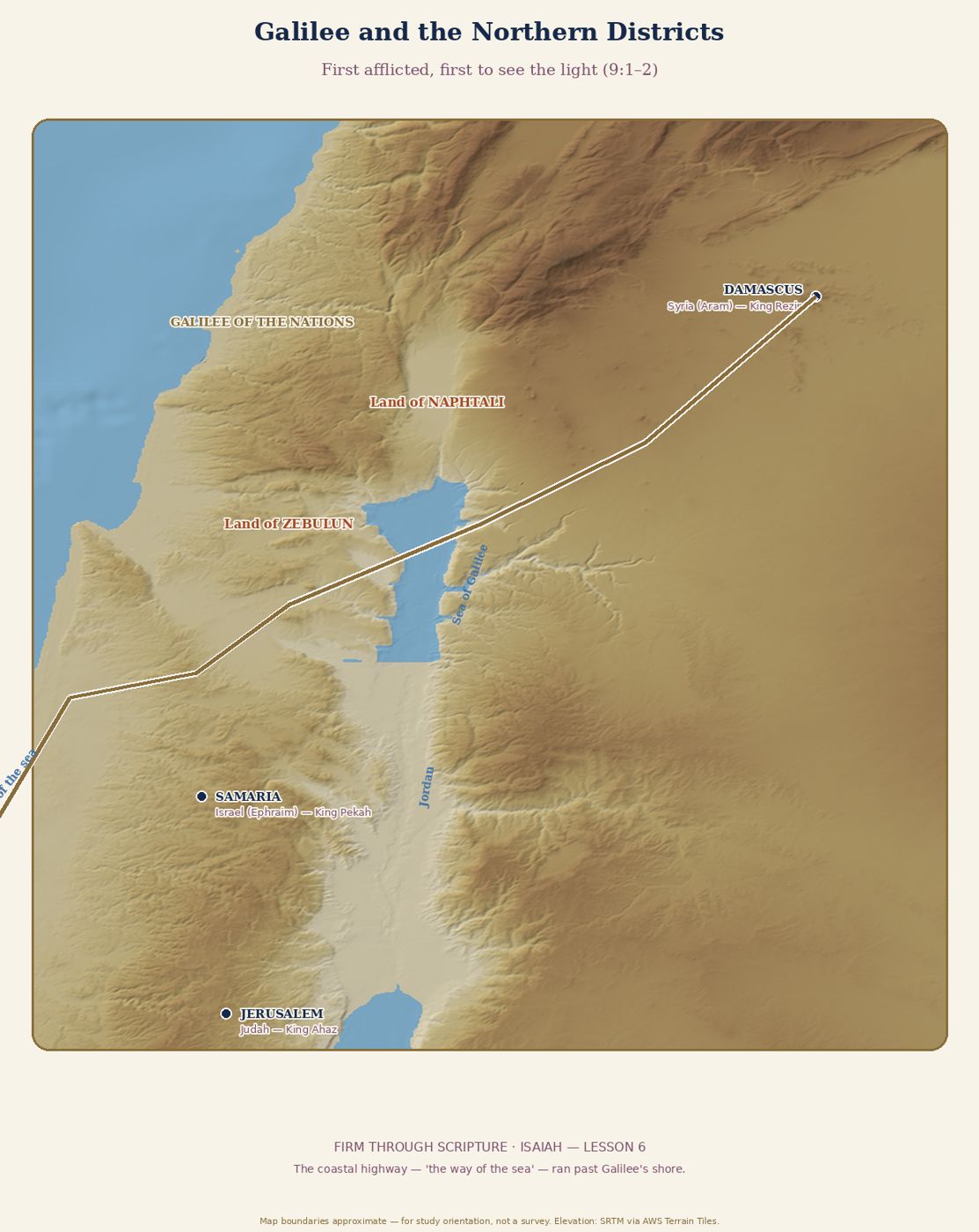
And at the land's far end lay Galilee. The northern districts — the tribal territories of Zebulun and Naphtali around and above the Sea of Galilee — were Israel's exposed frontier: first in the path of any army from the north, crossed by the highway called "the way of the sea," and mixed with surrounding peoples, which is why Isaiah calls the region "Galilee of the nations" (9:1) — Galilee means a circuit or district, and this one belonged, in every century, to more than Israel. Distant from Jerusalem, looked down on by the capital, stripped first by Assyria: ranked by dignity in 732 BC, Galilee would have come last. Chapter 9, verse 2 is about to reverse that ranking.
That is the world. Now we open the text itself.
3. OBSERVE — O: what the text actually does
Before meaning comes observation. Most bad interpretation is not deep error; it is shallow reading — people answering a text they never actually looked at. So look:
- The shape. The passage falls in two movements. Chapter 8 moves downward: sign (vv. 1–4), flood (vv. 5–10), instruction (vv. 11–20), darkness (vv. 21–22). Chapter 9:1–7 turns, at a single word — "nevertheless" — and moves upward: light (vv. 1–2), joy (vv. 3–5), the child on the throne (vv. 6–7). The whole passage is a valley with a sunrise at its end: the light is not introduced until the darkness has been fully described.
- Names do the preaching. Count them. Maher-shalal-hash-baz (8:1, 3). Immanuel, sounding twice inside the flood oracle — "thy land, O Immanuel" (8:8), and its translation, "God is with us" (8:10). And at the end, a child who gets no ordinary name is given five titles instead (9:6). The chapter is carried by children and the names they bear.
- The fear exchange. "Fear" language clusters in verses 12–13: the people's fear, God's command not to fear it, then fear deliberately transferred — "let him be your fear." Observation first, doctrine later: the text does not tell Isaiah to stop fearing. It tells him to change fear's object.
- The silences. The child of 9:6 gets no ordinary name, his mother is not mentioned, and no date is given for his appearing. The text that times Maher-shalal-hash-baz to the year leaves the greater child untimed. Observation refuses to fill silences like that with confident invention — §16 will show you the honest argument the silence has produced.
4. GENRE — N: note the genre (prophetic sign-narrative and oracle, ending in a royal salvation oracle)
This passage is not one kind of literature but three, woven in sequence — and each kind must be read by its own rules:
- Prophetic sign-narrative (8:1–4). A report of something the prophet did: took a roll, wrote a name, called witnesses, named a son. Prophets of this era preached with acted signs as well as spoken words, and the form matters — this really happened in Isaiah's household, and the sign's meaning is fixed by the explanation God attaches to it in verse 4. Read it as history carrying a message, not as a parable invented to carry one.
- Oracle (8:5–22). Direct speech from God — "the LORD spake also unto me again, saying" — in the heightened, parallel lines of Hebrew poetry. Oracles forthtell before they foretell: their first work is to confront the present audience with God's verdict on its present choices, and only then to announce what is coming. 51 Poetry's images (flood, wings, snare) are true speech, but image-speech: Assyria is not literally water, and pressing the picture into a timetable is a genre error.
- Royal salvation oracle (9:1–7). The final section shifts key entirely: no condition is stated, no repentance demanded, no threat hangs over it. It announces a birth and a reign in the celebratory style of a royal proclamation — a form known across the ancient world when a king was born or crowned, here stretched past every earthly example: a government with no end. Read it as proclamation, not prediction-trivia: its job is to make a darkened people lift their heads.
The genre lesson is the sequence: God acts a sign, speaks judgment and instruction, proclaims a king. Confuse the kinds — treat the poetry as newspaper, or the proclamation as a coded calendar — and the passage will seem to fail tests it never sat.
5. TERMS — T: the words in the writer's mouth
Four terms carry this passage. Learn what they meant in Isaiah's mouth, and watch how much false teaching dies at the dictionary:
- The sermon-names. Maher-shalal-hash-baz is four Hebrew words worn as one name: maher, "swift"; shalal, "spoil"; hash, "hastens"; baz, "prey" — the whole name says "in making speed to the spoil, he hastens to the prey": spoil is coming, and it is coming fast. [19, 20] Set the boy beside his brother and his sign-cousin and the family becomes a sermon series: Shear-jashub, "a remnant shall return" (7:3) — judgment will not be total; Immanuel, "God with us" (7:14) — God has not abandoned His house; Maher-shalal-hash-baz — and the spoil-clock is already ticking. Return, presence, and speed: three names, one message. [4, 17]
- "Confederacy" (8:12). The Hebrew word, kesher, is the ordinary word for a conspiracy — a treasonous plot. Isaiah's Judah had started using it as a shout: every rumoured alliance and court faction was "a confederacy!" God's instruction is precise: Isaiah must not adopt the crowd's vocabulary, because the vocabulary carries the crowd's fear inside it. Call everything a conspiracy and you will soon fear everything like a conspirator. [19, 2]
- "Sanctify" (8:13). The verb is qadash — to set apart as holy, to hold in a class by itself. God is not asking Isaiah to make the LORD of hosts holy; He is holy. He is commanding Isaiah to regard Him as holy — to give Him the place nothing else occupies. That is why the sentence can continue "and let him be your fear": the God you set apart above everything becomes the One you fear above everything. Sanctifying and fearing are the same act described twice. [20, 18]
Method note — the word-study guardrail: a word means what its author uses it to mean, in its sentence, in its century — not what its oldest root once meant, and not everything it can mean anywhere. Every term above was settled by Isaiah's usage in Isaiah. That is the discipline that keeps word studies honest.
TRANSLATION NOTE — why your friend's Bible starts chapter 9 one verse earlier
If you compare translations or study notes on this passage, you will trip over a numbering difference, and it is nobody's error. In the Hebrew Bible, chapter 8 runs one verse longer than in English versions: what your KJV prints as Isaiah 9:1 ("Nevertheless the dimness…") is numbered Isaiah 8:23 in the Hebrew text. That one-verse shift then runs through the chapter: English 9:2 ("The people that walked in darkness…") is Hebrew 9:1, English 9:6 is Hebrew 9:5, and English 9:7 is Hebrew 9:6. The words are identical; only the address numbers differ, because chapter divisions were added many centuries after Isaiah — a finding-aid, not part of the inspired text. So if a commentary says "Isaiah 8:23" about the great light, do not conclude it is missing from your Bible. It is your 9:1, wearing its Hebrew number. [23, 2]
- "The everlasting Father" (9:6). The Hebrew title is 'abi-'ad — literally, "Father of eternity." In Isaiah's royal language, a king could be called a father to his people: a protector whose care defined his reign. This title says the coming king's fatherly rule belongs to eternity — it will never lapse or be succeeded. It is a title about the length and character of His reign, spoken of the child just called "a son." Handle it exactly there and it teaches beautifully; pull it out of its sentence and it manufactures a confusion the text never makes — §7 returns to this, carefully. [19, 20]
6. ENTIRE CANON — E: where this passage sits in the whole story
No passage lives alone, and this one is a knot where threads from the whole Bible cross — including threads the New Testament itself ties:
- Immanuel, three times over. The name given in 7:14 returns as the flood reaches Judah's neck — "the breadth of thy land, O Immanuel" (8:8) — and then as the reason every counsel against God's people fails: "for God is with us" (8:10) is simply Immanuel translated. Lesson 05's sign becomes chapter 8's refrain and battle-cry. 4
- The stone, picked up by the apostles. Isaiah's sanctuary-and-stumbling God (8:14) is quoted directly in the New Testament. Paul weaves this verse with Isaiah 28:16 to explain Israel stumbling over Christ: they stumbled at "that stumblingstone" (Romans 9:33). 1 Peter does the same — to those who believe, the stone is precious; to the disobedient, "a stone of stumbling, and a rock of offence" (1 Peter 2:7–8). 1 The apostles are identifying the stone: the LORD of hosts of 8:13–14 is met, in the flesh, in Jesus — sanctuary to everyone who trusts Him, stumbling-stone to everyone who will not.
- Isaiah's children, on Jesus' lips. Hebrews 2:13 puts 8:18 into the mouth of Christ Himself: "Behold I and the children which God hath given me." 1 The point is solidarity — the Son stands where Isaiah stood, among given children, a sign in Israel; and Isaiah sealing the testimony "among my disciples" (8:16) has already sketched the shape: a rejected prophet, a small taught company, a preserved word.
- Galilee, exactly as written. Matthew, narrating Jesus' move to Capernaum and the start of His Galilean ministry, quotes 9:1–2 outright and calls it fulfilment: "That it might be fulfilled which was spoken by Esaias the prophet, saying, The land of Zabulon, and the land of Nephthalim, by the way of the sea, beyond Jordan, Galilee of the Gentiles; The people which sat in darkness saw great light" (Matthew 4:14–16). 1 This is canon evidence, stated plainly: the apostolic church read Isaiah's light-text of Jesus, and read it geographically — the light rose in the same named districts Isaiah named.
- David's throne, Gabriel's echo. The angel's announcement to Mary runs on 9:7's rails: God will give Jesus "the throne of his father David," He "shall reign over the house of Jacob for ever," and "of his kingdom there shall be no end" (Luke 1:32–33). 1 Behind both texts stands the covenant promise to David in 2 Samuel 7, which Isaiah presupposes and Luke's angel declares arrived.
- Midian behind the yoke. Verse 4's "as in the day of Midian" reaches back to Judges 7, where God broke Midian's oppression through Gideon, deliberately shrinking Israel's army so the victory could only be God's. 1 The God who broke a yoke with three hundred men can break any later yoke the same way.
The chapter's two children, side by side:
| Maher-shalal-hash-baz (8:1–4) | The child of the throne (9:6–7) | |
|---|---|---|
| His name | One long name announcing coming spoil | Five titles announcing coming government |
| His clock | Precise: before he can cry "My father," the north is spoiled | Untimed: the reign, once begun, has no end |
| His work | A living countdown to judgment | The living answer to the darkness judgment leaves |
7. THE MEANING — what the passage teaches
The Walk has established what the text says and where it sits. Now its payload, taught straight — the doctrines this passage actually carries, in the text's own proportions.
A name written large, before it happened (8:1–4)
God's first move is a piece of public writing. "Take thee a great roll" — a large sheet, big enough to be read — "and write in it with a man's pen": in ordinary human writing, not in code. The prophecy is to be legible, dated, and witnessed: Isaiah calls two named men, Uriah the priest and Zechariah the son of Jeberechiah, "faithful witnesses to record" it. [2, 11] Only after the writing is witnessed does the child arrive to wear the name — the word fixed in public before the events, so no one could call it hindsight when Damascus fell.
Then notice the clock God chooses. Not a calendar — a baby's development: "before the child shall have knowledge to cry, My father, and my mother." Everyone in Jerusalem could watch that clock; every stage of the boy's first years was a tick. And the name on the clock is bad news preached at two capitals: the spoil is coming, swiftly — for Damascus and Samaria first. Judah's comfort is real but narrow, and the chapter will not let it stay comfortable.
Two waters: the stream refused, the river received (8:5–8)
Verses 5–8 give the reason for everything. "Forasmuch as this people refuseth the waters of Shiloah that go softly" — God's gentle supply, spurned as too small and slow for a national emergency — "and rejoice in Rezin and Remaliah's son": the people's heart ran toward the drama of kings and coalitions. So God gives them the alternative water at full strength: "the Lord bringeth up upon them the waters of the river, strong and many, even the king of Assyria." You refused the stream; here is the flood. And the flood does not stop at the northern kingdoms. It passes through Judah — "he shall reach even to the neck." Neck-deep: not quite drowned. That measured line is judgment with a limit set by mercy, and the next line tells you why: the flooded land is addressed, at its worst moment, as "thy land, O Immanuel." The land is not finally Assyria's, or Ahaz's. It is Immanuel's — God with us has a claim on the map even while the map is underwater. [2, 4]
A defiance sung at the nations (8:9–10)
Then the oracle wheels around and addresses the nations: associate, gird yourselves — "and ye shall be broken in pieces." "Take counsel together, and it shall come to nought; speak the word, and it shall not stand" — grounded on one translated name: "for God is with us," Immanuel. [13, 4] This is not Judah boasting in her strength; the same chapter has just put her neck-deep in the flood for her unbelief. The defiance rests on God's presence and promise, not the nation's performance.
The great exchange of fears (8:11–13)
Now the passage turns to the prophet's own instructions, among the most searching words in the book. "The LORD spake thus to me with a strong hand" — God's hand gripping the prophet, holding him off the crowd's path — "and instructed me that I should not walk in the way of this people." The crowd's way is named in verse 12: conspiracy-talk, and the fear that travels with it. Isaiah is forbidden the vocabulary and the emotion that travels with it: "neither fear ye their fear, nor be afraid."
What replaces it is not calm technique. It is a transfer: "Sanctify the LORD of hosts himself" — and let him be your fear, and let him be your dread. The LORD of hosts is Isaiah's signature title for God — the LORD of the armies of heaven and earth — and it matters here: the One Isaiah is to fear is precisely the commander of every force the crowd fears. Reverent fear of God is not terror of God: terror expects harm from a power it cannot trust; reverent fear stands in awe before a holiness it can trust — and it has this unique property among fears: it crowds out the lesser ones. A heart occupied with the LORD of hosts' greatness has little room left for Rezin, Assyria, or the whisper network. The passage never promises the dangers are imaginary — Assyria was a real army. It promises a greater object for fear, and in that object a steadiness the crowd cannot give or take away. [13, 17]
Sanctuary, or stone (8:14–15)
Verse 14 is the hinge of the chapter, and it swings on trust. The same LORD of hosts — "he shall be for a sanctuary": a refuge, God's own presence as shelter for those who sanctify Him. "But for a stone of stumbling and for a rock of offence to both the houses of Israel, for a gin and for a snare to the inhabitants of Jerusalem." Both houses — north and south alike; no covenant pedigree exempts anyone from the fork. §6 showed where the apostles take this: to Christ Himself, sanctuary to everyone who believes, stumbling-stone to everyone who demands a different God than the One who came. Verse 15's five verbs describe the fall in slow motion, and the scale is blunt: "many among them."
Bind it up, hide Your face — and wait (8:16–17)
What is a prophet to do when most of the city takes the stone side? Verse 16 answers with the founding of a school: "Bind up the testimony," God says — testimony and law, His revealed word, are to be sealed "among my disciples": learners, a small company who will carry the word, preserved intact, through the years when the nation will not hear it. This is the remnant idea becoming a community: when the public ministry is refused, the word is entrusted to the few who will keep it until the many are ready. Verse 18 adds the authenticating sign: Isaiah and his children stand in Israel as "signs and wonders" from the LORD who dwells in Mount Zion — Zion, Jerusalem's temple hill (Lesson 02).
And verse 17 is Isaiah's own response, the passage's pastoral centre: "I will wait upon the LORD, that hideth his face from the house of Jacob, and I will look for him." God was hiding His face — His favour withdrawn from the nation's experience under judgment. Isaiah does not deny it or perform a confidence he does not feel. He does two things with the hiddenness: he waits upon the LORD — tense, hopeful expectation, like a watchman — and he looks for him. The prophet who knows the most about what is coming spends the interval between promise and fulfilment in the dark, on purpose, facing the direction the light was promised from. [4, 13]
The whispering alternative (8:19–22)
Two sources on offer in the dark:
| The testimony (8:16, 20) | The whisper (8:19) | |
|---|---|---|
| Where it speaks from | Bound up, written, sealed among disciples | Peeping and muttering, from the ground |
| Who it consults | The living God who has spoken | The dead, through mediums and wizards |
| Its test | "According to this word" — it welcomes measuring | It cannot survive the light-test of v. 20 |
Human beings in the dark will consult something. Verses 19–22 show Judah's alternative source: "Seek unto them that have familiar spirits, and unto wizards that peep, and that mutter." Familiar spirits are the spirits of the dead, consulted through mediums; wizards — literally "knowing ones" — claimed access to hidden knowledge; and the text's sound-effects are contemptuous: these sources peep and mutter — chirping whispers, the squeak of the dead through a medium's throat. Isaiah's answer is one of Scripture's great questions: "should not a people seek unto their God? for the living to the dead?" The contrast is the argument: a living people, with a living God who has spoken, queuing to ask corpses for guidance. Verse 20 sets the test that replaces all whispering: "To the law and to the testimony" — back to the bound-up written word — "if they speak not according to this word, it is because there is no light in them."
The outcome is verses 21–22, bleak on purpose: hungry, fretting, cursing their king and their God, looking up and finding nothing, looking down and finding only darkness — driven to darkness. Do not rush past it into chapter 9's comfort: the light of 9:2 is great precisely because this darkness is total.
Nevertheless: light at the land's end (9:1–2)
Then the turn — and watch where it lands. "Nevertheless the dimness shall not be such as was in her vexation": the gloom that ends chapter 8 will not have the last word. God rehearses the affliction's geography precisely — "when at the first he lightly afflicted the land of Zebulun and the land of Naphtali, and afterward did more grievously afflict her by the way of the sea, beyond Jordan, in Galilee of the nations." (Assyria's two-stage stripping of the north, 733–732 BC.) [11, 16] Verse 2 announces the reversal on the same soil: a people who "walked in darkness" have "seen a great light," and on those who dwell "in the land of the shadow of death" the light "hath shined." Note the tense: have seen, hath shined — the prophetic perfect, speaking of a future event as so certain in God's purpose that grammar may treat it as done. [13, 4] And note the direction: the light does not rise in Jerusalem and spread outward. It rises in Galilee — the stripped, mixed, looked-down-on frontier.
Harvest joy, a broken yoke, and the burning of war (9:3–5)
Isaiah lets the delivered people feel it before he explains it, in three pictures:
- Joy like harvest, like dividing spoil (v. 3). The two happiest public moments in that world: the ingathering, when the year's survival is secured; and the distribution after a victory, when soldiers divide what the enemy left. God's rescue will feel like that — relief and abundance together, joy "before thee," in God's presence. (A famous knot in this verse's wording — whether the joy was "increased" — is untangled in §16.)
- The yoke broken, as at Midian (v. 4). Exodus language aimed at Assyria: "the yoke of his burden, and the staff of his shoulder, the rod of his oppressor" — yoke on the neck, staff on the shoulder, rod on the back. Every item is named, and every item is broken, by God: "for thou hast broken." The comparison fixes the method: "as in the day of Midian" — the Gideon pattern (§6), victory by God's act alone.
- War itself burned (v. 5). The final picture is the strangest and the best: the whole apparatus of battle, "every battle of the warrior… and garments rolled in blood," goes onto the fire as "fuel of fire." War is not just defeated once; its equipment is consumed, made unusable for the next war — a peace with finality to it. The next verse gives the reason, and the reason is a person.
Unto us a child is born (9:6–7)
"For unto us a child is born, unto us a son is given: and the government shall be upon his shoulder." Every clause loads weight. The child is born — truly human, arriving the way every king and peasant arrives. A son is given — the same child is a gift, sent from beyond the human line that receives him. Both halves stand in one breath. The government lands on his shoulder — the place the oppressor's staff had beaten (v. 4) now bears the rule of the world, and one shoulder is enough.
Then the names — and in the ancient world a throne-name announced what a reign would be. His name "shall be called":
| The title (9:6) | What it announces |
|---|---|
| Wonderful | His person and works are beyond ordinary accounting — a wonder, as God's own acts are called wonderful |
| Counsellor | The king whose counsel needs no counsellors: where Ahaz bought counsel that "shall come to nought" (8:10), this king is wisdom in office |
| The mighty God | The full divine title set on the child — the same usage Isaiah gives the LORD Himself in 10:21 |
| The everlasting Father | "Father of eternity" (see §5): the king whose fatherly care over his people is eternal — a reign-title, not a confusion of the Persons |
| The Prince of Peace | The ruler whose government is peace — shalom, wholeness and well-being — and who ends war by ruling, not merely by truce |
Verse 7 refuses every limit: "Of the increase of his government and peace there shall be no end, upon the throne of David, and upon his kingdom, to order it, and to establish it with judgment and with justice from henceforth even for ever." Government and peace increase without ending, on David's throne, in judgment and justice — the two qualities Judah's courts had most lacked. And the last line removes the outcome from human management: "The zeal of the LORD of hosts will perform this." Not the zeal of the LORD's people, not a programme: the LORD of hosts will perform this. The child is not Israel's contribution to her own rescue. He is God's.
Now the honest note, at full strength. DISPUTED: many scholars, ancient and modern, have identified the child first with a royal child of Isaiah's own day — Hezekiah, Ahaz's son and successor, is the usual candidate — reading verses 6–7 as a birth-or-accession oracle whose court language was overtaken by history. [39, 17] That identification must be faced, not mocked: Hezekiah was a real Davidic king who trusted God in the Assyrian crisis (chapters 36–37), and royal oracles did use exalted language. But the titles strain it past breaking: no merely human king — not even good Hezekiah, who also failed (chapter 39) and died — is "The mighty God," or reigns with government increasing without end, for ever. POSITION — the church's historic reading, and this study's: the oracle outruns any eighth-century crib; its full stature is the Messiah, and the New Testament's reading of its light-text (Matthew 4) and its endless kingdom (Luke 1) is the canon's own verdict on where the words land. §16 lays out the whole dispute.
The Christ Thread
This passage does not need Christ imported into it; the New Testament keeps arriving here on its own errands (§6): Matthew cites 9:1–2 as fulfilled in Jesus' Galilean ministry, Gabriel builds the annunciation out of 9:7, Paul and Peter identify the stone of 8:14 as Christ, Hebrews places 8:18 on Christ's lips. No forced symbolism is required, because the apostles did the connecting themselves — the thread is citation, not invention. [1, 4]
Where in the Covenant Story?
Stand back and locate the chapter in the covenant plot. The Davidic covenant (2 Samuel 7) promised David a descendant whose kingdom God would establish for ever — and by chapter 8 that promise is housed in a faithless king (Ahaz), a capital under threat, and a land about to flood to the neck. Isaiah 8–9 is the covenant's darkest hour answered from inside the covenant itself: God preserves the testimony with a remnant of disciples, keeps addressing the drowning land as Immanuel's, and swears the promised throne will be filled by a king whose reign cannot end. 17
Father, Son, and Spirit
This passage earns one careful paragraph here, because 9:6 puts divine titles on a child and beginners trip exactly here. The child is called "a son… given" and, four titles later, "The everlasting Father" — and the careless conclusion is that the Bible confuses the Father and the Son, as if Jesus simply is the Father wearing another name (the error the church calls modalism). The text does not teach that. "The everlasting Father" is, in Hebrew, "Father of eternity" (§5) — a reign-title describing the king's eternal fatherhood over his people: what His rule is like, not which Person He is. The same Bible shows this child at His baptism as the Son in the river while the Father speaks from heaven and the Spirit descends (Mark 1, in this course) — three Persons, unconfused, one God. The Spirit is not named in this passage itself — He arrives in the next royal portrait, resting upon the Branch (11:2) — and is not imported here. What 9:6 does teach, at full strength, is that the coming king is no merely human king: the child born is also the mighty God, given as a son.
The Long View — what the church has believed
You are not this passage's first reader. The early church read 9:6–7 of Christ without hesitation: Justin Martyr, arguing with Jewish interlocutors in the second century, works through Isaiah's child-texts as prophecies of Jesus, and the fathers follow the same road. 44 Jerome and Calvin after him both read the oracle messianically at full strength — Calvin insisting its comfort be preached to frightened people, its original use. [37, 36] The medieval Jewish reading of Rashi's school took the other main road, identifying the child with Hezekiah (§16). 39 Where has the church agreed? That this text stands at the centre of the Bible's hope for a coming king, that its light-text belongs to Galilee and to Jesus there, and that its fear-exchange is a permanent word to God's people in every panic. Where has it divided? Over the child's first identification. The centre — a child, a throne, government and peace without end — has held for two thousand years.
That is the payload. The next section compresses it into the one sentence you are meant to carry out of this study.
8. THE AIM SENTENCE — X: eXplain the intent
Everything observed now compresses into one sentence — the author's intended meaning, stated before any application is allowed near it:
In a crisis of conspiracy-fear, Isaiah is taught to sanctify the LORD of hosts and let Him alone be his fear — for the God who lets Assyria's flood rise to Judah's neck, and who hides His face while His prophet waits with the sealed testimony, answers the darkness with His final word: in the very districts Assyria afflicted first, a great light dawns, and a child is born whose divine names and endless Davidic kingdom the zeal of the LORD of hosts Himself will perform.
If a sermon, a post, or a devotional uses Isaiah 8:1–9:7 to say something that cannot be traced back to that sentence, it is not this passage talking. That is the whole skill this course exists to build — and the next sections are where you watch it work.
9. SAY IT BACK
Close the book and say the AIM sentence from section 8 in your own words — out loud, or in your notes, without looking. Then say, in one more sentence, what it asks of you this week.
If your version quietly changes the meaning — if the child becomes decoration on the darkness instead of God's answer to it, or the fear-exchange becomes a tip for staying calm — open the lesson and walk it again. This exercise feels small. It is the entire course in miniature: meaning first, then — and only then — your life.
10. THE MISREAD — the guardrail, with verdicts
Three live misuses of this passage. Each gets a fair hearing, the evidence, and a verdict.
Misread 1: "Isaiah 9:6–7 is a Christmas text — a beautiful prophecy of Jesus' birth to lift out at December services; its connection to chapter 8 is just the accident of where it sits in the book." Why it sounds right: verses 6–7 really are about the child the church confesses as Jesus, and they are beautiful lifted out — generations of carol services cannot all be wrong about the words. The evidence: they are not wrong about the words; the misread is wrong about the join. Chapter 9 opens with "nevertheless" — a word that means nothing without the gloom of 8:21–22 in front of it. The child is announced as God's answer to specific things this passage has named: the confederacy panic (8:12), the flood the people chose over the soft waters (8:5–8), the hidden face Isaiah waits through (8:17), and the whisper-consulting darkness of a people who would not seek their God (8:19–22). Cut the join and the child becomes a decoration — lovely, seasonal, weightless. Keep it and He becomes what the text makes Him: God's reply, from inside the darkness, to the darkness. Matthew honours the join: he quotes 9:1–2 not at the nativity but at the start of the ministry, light dawning on a dark land. Verdict: right child, severed context. Isaiah 9:6–7 detached from Isaiah 8 is a Christmas card; read in place, it is a war-time proclamation — stronger, not weaker, for being read whole.
Misread 2: "'Let him be your fear' means God wants us frightened of Him — trembling before an unpredictable God is the safest posture, because a scared believer stays obedient." Why it sounds right: the words are stark — "let him be your fear, and let him be your dread" — and Scripture elsewhere does command the fear of the LORD as the beginning of wisdom. The evidence: read the exchange the verse actually makes. Verses 12–13 set two fears against each other: "their fear" — the crowd's conspiracy-terror, borrowed, contagious, enslaving — and the fear of the LORD of hosts, commanded precisely as its replacement. The fear that belongs to God here is defined by its own first verb: sanctify Him — set Him apart as holy, give Him the unrivalled place (§5). Its fruit, in the very next verse, is not cringing but sanctuary: the God rightly feared becomes refuge (8:14). Terror of a tyrant produces hiding; this reverent fear produces a prophet who can stand still in a panicking city and say "I will wait… and I will look for him." Fear of God, in Isaiah, is the one fear that retires all the others — because the One feared is also the One trusted. Verdict: wrong fear. The passage trades terror in, not deepens it: reverent fear of the LORD of hosts — awe before the holy God who is also your sanctuary — crowds out the lesser fears. A reading that leaves a believer more afraid of everything, including God, has reversed the exchange.
Misread 3: "Isaiah 8:19 is about ancient superstition — but its modern equivalents (mediums, horoscopes, 'spiritual' guidance, talking to the dead) are harmless comfort for many people, and judging them is unkind." Why it sounds right: the practices really do comfort some grieving people, and kindness is a real obligation.
"should not a people seek unto their God? for the living to the dead?" — Isaiah's question, 8:19
The evidence: Isaiah's objection is not that the whispering is ineffective or unfashionable; it is an exchange of sources — the living God traded for the dead. A people with a living, speaking God is choosing corpses and chirping shadows instead, and verse 20 applies the light-test: any voice that will not speak "according to this word" has "no light in them." Verses 21–22 show where the exchange lands its customers: hungry, fretting, cursing upward, driven to darkness. The kindness question answers itself: it is not kind to bless a road whose destination the passage has already shown you. Isaiah's alternative is a better source, offered plainly: seek unto your God, and measure everything by His word. Verdict: wrong diagnosis. Verse 19's trade — the dead consulted instead of the living God — is presented by the text as the darkness's cause, not its comfort, and its modern forms do not become harmless by becoming familiar.
11. FROM WORD TO WALK
A reflection page — the lesson is not finished until the passage has had its say with you.
Sit with Isaiah in verse 17 for a while, because most believers will spend more of their lives in that verse than in chapter 9, verse 2. The promises have been given — Isaiah has seen the child on the throne, the light in Galilee, the endless kingdom — and his circumstances are: a nation that will not listen, a testimony bound up for a small company of learners, and the face of God hidden from his people. He is not in the fulfilment. He is in the waiting. And his waiting is not resignation; it has a direction ("I will look for him") and an address (the LORD who hides — still the LORD, still his). If you are in a season where God seems hidden — where the word you have is real but the sight of it is not — and Isaiah 8:17 does not call the waiting man faithless. It calls him a sign.
Then let the fear-exchange examine you, gently and precisely. You do not get to choose whether you will fear; the passage assumes fearing creatures. You get to choose — daily, sometimes hourly — which fear sits in the senior seat. Conspiracy-fear wears modern costumes: the feed that trains your nerves, the rumour dressed as discernment. Sanctifying the LORD of hosts is the deliberate counter-practice: setting Him apart in your thoughts until His size, not the threat's size, sets your emotional weather. The promise attached is not that the flood will not come — Judah's flood came. It is that the feared God becomes sanctuary: refuge in the middle of the water, up to the neck and not over the head.
And finally, notice where the light rose: not in the neighbourhood that had its act together, but in Galilee of the nations — the stripped frontier with the worst reputation in the country. If the ground of your life that feels most written-off is where you least expect God to shine, you have understood this passage's geography exactly.
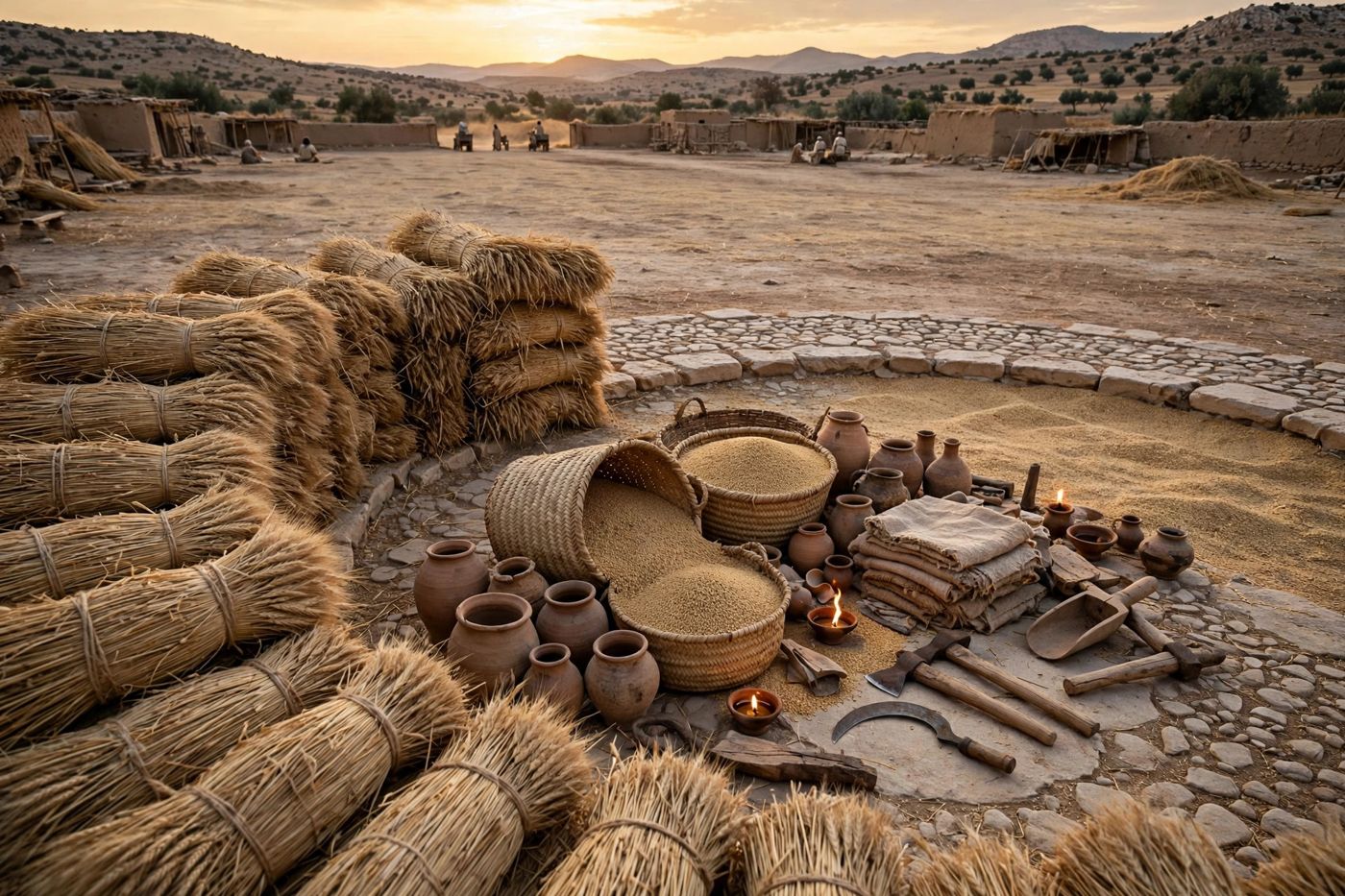
LORD of hosts — I sanctify You. Be my fear, and let every lesser fear lose its seat. While Your face seems hidden, teach me Isaiah's waiting: bound to Your testimony, looking for You. And when the light comes, let me be found among the people who walked in darkness and saw it, because we never stopped facing the direction You promised it from. In the name of the child who is born unto us, the Prince of Peace, amen.
12. FOR DISCUSSION — OR FOR YOUR JOURNAL
With a group, work these aloud. Alone, they're yours — answer them in your journal or in prayer; they lose nothing in the quiet.
- Isaiah's sons preached every time their names were called. What has God placed in your ordinary life — your work, your household, your history — that already preaches to the people around you?
- Name the current form of "their fear" (8:12) in your world — the conspiracy-talk the crowd trades in. What would it mean, this week, to refuse the vocabulary as well as the fear?
- Verse 17 joins two things many believers separate: honestly naming that God "hideth his face," and waiting on Him anyway. Which half is harder for you — the honesty, or the waiting — and why?
- The light of 9:2 rose first in the first-afflicted place. Where is the "Galilee" in your life or your church's neighbourhood — the written-off ground — and what would change if you started expecting God's dawn there?
13. THE WALK-OUT — T: Transfer to today
Meaning is settled. Now — and only now — application, and it must cross the bridge honestly. Run the five Transfer Tests on this passage:
- Same covenant? Isaiah addresses the old-covenant nation with Assyria at the border; we read as the new-covenant church, on the far side of the child's birth. The throne promises are fulfilled in Christ and travel to us in Him; the judgments on eighth-century Judah do not transfer as forecasts about any modern nation.
- Same audience? The fear-command was given first to a prophet forbidden to join his nation's panic, and through him to the disciples who kept the testimony. Its pattern — God's people refusing the crowd's fear — addresses God's people in every age; its eighth-century referents (Rezin, Pekah, Tiglath-pileser) do not.
- Same genre rules? Sign-narrative, oracle, and royal proclamation: the passage announces and proclaims far more than it commands. So its applications centre on trust, waiting, and source-seeking — the responses the text itself models — not on copied actions like naming children as sermons.
- Repeated or rooted? Fear the LORD and no other fear (carried to Jesus' own teaching, Matthew 10:28); wait on the LORD in hiddenness (the Psalms' constant posture); go to God's word rather than rival voices (Deuteronomy already forbade 8:19's whispering). Each is rooted in God's character and repeated across the canon. These cross.
- Ten verses either side? Every application below is drawn from this passage read whole — darkness and child together. Nothing hangs on 9:6 torn out of its chapter, or on chapter 8 with its sunrise amputated.
What crosses — and lands (led, as always, by what God has done — the indicative before the imperative):
- God has already given the child. The walk-out does not begin with your fear-management; it begins with "unto us a child is born." Its performer is not you: "The zeal of the LORD of hosts will perform this." Your waiting (8:17) is waiting on a performer, not on a possibility.
- The fear-exchange is a standing order for God's people. Because the LORD of hosts is holy and sovereign, His people are freed to sanctify Him as their one senior fear. Lesser fears are not denied; they are demoted, outranked by a greater object of awe who is also sanctuary.
- The testimony is kept by waiting disciples. When a culture will not hear, the faithful work is Isaiah's: bind up the word, keep it unedited among learners, stand as a sign, and look for God. Obscurity in a dark season is not failure; it is the remnant's assignment.
- Every rival voice is tested by the written word. "To the law and to the testimony" is the standing rule for every whisper: if it will not speak according to this word, there is no light in it — whatever its tone, following, or comfort.
The gate, at a glance:
| Crosses the gate | Stopped at the gate |
|---|---|
| The fear-exchange — the LORD sanctified as your senior fear | Any modern ruler or nation read into 9:6–7 |
| Waiting on God in hiddenness, testimony in hand | Grief, caution, and lament forbidden in fear's name |
| Every rival voice tested by the written word | The dead consulted "just for comfort" |
Practices — what the gate lets through, made concrete this week:
- The fear audit. On paper, list the fears currently loudest in your life, with the crowd-source each came from (a feed, a conversation, your own rehearsing). Then write 8:13 over the list and pray it, name by name, transferring each fear's seniority to the LORD of hosts.
- Sanctify, daily. Each morning this week, before any news or messages, speak one sentence aloud: "LORD of hosts, I set You apart — be my fear today."
- Wait on purpose. Choose one matter where God's face seems hidden. Set a daily ten minutes to do exactly what Isaiah did: open the bound-up testimony (this passage is a good page), wait, and look — no fixing, no rival voices, just expectant attention.
- Refuse one whisper. Identify the modern peep-and-mutter source you consult under pressure — horoscope, medium-content, doom-feed, rumour mill — and close it for the week. Replace each urge to check it with 8:20's test, spoken aloud.
- Carry light to a Galilee. Name one person or place you have written off as too far gone for God to shine on. Pray for them by name daily this week, and take one concrete step toward them — a visit, a call, an invitation.
What does not cross: treating 9:6–7 as a prediction about any modern ruler or nation; reading 8:9–10 as a guarantee that a nation calling itself God's cannot be broken in pieces (the promise rests on God's purpose in Christ, not national self-identification); using the fear-exchange to forbid grief, caution, or lament — the tests forbid panic's throne, not tears; and consulting the dead or the occult "just for comfort," which the passage closes by name.
Praise Him
Sanctify the LORD of hosts himself — of the increase of His government and peace there shall be no end, and the zeal of the LORD of hosts has performed it. The people that walked in darkness have seen a great light: unto us a child is born, unto us a son is given — Wonderful, Counsellor, The mighty God, The everlasting Father, The Prince of Peace. Let Him be our fear, and He is our sanctuary — the child on David's throne, whose kingdom is established with judgment and with justice, from henceforth even for ever.
14. THE RECAP CARD — this study on one page
Print it. Keep it where you'll see it this week.
- The passage: Isaiah 8:1–9:7 — a sermon-child and a flood, two fears and a hidden face, then a great light in Galilee and a child on David's throne for ever.
- Say It Plain: Judah refused God's soft waters and chose panic, so Assyria floods to her neck — yet the land is Immanuel's. Isaiah refuses the crowd's conspiracy-fear, makes the LORD his only fear, seals the testimony among his disciples, and waits on a hiding God. Then, in first-afflicted Galilee, light dawns: a child is born whose kingdom never ends.
- The AIM: In a crisis of conspiracy-fear, Isaiah sanctifies the LORD of hosts as his only fear; and the God who lets the flood rise to the neck, and hides His face while His prophet waits, answers the darkness with a great light in Galilee and a child whose endless kingdom His own zeal will perform.
- Key terms: Maher-shalal-hash-baz — "swift to the spoil, hastening to the prey," the sermon-name clock · kesher — "confederacy": the crowd's word, carrying the crowd's fear · qadash — sanctify: set apart as holy · 'abi-'ad — "Father of eternity," the king's eternal fatherhood over his people.
- The Misread, in one line: 9:6–7 is no detachable Christmas card — the child answers chapter 8's darkness · "let him be your fear" trades terror in · 8:19's whispering voices are the darkness's cause, not its comfort.
- Memory verse: "The people that walked in darkness have seen a great light: they that dwell in the land of the shadow of death, upon them hath the light shined." — Isaiah 9:2
- This week's practice: the fear audit — name the loudest fears, transfer their seniority to the LORD of hosts (8:13) — and one closed whisper-source, tested by 8:20 instead.
15. CHECK YOURSELF — five questions
Answer from the study, not from instinct. (Answers live in the Teacher Edition.)
- In your own words: what is the AIM of Isaiah 8:1–9:7?
- Maher-shalal-hash-baz, Shear-jashub, and Immanuel preach three things between them. Give all three meanings, and state the clock God attached to the second sermon-child.
- Explain the exchange of fears in 8:12–13: what fear is refused, what replaces it, and why does verse 14 call the feared God a "sanctuary"? How is this different from terror of God?
- A friend calls Isaiah 9:6–7 "just a Christmas prophecy," unrelated to chapter 8. Using at least three links from this study, show the join between the darkness and the child.
- Why does this study label the child's identification with Hezekiah DISPUTED rather than simply right or wrong — and which phrases make a merely human king an impossible final fit?
16. GO DEEPER
Optional — for readers who want the machinery. The lesson is complete without it.
From the Sources — the affliction of the north, on the record
Isaiah 9:1's two-stage affliction — lightly at first, "more grievously" afterward, falling on Zebulun and Naphtali "by the way of the sea" — matches the shape of Assyria's campaigns of 733–732 BC as reconstructed from the Assyrian records and 2 Kings 15:29, where Tiglath-pileser takes Galilee and Naphtali captive. [11, 25] FACT — as a statement about what those records report: Galilee was the first region of Israel stripped by Assyria, a decade before Samaria city fell. [16, 11]
The Honest Argument — whose child? Hezekiah, an ideal king, or the Messiah?
The argument at a glance:
| Reading of the child (9:6) | Strongest support | Where it strains |
|---|---|---|
| Hezekiah | Davidic heir in the crisis generation; trusted God in 701 BC; exalted court language was customary [39, 17] | Titles exceed him; his reign ended; chapter 39 records his failure |
| An ideal coming king | The oracle's untimed, unlimited language reads as hope projected forward | Leaves the promise without the fulfilment the NT announces |
| The Messiah — Jesus (POSITION) | Matthew 4 and Luke 1 read the passage's own verses of Him; the titles fit without remainder | Requires receiving the NT's reading as the canon's verdict — precisely the POSITION, labelled |
The dispute over 9:6–7 is old and genuine, and deserves its strongest statements on every side. The Hezekiah case: the oracle answers Ahaz's crisis; Hezekiah, Ahaz's son, was the Davidic heir whose reign followed, who trusted the LORD in the Assyrian crisis of 701 BC when Ahaz had not; and royal oracles in the ancient world used exalted, even divine-sounding court language. On this reading, associated with Rashi's school and taken up by many modern critical scholars, the titles either name the child by God's attributes (God — wonderful in counsel, mighty, everlasting Father — calling him "Prince of Peace") or are courtly hyperbole history did not sustain. [39, 17] FACT — those readings exist, in those sources, as a matter of interpretive history. The strain: the clauses outrun Hezekiah at every measurable point — his reign ended, his government did not increase for ever, he stumbled in the Babylon-envoy affair (Isaiah 39), and "The mighty God" is a title Isaiah elsewhere reserves for the LORD Himself (10:21). Chronology also presses: on the usual dating Hezekiah was likely already born before this oracle — hence the ideal coming king reading. DISPUTED — Hezekiah's birth and co-regency dates are reconstructed, not recorded; honest scholars land on both sides. POSITION — this course's, and the historic church's: the oracle's final referent is the Messiah, Jesus — born, as Gabriel told Mary with this text in his mouth, to David's throne and a kingdom without end (Luke 1:32–33); Matthew had already said as much about the light-text immediately before it. [1, 44] The labels matter more than the argument's volume: a student who can say which parts are FACT, which DISPUTED, and which POSITION has learned to read Isaiah like an adult.
The Word Underneath — "not increased the joy"? (9:3)
Your KJV reads, at 9:3, "Thou hast multiplied the nation, and not increased the joy." Most modern translations read the opposite: "you have increased its joy." The Hebrew written tradition (the ketiv) reads lo', "not"; the reading tradition preserved in the margin (the qere) reads lo, "to it" — two words that sound alike and differ in sense entirely. FACT — the variant stands in the Hebrew textual tradition and is documented in the standard critical edition. [23, 19] The KJV followed the written text; most modern versions follow the marginal reading. This study keeps the KJV as printed and flags the wrinkle: the picture — multiplied people, harvest joy before God — survives either reading.
Go Read
- John N. Oswalt, The Book of Isaiah, Chapters 1–39 (NICOT) 2 — chapters 8–9 as one Immanuel unit.
- Walter Brueggemann, Isaiah 1–39 (Westminster Bible Companion) 13 — panic to proclamation, rhetorically read.
- Gary V. Smith, Isaiah 1–39 (New American Commentary) 11 — the Assyrian records behind the north's affliction.
17. SOURCES & REFERENCES
Numbered citations in this lesson key to this list — the course standard: every sourced claim carries its number, and every number can be checked.
- The KJV text itself — Holy Bible, King James Version (eBible.org KJV, 1769 text). Scripture quotations are from the King James Version (KJV), which is in the public domain in the United States; the full passage is always assigned as reading. Cross-references within Scripture cite this number.
- Oswalt, The Book of Isaiah, Chapters 1–39 (NICOT) — John N. Oswalt (Eerdmans). The leading evangelical commentary on the first half; defends essential unity of authorship and reads the book as a finished theological whole. Detailed notes on the Assyrian-period history (Ahaz, Hezekiah, Sennacherib).
- Motyer, The Prophecy of Isaiah — J. Alec Motyer (IVP). A one-volume commentary by an evangelical scholar who argues the whole book breathes the mind of the eighth-century prophet; especially strong on the book's structure, its repeated refrains, and the Servant.
- Smith, Isaiah 1–39 and Isaiah 40–66 (New American Commentary) — Gary V. Smith (B&H). Evangelical commentary with strong historical notes (the Assyrian and Babylonian records) and an even-handed survey of the authorship debate.
- Brueggemann, Isaiah 1–39 and Isaiah 40–66 (Westminster Bible Companion) — Walter Brueggemann (Westminster John Knox). A rhetorical-theological reading for preachers and teachers; strong on the poetry's movement from judgment to hope.
- Walton, Matthews & Chavalas, The IVP Bible Background Commentary: Old Testament — John H. Walton, Victor H. Matthews, Mark W. Chavalas (IVP). Verse-by-verse ancient Near Eastern background: Assyrian siege practice, Babylonian religion, treaty and coronation customs, geography.
- Boda & McConville (eds.), Dictionary of the Old Testament: Prophets — Mark J. Boda and J. Gordon McConville (IVP). Articles on Isaiah's composition, the Servant, Zion, the nations oracles, and the prophetic genres, written across the scholarly spectrum.
- VanGemeren (ed.), New International Dictionary of Old Testament Theology and Exegesis (NIDOTTE) — Willem A. VanGemeren (Zondervan). Theological word studies with semantic-range discipline for the Hebrew terms.
- Brown, Driver & Briggs, Hebrew and English Lexicon of the Old Testament (BDB) — The standard older Hebrew lexicon; word senses and usage ranges for the Terms sections.
- Koehler & Baumgartner, The Hebrew and Aramaic Lexicon of the Old Testament (HALOT) — The standard modern Hebrew lexicon; the control on BDB for contested senses (e.g., 'almah).
- Biblia Hebraica Stuttgartensia (BHS) — The standard critical edition of the Hebrew text behind the modern translations, with its textual apparatus (the home of the Isaiah variants discussed in the Translation Notes).
- Pritchard (ed.), Ancient Near Eastern Texts Relating to the Old Testament (ANET) — James B. Pritchard (Princeton). Translations of the primary records: Sennacherib's annals, the Babylonian Chronicle, the Cyrus Cylinder, treaty and hymn texts.
- Calvin, Commentary on Isaiah — John Calvin (public domain). Reformation exegesis; a control on interpretation and a voice in the Long View.
- Jerome, Commentary on Isaiah — Jerome (c. AD 408–410). The early church's fullest Isaiah commentary; Jerome transmits the Hebrew learning of his day and treats Isaiah as one prophet's book.
- Rashi and Ibn Ezra on Isaiah — The medieval Jewish commentators (11th–12th centuries). Rashi's school reads the Servant corporately as Israel; Ibn Ezra leaves doors open Rashi closes. Cited for the Jewish reading at full strength.
- Justin Martyr, Dialogue with Trypho — 2nd century AD. The church's argument with Judaism over Isaiah 53 (and 7:14) conducted in the open, chapter by chapter — primary evidence for the Long View.
- Fee & Stuart, How to Read the Bible for All Its Worth — Gordon D. Fee and Douglas Stuart (Zondervan). The beginner's method book; its prophecy chapter ("a forthtelling first") undergirds the Genre sections.