
One study, one walk — the universal FIRM format. The passage first and whole; then its world; then the Walk (Context · Observe · Genre · Terms · Entire Canon); the meaning taught straight; the AIM sentence; the misread exposed and answered; and the walk-out, where application has to pass the Transfer Tests before it reaches your week. The same skeleton serves a book, a chapter, a single verse, or a whole subject. In the early studies the moves are labeled as they happen. The labels fade as the walk becomes yours.
THE WEEK WITH THIS STUDY — six bites
Day 1 — Read the passage · Say It Plain · The World (§§1–2) · Day 2 — Observe · Genre (§§3–4) · Day 3 — Terms · Entire Canon (§§5–6) · Day 4 — The Meaning · the AIM Sentence · Say It Back (§§7–9) · Day 5 — The Misread · From Word to Walk (§§10–11 — add For Discussion, §12, if you're with others) · Day 6 — The Walk-Out · the Recap Card (§§13–14). Go Deeper (§16) any evening you want the basement.
BEFORE YOU READ — Open My Eyes
LORD of hosts, You have purposed, and no one can turn Your hand back. Teach me not to fear the empire that looks eternal, and not to climb the proud man's ladder in my own heart. Open my eyes to Babylon falling, to Jacob receiving mercy, and to Zion founded by You — and let me rest where Your poor rest.
§ means “section” — the numbered parts of your lesson. Each bite above names the sections for that day.
1. READ THE PASSAGE — Isaiah 13:1–14:32 (KJV)
Read it all, slowly, before any teaching. In this course the passage always prints once, in full, at the head of the lesson. Everything after this is commentary — this is the text.
Isaiah 13
1 The burden of Babylon, which Isaiah the son of Amoz did see.
2 Lift ye up a banner upon the high mountain, exalt the voice unto them, shake the hand, that they may go into the gates of the nobles.
3 I have commanded my sanctified ones, I have also called my mighty ones for mine anger, even them that rejoice in my highness.
4 The noise of a multitude in the mountains, like as of a great people; a tumultuous noise of the kingdoms of nations gathered together: the LORD of hosts mustereth the host of the battle.
5 They come from a far country, from the end of heaven, even the LORD, and the weapons of his indignation, to destroy the whole land.
6 Howl ye; for the day of the LORD is at hand; it shall come as a destruction from the Almighty.
7 Therefore shall all hands be faint, and every man's heart shall melt:
8 And they shall be afraid: pangs and sorrows shall take hold of them; they shall be in pain as a woman that travaileth: they shall be amazed one at another; their faces shall be as flames.
9 Behold, the day of the LORD cometh, cruel both with wrath and fierce anger, to lay the land desolate: and he shall destroy the sinners thereof out of it.
10 For the stars of heaven and the constellations thereof shall not give their light: the sun shall be darkened in his going forth, and the moon shall not cause her light to shine.
11 And I will punish the world for their evil, and the wicked for their iniquity; and I will cause the arrogancy of the proud to cease, and will lay low the haughtiness of the terrible.
12 I will make a man more precious than fine gold; even a man than the golden wedge of Ophir.
13 Therefore I will shake the heavens, and the earth shall remove out of her place, in the wrath of the LORD of hosts, and in the day of his fierce anger.
14 And it shall be as the chased roe, and as a sheep that no man taketh up: they shall every man turn to his own people, and flee every one into his own land.
15 Every one that is found shall be thrust through; and every one that is joined unto them shall fall by the sword.
16 Their children also shall be dashed to pieces before their eyes; their houses shall be spoiled, and their wives ravished.
17 Behold, I will stir up the Medes against them, which shall not regard silver; and as for gold, they shall not delight in it.
18 Their bows also shall dash the young men to pieces; and they shall have no pity on the fruit of the womb; their eye shall not spare children.
19 And Babylon, the glory of kingdoms, the beauty of the Chaldees' excellency, shall be as when God overthrew Sodom and Gomorrah.
20 It shall never be inhabited, neither shall it be dwelt in from generation to generation: neither shall the Arabian pitch tent there; neither shall the shepherds make their fold there.
21 But wild beasts of the desert shall lie there; and their houses shall be full of doleful creatures; and owls shall dwell there, and satyrs shall dance there.
22 And the wild beasts of the islands shall cry in their desolate houses, and dragons in their pleasant palaces: and her time is near to come, and her days shall not be prolonged.
Isaiah 14
1 For the LORD will have mercy on Jacob, and will yet choose Israel, and set them in their own land: and the strangers shall be joined with them, and they shall cleave to the house of Jacob.
2 And the people shall take them, and bring them to their place: and the house of Israel shall possess them in the land of the LORD for servants and handmaids: and they shall take them captives, whose captives they were; and they shall rule over their oppressors.
3 And it shall come to pass in the day that the LORD shall give thee rest from thy sorrow, and from thy fear, and from the hard bondage wherein thou wast made to serve,
4 That thou shalt take up this proverb against the king of Babylon, and say, How hath the oppressor ceased! the golden city ceased!
5 The LORD hath broken the staff of the wicked, and the sceptre of the rulers.
6 He who smote the people in wrath with a continual stroke, he that ruled the nations in anger, is persecuted, and none hindereth.
7 The whole earth is at rest, and is quiet: they break forth into singing.
8 Yea, the fir trees rejoice at thee, and the cedars of Lebanon, saying, Since thou art laid down, no feller is come up against us.
9 Hell from beneath is moved for thee to meet thee at thy coming: it stirreth up the dead for thee, even all the chief ones of the earth; it hath raised up from their thrones all the kings of the nations.
10 All they shall speak and say unto thee, Art thou also become weak as we? art thou become like unto us?
11 Thy pomp is brought down to the grave, and the noise of thy viols: the worm is spread under thee, and the worms cover thee.
12 How art thou fallen from heaven, O Lucifer, son of the morning! how art thou cut down to the ground, which didst weaken the nations!
13 For thou hast said in thine heart, I will ascend into heaven, I will exalt my throne above the stars of God: I will sit also upon the mount of the congregation, in the sides of the north:
14 I will ascend above the heights of the clouds; I will be like the most High.
15 Yet thou shalt be brought down to hell, to the sides of the pit.
16 They that see thee shall narrowly look upon thee, and consider thee, saying, Is this the man that made the earth to tremble, that did shake kingdoms;
17 That made the world as a wilderness, and destroyed the cities thereof; that opened not the house of his prisoners?
18 All the kings of the nations, even all of them, lie in glory, every one in his own house.
19 But thou art cast out of thy grave like an abominable branch, and as the raiment of those that are slain, thrust through with a sword, that go down to the stones of the pit; as a carcase trodden under feet.
20 Thou shalt not be joined with them in burial, because thou hast destroyed thy land, and slain thy people: the seed of evildoers shall never be renowned.
21 Prepare slaughter for his children for the iniquity of their fathers; that they do not rise, nor possess the land, nor fill the face of the world with cities.
22 For I will rise up against them, saith the LORD of hosts, and cut off from Babylon the name, and remnant, and son, and nephew, saith the LORD.
23 I will also make it a possession for the bittern, and pools of water: and I will sweep it with the besom of destruction, saith the LORD of hosts.
24 The LORD of hosts hath sworn, saying, Surely as I have thought, so shall it come to pass; and as I have purposed, so shall it stand:
25 That I will break the Assyrian in my land, and upon my mountains tread him under foot: then shall his yoke depart from off them, and his burden depart from off their shoulders.
26 This is the purpose that is purposed upon the whole earth: and this is the hand that is stretched out upon all the nations.
27 For the LORD of hosts hath purposed, and who shall disannul it? and his hand is stretched out, and who shall turn it back?
28 In the year that king Ahaz died was this burden.
29 Rejoice not thou, whole Palestina, because the rod of him that smote thee is broken: for out of the serpent's root shall come forth a cockatrice, and his fruit shall be a fiery flying serpent.
30 And the firstborn of the poor shall feed, and the needy shall lie down in safety: and I will kill thy root with famine, and he shall slay thy remnant.
31 Howl, O gate; cry, O city; thou, whole Palestina, art dissolved: for there shall come from the north a smoke, and none shall be alone in his appointed times.
32 What shall one then answer the messengers of the nation? That the LORD hath founded Zion, and the poor of his people shall trust in it.
SAY IT PLAIN — the passage in everyday words: God gives Isaiah a heavy oracle — a "burden" — against Babylon, a city that in Isaiah's own lifetime is not yet Judah's destroyer. The day of the LORD is coming on her: cruel, darkening the stars, shaking earth and heaven, until the glory of kingdoms stands empty like Sodom, with wild creatures in her palaces and no tent and no shepherd's fold where crowds once lived. But the oracle turns: the LORD will have mercy on Jacob, choose Israel again, and join strangers to his people. Then Israel sings a taunt over Babylon's fallen king — the trees rest, the grave receives his pomp, his bed is worms — and the shining morning star who said five times "I will" is brought down to the pit, while onlookers ask, "Is this the man that made the earth to tremble?" God swears the same purpose against Assyria, the empire actually standing over Judah now, and no one can disannul it. Last comes a short oracle to Philistia, dated the year King Ahaz died: do not rejoice too soon because a rod that struck you is broken; a worse serpent is coming — but Zion is founded by the LORD, and his poor will rest in her. That's the whole passage. Everything after this teaches from it — nothing will change what you just read.
2. THE WORLD — C: Context & Audience
A text can never mean what it never meant — so before we ask what these verses mean, we stand where their first hearers stood.
A new section of the book opens — and it opens facing outward. Up to now Isaiah has mostly faced Judah: her lawsuit (Lesson 01), her pride (Lesson 02), her vineyard song (Lesson 03), her kings in crisis (Lessons 05–08). Now, at chapter 13, the camera turns to the nations. Chapters 13–23 are a long run of oracles against foreign peoples: Babylon first, then (in lessons ahead) Moab, Damascus, Cush, Egypt, Tyre, and others [4, 10]. An oracle against a nation is the covenant God of one small people announcing that he is also judge of the whole earth. Every empire in this section will be measured by the same God who measured Judah in chapters 1–12. No one is too big, and no one is outside.
And the first name on the list is the shock: Babylon. Babylon was an ancient and famous city on the river Euphrates, far to the east in what is now Iraq, in the land also called Chaldea — hence "the Chaldees" in verse 19. Babylon had a long past as a great capital, but in Isaiah's own century it was not the power holding the whip. Assyria, the brutal empire to the north-east that you have met in every lesson so far, ruled the region and kept Babylon under its thumb; Babylon pushed back again and again, but it was Assyria's junior problem — a troublesome subject city, not the world's master [2, 16]. The power Judah feared and paid was Assyria. So hear how strange this opening sounded: the burden of Babylon (13:1). The first and longest oracle of the section is spent not on the empire currently crushing God's people, but on a city whose own day of world-rule still lay ahead — the city that would, a century and more after Isaiah, destroy Jerusalem itself in 586 BC, burn the temple, and carry Judah into exile. Isaiah's first hearers could not know that timetable. The oracle knows it for them.
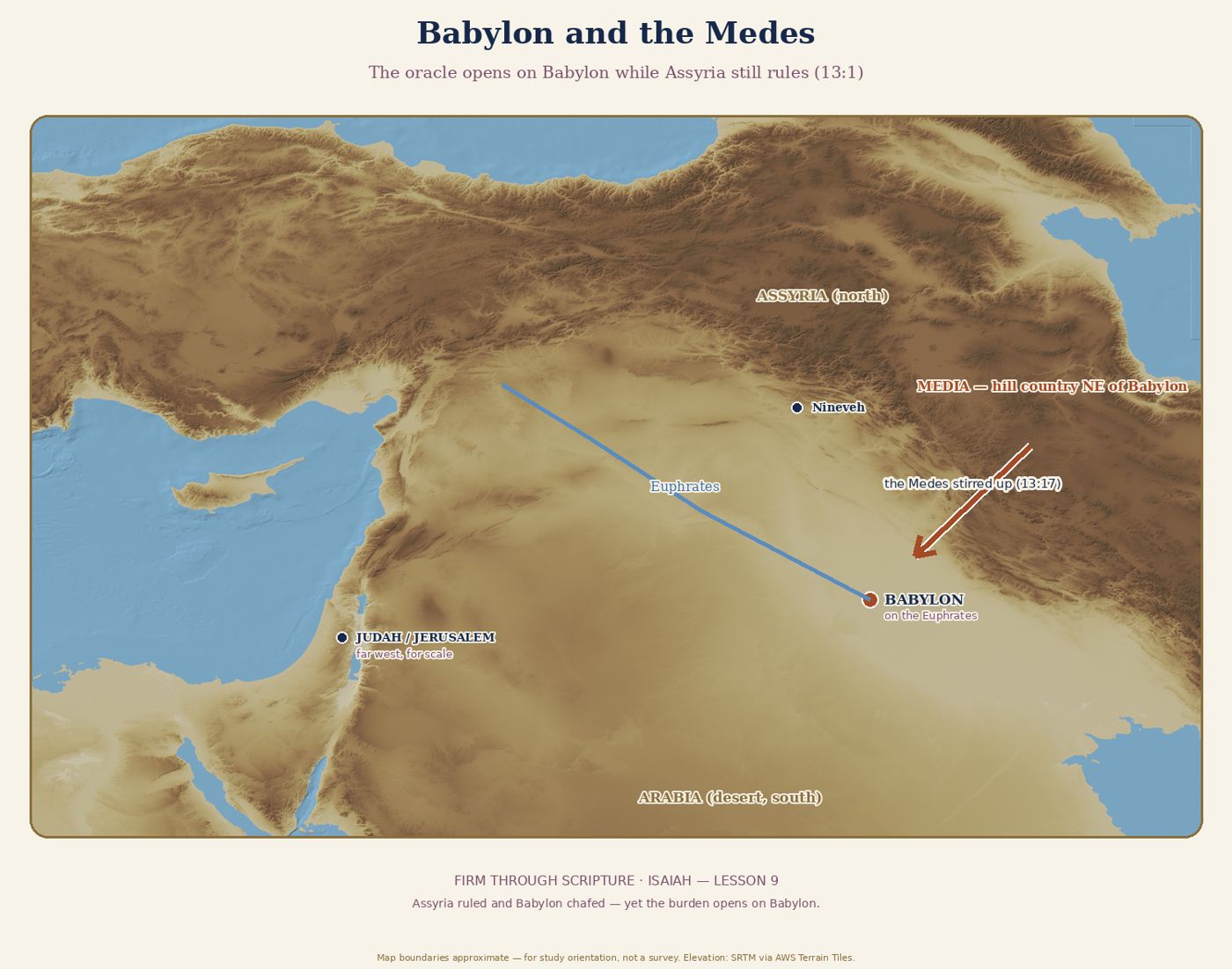
Say that plainly, because this lesson will not hide it: this oracle's horizon runs past Isaiah's century. Its superscription is a FACT of the text: "The burden of Babylon, which Isaiah the son of Amoz did see" (13:1) 1. The book itself puts Isaiah's name over these words. The oracle also names its instrument: "I will stir up the Medes against them" (13:17). The Medes were a people of the hill country north-east of Babylon, in what is now western Iran; in the event, Babylon fell in 539 BC to the rising Medo-Persian power under Cyrus, a fall recorded in the Babylonian Chronicle tradition as well as in Scripture [25, 30]. That is also FACT as far as the records go. What scholars dispute is what to make of the distance. The critical INFERENCE — at full strength — is that an oracle so exactly fitted to Babylon's rise and fall reads most naturally as coming from an exilic or post-exilic setting, close to 539 BC: on that view, the oracle as we have it took shape among people already living inside the events. That inference is DISPUTED; it rests in part on a prior judgment about whether a prophet can be shown a city's fate a century and a half ahead — a philosophical premise, not a discovery anyone dug up [9, 10]. This study's POSITION — the program's settled reading, labelled as such — is Isaiah's witness read whole: the book's own claim is that Isaiah saw this, its far sight is the point, and verse 17's naming of the Medes is exactly the sort of specific, checkable detail that claim stakes itself on. Hold all three labels at once. Go Deeper (§16) argues the case in the open.
The other peoples in the passage, briefly, so no name strands you. The Arabian of verse 20 is a desert traveller of Arabia, south and east of Judah, who pitched tents where caravans stopped; the shepherds of the same verse folded their flocks wherever pasture allowed. If even they will not use Babylon's site, the place is emptier than empty. Jacob in 14:1 is not just the long-dead patriarch; his name stands for his descendants, the people of Israel. Strangers are non-Israelites, Gentiles, who will be "joined" to Jacob's house — hold that surprise for §7. Philistia (14:28–32), called "whole Palestina" in the KJV, is the land of the Philistines, Israel's old coastal neighbours to the south-west — Goliath's people, centuries before. It is an ancient place-name; do not import any modern map or modern conflict into it. Zion is Jerusalem's hill, and by extension Jerusalem itself and God's people gathered there — the city God founded, set against every city men found for their own glory.
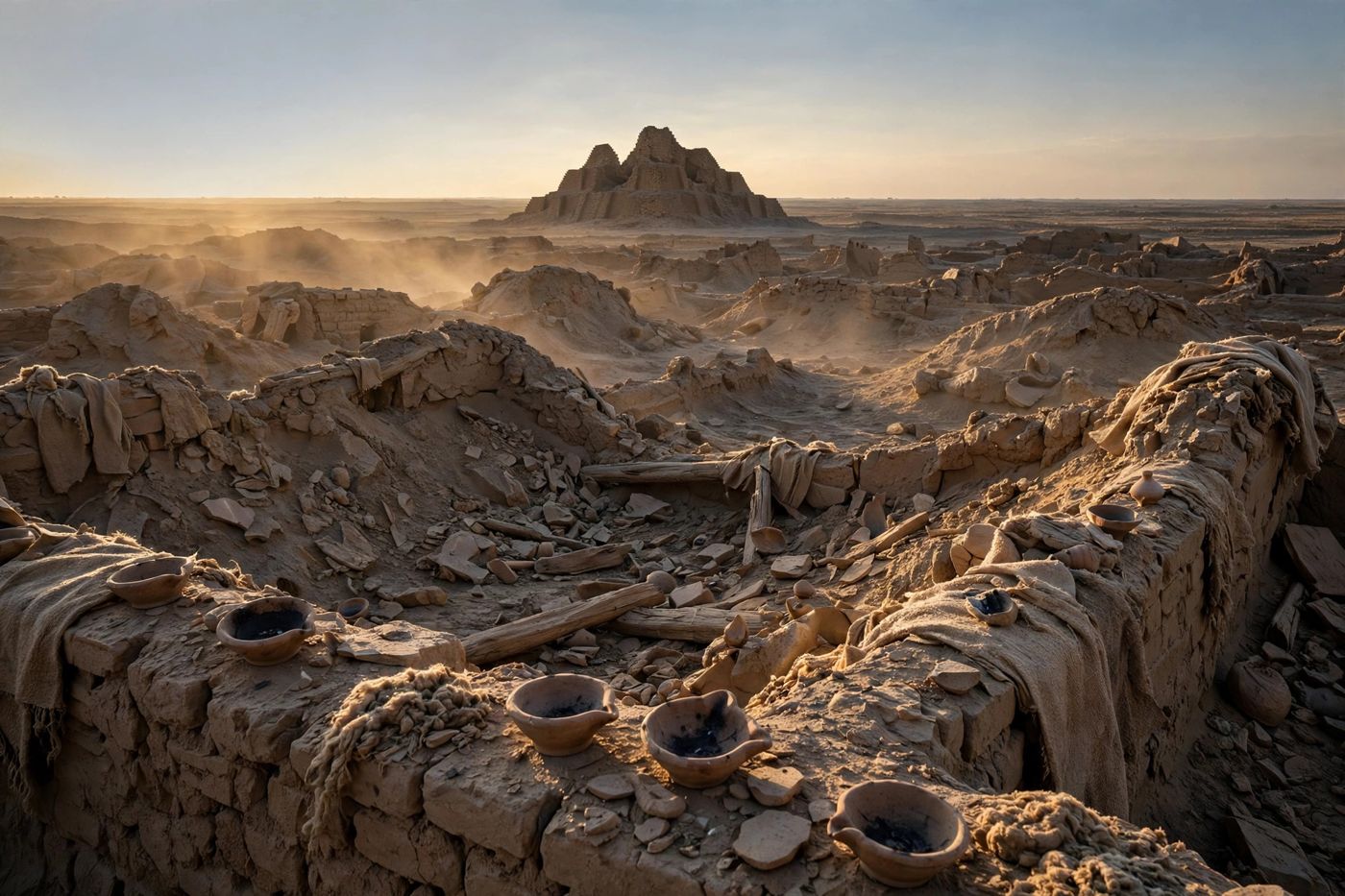
One last piece of the world: empires fell slowly, even when their capitals fell fast. Babylon's fall in 539 BC was sudden as a political event — the Chronicle tradition gives it a date and a conqueror [25, 30]. But a great city does not vanish the morning after. Babylon lived on under Persian rule, diminished; later rulers used it and let it slide; over centuries it dwindled until the site was, as later ages found it, ruin-mounds beside an empty plain [16, 32]. Keep that long dwindling in your pocket. You will need it in §7 and §10, when this lesson handles verses 20–22 honestly instead of flattening them into a claim they never quite make.
That is the world. Now we open the text itself.
3. OBSERVE — O: what the text actually does
Before meaning comes observation. Most bad interpretation is not deep error; it is shallow reading — people answering a text they never actually looked at. So look:
- The shape. Fifty-four verses in four movements. First, the burden against Babylon (13:1–22) — the whole of chapter 13. Second, a turn inside the Babylon oracle: mercy for Jacob, and Israel's taunt-song over Babylon's king (14:1–23). Third, a short, sworn oracle against Assyria (14:24–27). Fourth, a dated oracle against Philistia (14:28–32).
- The title word. "Burden" opens 13:1 and returns at 14:28. Watch it; chapters 13–23 will keep using it as the title over oracle after oracle. §5 takes it apart.
- The light goes out in order. Verse 10 of chapter 13: stars and constellations withhold their light, the sun is darkened "in his going forth," the moon will not shine — the whole sky's inventory, named and switched off. Hold the wording; Jesus will pick this language up (§6).
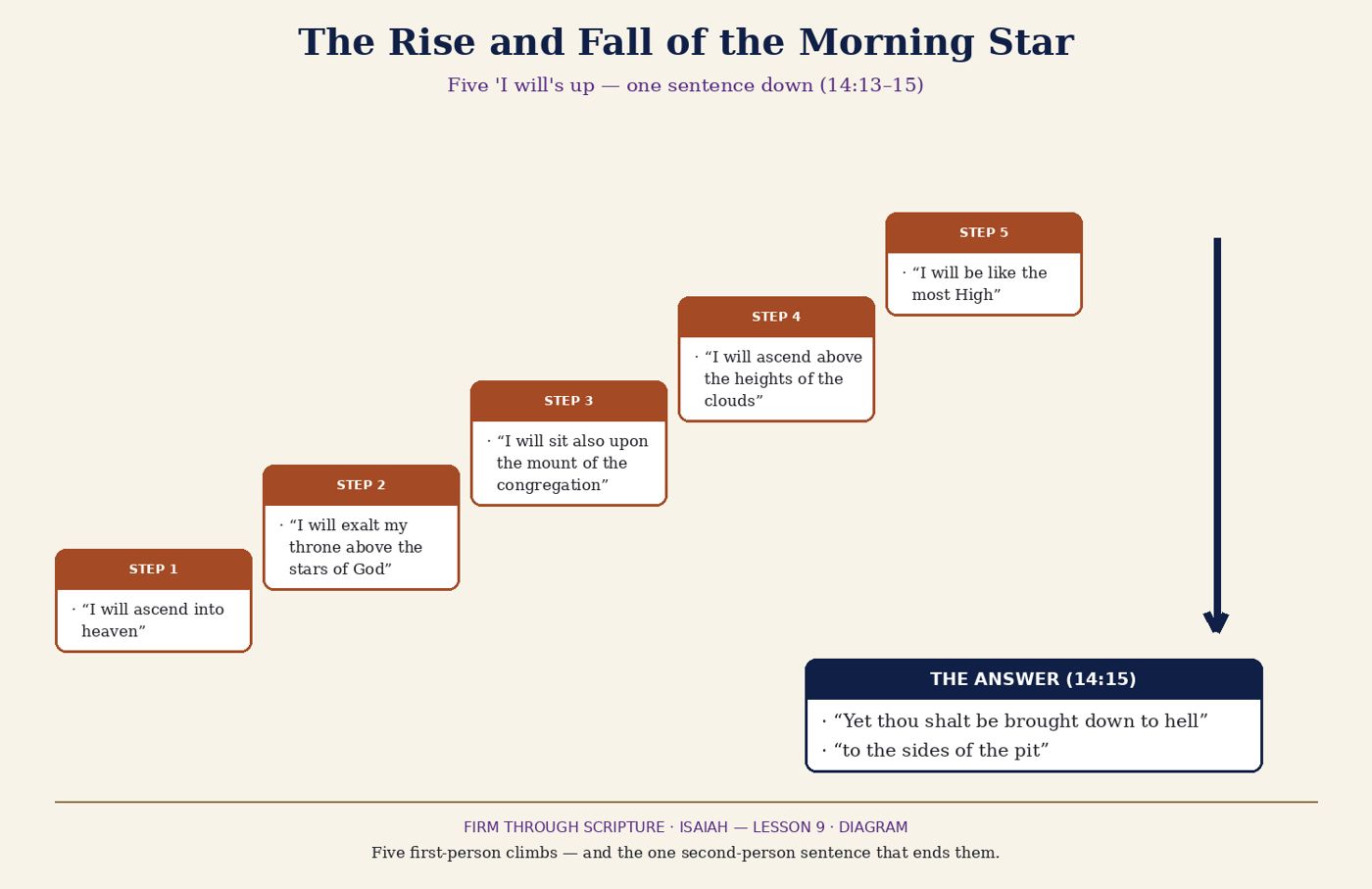
- Count the "I will"s. In 14:13–14 the king's heart speaks five times in the first person: I will ascend, I will exalt, I will sit, I will ascend, I will be like. Then one answering sentence undoes all five: "Yet thou shalt be brought down" (14:15). Five climbs, one fall. The arithmetic is the sermon, and Visual 3 draws it.
4. GENRE — N: note the genre (oracle against a nation, carrying a taunt-song)
The governing form here is the oracle against a nation — a recognised prophetic genre in which God addresses a foreign power directly, announces his judgment on it, and usually names its sins and its end [4, 10]. Amos, Jeremiah (chapters 46–51), Ezekiel (chapters 25–32), and Nahum all use it; Isaiah 13–23 is its longest Old Testament run. Inside this lesson's oracle sit two smaller forms you should be able to spot: a day-of-the-LORD announcement (13:6–13), in which a coming day of God's intervention is described in cosmic language, and a taunt-song (14:4–23) — a mocking song sung over a fallen tyrant, the ancient equivalent of singing at an enemy's funeral in his own parade music. Prophecy here is forthtelling first 4: even when it reaches far ahead, it is spoken into its first hearers' present — to teach Judah how to read the empires around her now.
The genre reads by its own rules:
- Oracles against nations are addressed to the nation but preached for God's people. Babylon never filed this oracle in its archives; Judah heard it and kept it. Ask first not "what did Babylon learn?" but "what was Judah meant to believe about God, empire, and her own future, hearing this?"
- Poetic judgment language works in the imagery of its world — at full seriousness, not at literal flatness. Stars withholding light, trees rejoicing, dead kings rising from thrones to gossip: this is Hebrew prophetic poetry saying enormous things in pictures. The pictures are not decorations on a plainer claim; they are the claim, in the register the genre uses. Neither flatten them into newspaper prose nor dissolve them into "mere symbolism" that costs nothing.
- A taunt is sung over someone specific. The song names its addressee in its first line — "against the king of Babylon" (14:4). Whatever further applications later readers find (§7, §16), the genre fixes the first address. A taunt detached from its named target and turned into a free-floating biography of someone else has broken its genre before it has said anything else.
5. TERMS — T: the words in the writer's mouth
Three words and one title carry this passage, and one of them has carried two thousand years of extra luggage. Take them in the passage's order:
-
Massa' (mas-SAH), "burden" (13:1; 14:28) — from a Hebrew root meaning to lift or carry. As an oracle-title it names a prophetic utterance that is lifted up — pronounced — and also, by a wordplay Hebrew hearers would feel, a load laid on the prophet to carry and on the nation to bear 19. This is its first appearance as the running title of Isaiah's oracles section; chapters 15, 17, 19, 21, 22, and 23 will each open a new "burden" over a new nation [4, 10]. Read it: a heavy word, carried by the prophet, laid on the named people. It is a genre label, not a mood.
-
"The day of the LORD" (13:6, 9) — you met this phrase at length in Lesson 02 (on Isaiah 2), and this lesson does not re-teach it; cross-reference that study. Briefly: it is the Bible's name for a day when the LORD intervenes openly in judgment and salvation, humbling pride. Here the new thing is its address: the day Lesson 02 aimed at proud men in Judah is now aimed at Babylon. The day of the LORD is no respecter of passports.
- Mashal (mah-SHAHL), "proverb" (14:4) — a proverb, parable, or byword; here, specifically, a taunt-song. Israel is to "take up" this mashal — pick it up and sing it — the way a people takes up a song everyone knows the tune to 19. A proverb is compressed and memorable, built to be repeated by ordinary mouths. This judgment was meant to be hummed by the delivered, not filed by scholars.
- Helel ben-shachar (heh-LEL ben shah-KHAR), "Lucifer, son of the morning" (14:12) — literally, "shining one, son of dawn." Helel is a shining one — almost certainly the morning star, the planet Venus, which blazes in the dawn sky brighter than any star and is then swallowed by the sunrise [19, 20]. The image, before any theology touches it, is astronomy everyone could watch: the brightest light in the morning sky, gone by full day. §7 and the Translation Note handle what later tradition made of the name, and in what order you should receive it.
Method note — the word-study guardrail: a word means what its author uses it to mean, in its sentence, in its century — not what later centuries loaded onto it. That guardrail matters more in this lesson than in any so far, because "Lucifer" arrives carrying a name and a mythology the Hebrew words themselves do not state. Let Isaiah's sentence speak first; then, honestly labelled, hear the church's echo. The order is the whole discipline.
TRANSLATION NOTE — "Lucifer": a Latin word standing in your English Bible
Your KJV reads, "How art thou fallen from heaven, O Lucifer, son of the morning!" (14:12). Underneath "Lucifer" stands the Hebrew helel — "shining one," the morning star. So where did a Latin word come from? FACT: when Jerome translated the Bible into Latin (the Vulgate, around AD 400), he rendered helel with the ordinary Latin word for the morning star, lucifer — literally "light-bearer" [19, 37]. FACT: the early English translators, the KJV's makers among them, carried that Latin word straight into English as a name rather than translating it. Most modern translations translate instead: "morning star," "Day Star," "shining one." Neither choice is a conspiracy — but they feel different, and the feeling has consequences: a translated phrase reads as a picture of Babylon's king in a taunt-song, which is what the Hebrew is doing; an untranslated Latin name reads as a person's proper name, which invites readers to go looking for his biography. A large part of §10's first misread grows in exactly that gap. This study prints the KJV, teaches the Hebrew underneath it, and keeps the two in that order.
6. ENTIRE CANON — E: where this passage sits in the whole story
No oracle lives alone. Isaiah 13–14 is a knot where threads from Genesis to Revelation cross:
-
Back to Sodom — and forward from it. Babylon "shall be as when God overthrew Sodom and Gomorrah" (13:19). Genesis 19 is the Bible's first total city-judgment; Isaiah reaches back for it as the measuring rod 1. The line runs forward too: when Revelation names the final world-city drunk on its own glory, it takes up Babylon (Revelation 17–18), and its cry that fallen Babylon has become a haunt of unclean creatures echoes Isaiah 13:21–22's beasts in the palaces 1. Isaiah's Babylon becomes the Bible's standing name for human empire at its proudest and its end.
-
Jesus takes up the darkened sky. Look at 13:10 — stars withholding light, sun darkened, moon not shining — then hear Jesus describing the last day: the sun darkened, the moon not giving her light, the stars falling, in Matthew 24:29, with parallels in Mark 13 and Luke 21 1. Jesus is not quoting Isaiah 13 word for word; he is speaking in its language, the recognised prophetic vocabulary for God's final intervention. That is FACT about the texts — the shared imagery is on the page. The judgment Isaiah pronounced on one empire's day becomes, in Jesus' mouth, the pattern of the Day: every local day of the LORD is a rehearsal and a pledge of the final one. (The phrase itself is cross-referenced to Lesson 02, which owns it.)
-
Two parallels to the fall — noted as parallels, not proofs. Ezekiel 28 laments Tyre's king in Eden-and-mountain language that rises past its human addressee, and in Luke 10:18 Jesus says, in falling-light language, that he beheld Satan fall from heaven 1. Both passages' own addressees stand as written — a human king, a saying about Satan — and the resemblance between them and Isaiah 14:12 is part of why the church joined them (§7). A parallel is evidence of a pattern, not a proof of a third person's biography.
7. THE MEANING — what the passage teaches
The Walk has established what the text says and where it sits. Now its payload, taught straight — the doctrines this passage actually carries, in its own proportions: a whole chapter on Babylon's day, a mercy, a song, a sworn purpose, and a word to Philistia.
God musters the armies that think they muster themselves
The oracle's first doctrine is about who is actually in command of history. An invasion is coming on Babylon from "a far country, from the end of heaven" (13:5), and God speaks of the invaders as his own staff: his "sanctified ones" (13:3), set apart for his work, called "for mine anger." Set apart does not mean morally approved. It means conscripted. The commentaries across the spectrum read the scene the same way: a real human army, with real ambitions of its own, doing in history exactly what God has purposed — and answerable to him for its own cruelty as it does it (13:16–18 does not flinch from describing that cruelty) [2, 4, 10]. Isaiah taught this before — Assyria was "the rod of mine anger" in Lesson 07. Empires are instruments before they are anything else; they are never autonomous. A people who know their God musters the nations can fear an army without worshipping it.
The day of the LORD — near, cruel, and aimed at pride
"Howl ye; for the day of the LORD is at hand" (13:6). At hand — the oracle does not file Babylon's day in a distant, harmless future. It comes "as a destruction from the Almighty" (13:6); hands go faint, hearts melt, faces become "as flames" (13:7–8); it comes "cruel both with wrath and fierce anger, to lay the land desolate" (13:9). The pain is compared to a woman in labour (13:8) — pain with something on the other side of it, though Babylon will not live to enjoy what her fall makes room for. Jacob will (14:1). And the day's target is named with precision: "I will punish the world for their evil… and I will cause the arrogancy of the proud to cease, and will lay low the haughtiness of the terrible" (13:11). Not strength, not size, not foreignness — arrogancy, pride organised into power. Its result: a man made "more precious than fine gold" (13:12), human life so thinned that a survivor is rarer than Ophir's finest gold; heaven shaken and earth removed "out of her place" (13:13); and a world-city's mixed peoples scattering, each "to his own people" (13:14).
As Sodom: Babylon uninhabited — taught with the long, honest timeline
The day's target, in the text's own fragments: "I will punish the world for their evil" — "I will cause the arrogancy of the proud to cease" (13:11).
Now the passage's hardest historical claim, taught the way honest reading requires: text first, timeline second, labels on. The text (13:19–22): Babylon will be as Sodom's overthrow; "it shall never be inhabited, neither shall it be dwelt in from generation to generation"; no Arabian tent, no shepherd's fold; instead wild beasts lying in the houses, owls in the dwellings, creatures crying in "pleasant palaces" — "and her time is near to come, and her days shall not be prolonged." A capital city reverted to wilderness, palace by palace [10, 16].
The timeline (§2): Babylon fell politically in 539 BC to Cyrus's Medo-Persian power [25, 30]. She did not become an empty ruin that year, or that century. She continued, smaller, under Persian and then Greek rule, and her long decline ran on for centuries before the site was effectively abandoned [16, 32]. So sort the claims, because muddling them helps no one:
- FACT: the text prophesies Babylon's permanent desolation in the strongest available terms — never inhabited, generation to generation.
- FACT: Babylon fell in 539 BC and then dwindled, over a very long period, into abandonment; the great city of verse 19 has never again existed as a living capital on that site.
- INFERENCE: how the strongest terms and the long timeline fit is an interpretive judgment. Readers who stress the genre (§4) note that prophetic desolation-oracles speak in the totalising poetry of their form, and that a decline this complete — glory of kingdoms to unpeopled ruin-mounds — is the substance the poetry was reaching for. Readers who stress a sudden, single-moment fulfilment are left with a timeline the records will not give them.
- What this study will not do is flatten the matter in either direction: it will not turn verses 20–22 into a tour-guide claim ("stand here today and verify, tent by tent") that the long history complicates, and it will not call the prophecy failed because its fulfilment took the shape of centuries rather than a newsreel. §10 gives the second error its full verdict.
The turn: "the LORD will have mercy on Jacob"
Read chapter 14's opening slowly, because after a chapter of wrath it can slip past too fast. "For the LORD will have mercy on Jacob, and will yet choose Israel, and set them in their own land" (14:1). Mercy — not wages. Yet choose — choose again, in full knowledge of everything chapters 1–12 said about this people's rebellion. Set them in their own land — the exile this same prophet predicts is answered, inside the very oracle that predicts Babylon's fall, by a homecoming. The God who musters Babylon's destroyers is not finished with Jacob when Babylon is finished with Jacob. He has scheduled mercy on the far side of a judgment he himself announced.
And mercy, here, has company: "the strangers shall be joined with them, and they shall cleave to the house of Jacob" (14:1). Cleave is covenant language — the word for a husband cleaving to his wife in Genesis 2, for Israel cleaving to her God in Deuteronomy. Strangers do not merely admire Jacob's deliverance from a distance; they attach themselves to God's people, voluntarily, in covenant loyalty. Verse 2 then turns the ancient world upside down: Israel shall "take them captives, whose captives they were; and they shall rule over their oppressors." Read it as reversal-poetry: the power-relation that defined the exile is broken and inverted, definitively. Isaiah states it in the blunt political vocabulary of his century; the enduring claim is not a licence for God's people to become oppressors in their turn (this same book judges Judah for that spirit), but this: oppression is not the last word over Jacob [2, 4]. The day "that the LORD shall give thee rest from thy sorrow, and from thy fear, and from the hard bondage" (14:3) is the day the next section's song becomes singable.
The taunt-song: a tyrant received in the grave
The song (14:4–23) is the literary centre of the lesson, and it is merciless — deliberately, musically merciless. Its first cry is relief: "How hath the oppressor ceased! the golden city ceased!" (14:4). The LORD "hath broken the staff of the wicked, and the sceptre of the rulers" (14:5) — the working tools of rule, snapped. The king who "smote the people in wrath with a continual stroke" is now himself "persecuted, and none hindereth" (14:6) — hunted, with no ally stepping in. Cruelty had purchased no loyalty that outlasted his power.
Then creation joins the choir. "The whole earth is at rest, and is quiet: they break forth into singing" (14:7). Even the trees sing: "the fir trees rejoice at thee, and the cedars of Lebanon, saying, Since thou art laid down, no feller is come up against us" (14:8). Lebanon's cedars were the ancient world's prestige timber, felled by every empire for temples and ships 16. In the song, the logged mountains breathe again: empire's fall is rest for the earth as well as for peoples.
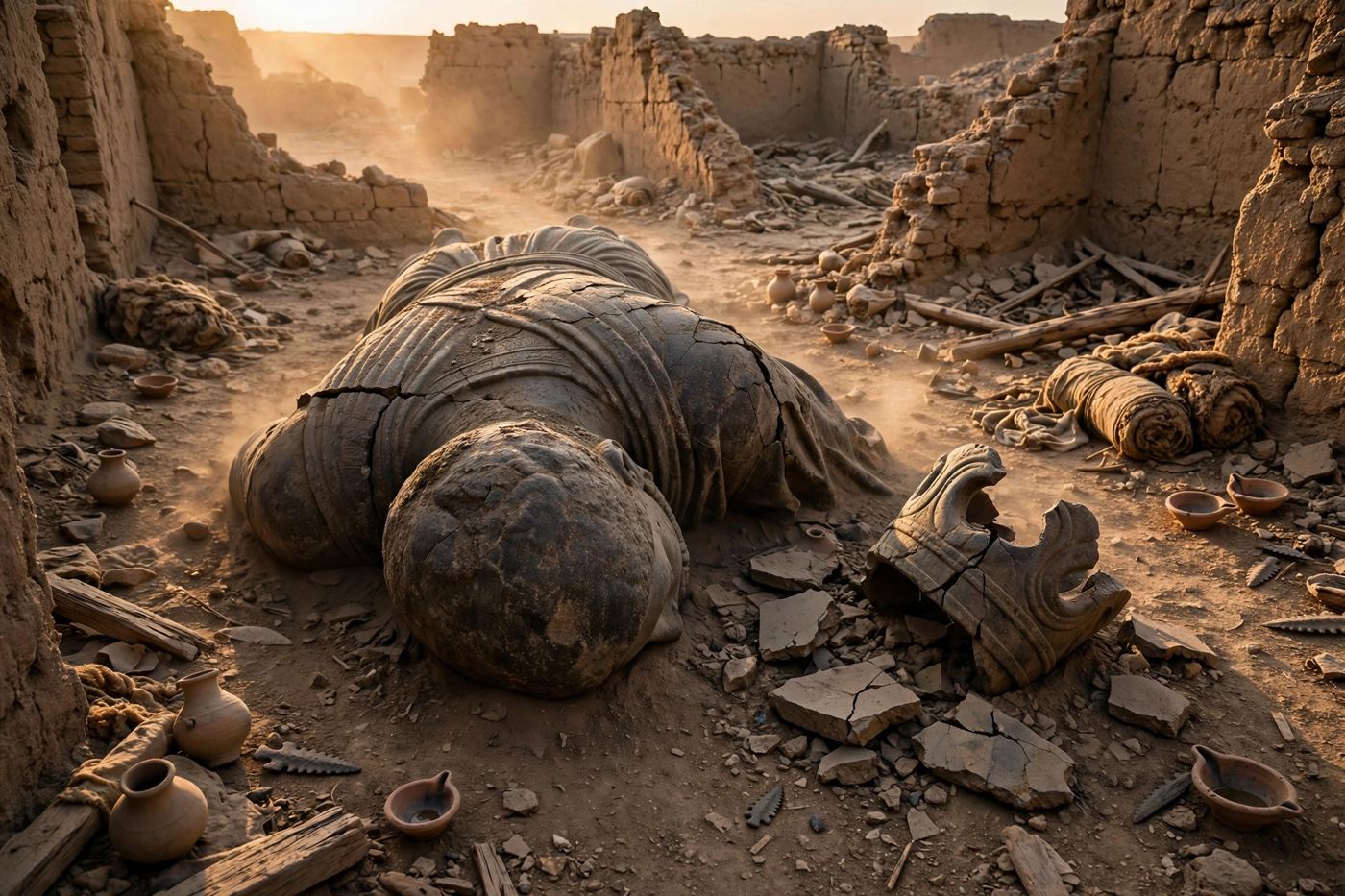
Then the camera drops below the earth. "Hell from beneath is moved for thee to meet thee at thy coming" (14:9). The KJV's "hell" here renders Sheol, the realm of the dead in Hebrew thought. And Sheol, in the song's theatre, is excited: it "stirreth up the dead" for the new arrival, raises the kings of the nations from their thrones, and they say the devastating line together: "Art thou also become weak as we? art thou become like unto us?" (14:10). Not "you were wicked" — they were too — but "you are ordinary now." The pomp is "brought down to the grave," his court's music silenced, and royalty receives its true bedding: "the worm is spread under thee, and the worms cover thee" (14:11). A bed of worms beneath, a blanket of worms above — the image the song wants in your memory the next time any throne looks eternal.
The morning star — in its own context first, then with the church's echo, labelled
Everything in this lesson has been walking toward this centre — and the centre demands the course's discipline at its strictest, because no passage in Isaiah has been read past more often than this one. So: context first, in the text's own words, before anything else is allowed to speak.
First, the taunt's addressee is Babylon's king. The song says so before it starts: Israel shall "take up this proverb against the king of Babylon" (14:4). It confirms it after the famous verses, when the onlookers bend over the fallen figure and say, "Is this the man that made the earth to tremble, that did shake kingdoms?" (14:16–17). The man. The "thou" of verses 12–15 is, in the text's own framing, a human king of Babylon — the empire personified in its monarch, as the "golden city" (14:4) already showed. FACT — that is what the passage's own frame states, and the commentaries across the spectrum read the song's first address there [2, 4, 9, 10].
Second, what verses 12–15 say to that king. "How art thou fallen from heaven, O Lucifer, son of the morning!" — and, in the same breath, "cut down to the ground, which didst weaken the nations!" (§5 gives the Hebrew: shining one, son of dawn — the morning star.) The picture is Venus at sunrise: no light in the dawn sky shines brighter, and none vanishes more completely when true day arrives. So with this king. His inner speech is quoted — the passage's only interior monologue — in five first-person climbs (14:13–14, counted in §3): ascend into heaven; exalt his throne above the stars of God (stars, in ancient poetry, for heavenly beings and glory itself); sit on the mount of the congregation, in the sides of the north — the far north being, in Isaiah's neighbours' world, the mountain where the gods were thought to assemble 16; ascend above the clouds; and, at the top, "be like the most High." The ambition is not merely to rule the earth. It is to occupy God's place. So the answer is a reversal of direction: "Yet thou shalt be brought down to hell" — "to the sides of the pit" (14:15) — from the sides of the north to the sides of the pit in one sentence. The disgrace runs past death: unlike "all the kings of the nations," who "lie in glory, every one in his own house" — his own tomb — this king is "cast out of thy grave like an abominable branch," unburied (14:18–20), because he "destroyed thy land, and slain thy people." His line is cut off with him (14:20–21), and God closes the song over Babylon itself: cut off "the name, and remnant, and son, and nephew," and sweep the site "with the besom of destruction" (14:22–23) — the besom is a broom: God sweeping Babylon out like dust, until marsh birds possess her pools. That is the passage, in context, complete. It needs nothing added to be devastating.
Third — and only third — the church's long further reading, honestly labelled. From its early centuries, the church has heard more in verses 12–15 than Babylon's king: it has heard the fall of Satan himself — the radiant created being whose pride cast him down, and whose pattern every earthly tyrant copies [36, 37]. That reading is POSITION — the church's traditional application, held by the great majority of preachers across the centuries — and it rests on real supports: Jesus' own "I beheld Satan as lightning fall from heaven" (Luke 10:18) gives the New Testament a fall of Satan in falling-light language 1; Ezekiel 28's lament rises into Eden-and-mountain language that strains past its human addressee in a similar way (§6) 1; and the pattern-fit is exact — Satan's career in Scripture is the five "I will"s. But those supports make the church's reading a serious, defensible application and tradition; they do not rewrite the taunt's first address, which the text fixes on Babylon's king (14:4, 16). Parallels are not proofs. This study receives the church's reading gratefully, as the church's reading — and refuses, in §10, both to proof-text a devil-biography out of a taunt-song and to scold the church for hearing an echo Jesus' own words made it hard not to hear.
The sworn purpose: Assyria now, and no hand can turn his back
The oath in one fragment: "The LORD of hosts hath purposed, and who shall disannul it?" (14:27).
The passage then pivots to the empire outside Judah's door today — and swears an oath. "The LORD of hosts hath sworn" — "as I have thought, so shall it come to pass; and as I have purposed, so shall it stand" (14:24). The purpose, in fragments: "I will break the Assyrian in my land" — tread him under foot on God's mountains — until "his yoke depart from off them" (14:25). Assyria will be broken not in Assyria but in God's land, on God's mountains, and her yoke will come off. Then the widest line in the lesson: "This is the purpose that is purposed upon the whole earth" (14:26) — and then the two questions no one answers: "who shall disannul it?" and, of his stretched-out hand, "who shall turn it back?" (14:27). Two rhetorical questions, one answer: no one. History is not a contest God might lose. Chapters 36–37 will watch this oath meet Sennacherib in the field (Lesson 18) — and hold.
Philistia: rejoicing too soon, and the poor at rest in Zion
The last movement is short, dated, and sharp. "In the year that king Ahaz died was this burden" (14:28) — Ahaz, the frightened king of Lesson 05, is dead, and a burden comes for Philistia. Her temptation is celebration: "Rejoice not thou, whole Palestina, because the rod of him that smote thee is broken" (14:29). The commentators divide over which rod the verse pictures — an Assyrian king whose death eased the pressure, or the Davidic power that had historically smitten Philistia — and that identification is DISPUTED; the warning's shape is not, because the verse completes itself: "for out of the serpent's root shall come forth a cockatrice, and his fruit shall be a fiery flying serpent." A cockatrice, in the KJV's English, is a venomous serpent — here a Hebrew word for a deadly snake. The picture is a family tree of snakes: you rejoice that the stick that beat you broke, but the root it grew from is alive, and what comes out of it next has wings and venom. Do not throw a party over a broken rod while the serpent's root is still in the ground. The threat will come "from the north" as smoke (14:31), and her cities are told to howl because she is "dissolved," melted away.
But Philistia's oracle ends not on Philistia. Messengers will ask what answer to take back, and the answer is a doctrine: "That the LORD hath founded Zion, and the poor of his people shall trust in it" (14:32). God founded Zion — she is not a human achievement like Babylon, to be swept out with a broom; she has a Founder. And in founded Zion, "the firstborn of the poor shall feed, and the needy shall lie down in safety" (14:30) — the most exposed people in any empire's path, feeding and lying down like sheep safe with a shepherd. Set the two cities side by side and you have the passage's whole theology in urban form: Babylon — built by pride, swept to marsh-pools; Zion — founded by God, with the poor at rest inside her.
The Christ Thread
This passage names no Messiah, and this study invents none. But the canon itself draws threads from here to Christ. First, the language of the last day: Jesus takes up Isaiah's darkened-sky vocabulary for his own coming (Matthew 24:29, §6) — the judgment-pattern pronounced on Babylon reaches its fullness at his appearing 1. Second, the fall pattern: the shining one brought down, and Satan falling like lightning in Jesus' own saying (Luke 10:18), meet in the church's reading traced above — Christ is the one in whose ministry that fall is already visibly happening, and at whose cross and return it is completed. Third, the mercy and the rest: the God who "will have mercy on Jacob" and joins strangers to his house does both, finally, in Jesus — in whom Jacob's children and cleaving strangers become one people — and the rest promised to Zion's poor (14:3, 30, 32) is rest Christ himself offers in his own voice. Canon-drawn threads, stated as such — not symbols forced onto a taunt-song.
The Long View — what the church has believed
Stand back and notice how the centuries have read this passage. On Babylon's oracle, the church ancient and modern has read a real word against a real city, fulfilled in her fall and long desolation, and — through Revelation's reuse — the pattern of every God-opposing world power's end [36, 37]. On the morning star, the historic reading has been remarkably settled: from the early fathers through the Reformers, Isaiah 14:12–15 was read, beyond its first address to Babylon's king, of Satan's fall — Jerome and Calvin alike stand in that stream, while still expounding the song against its Babylonian king in context [36, 37]. That double reading — context and further application, held together — is the historic norm; the insistence that you must choose only one is the modern invention, on whichever side it appears. Where the centuries have honestly differed is the composition question (§2, §16): the historic church read the whole book as Isaiah's; critical scholarship has commonly assigned oracles like this one to later settings, and evangelical scholars have answered with the unity case [2, 9]. The centre has never been in dispute: the proudest power on earth is on a clock, God's purpose stands, and his poor rest.
That is the payload. The next section compresses it into the one sentence you are meant to carry out of this study.
8. THE AIM SENTENCE — X: eXplain the intent
Everything observed now compresses into one sentence — the author's intended meaning, stated before any application is allowed near it:
Isaiah opens the oracles against the nations with Babylon to teach God's people that the LORD of hosts has purposed the fall of every proud empire — Babylon's shining king brought down to the pit, Assyria broken, Philistia warned — and that same sworn purpose is mercy for Jacob, a home for cleaving strangers, and rest for the poor in the Zion God himself has founded.
If a sermon, a post, or a devotional uses Isaiah 13–14 to say something that cannot be traced back to that sentence, it is not this passage talking. That is the whole skill this course exists to build — and the next section is where you watch it work.
9. SAY IT BACK
Close the book and say the AIM sentence from section 8 in your own words — out loud, or written in your notes, without looking. Then say, in one more sentence, what it asks of you this week.
If your version quietly changes the meaning — if Babylon's fall becomes only "bad nations get punished," or the morning star swallows the whole lesson, or Jacob's mercy and the poor's rest drop out — open the lesson and walk it again. This exercise feels small. It is the entire course in miniature: meaning first, in the author's words become your words, then — and only then — your life.
10. THE MISREAD — the guardrail, with verdicts
Three live misuses of this passage. Each gets a fair hearing, the evidence, and a verdict.
Misread 1: "Isaiah 14:12 is a free-standing biography of Satan's fall — 'Lucifer' is Satan's name and history, and verses 12–15 are simply his story." Why it sounds right: the KJV prints "Lucifer" as what looks like a proper name (§5's Translation Note shows how that happened); the language soars past ordinary human boasting; Jesus himself speaks of Satan falling from heaven (Luke 10:18); and the church has connected these verses to Satan for most of its history. The evidence: the passage fences its own address twice, before and after. Before: Israel shall "take up this proverb against the king of Babylon" (14:4). After: the onlookers say over the fallen figure, "Is this the man that made the earth to tremble?" (14:16). The Hebrew underneath "Lucifer" is helel ben-shachar, "shining one, son of dawn" — a morning-star picture, not a personal name [19, 20]. A reading that deletes the frame and keeps only the soaring middle has not interpreted the song; it has excerpted it. But the opposite error is just as live: the reader who, armed with the context, scolds the church for ever hearing more in these verses has ignored Jesus' lightning-fall saying, the Ezekiel 28 parallel, and eighteen centuries of the church's double reading (§7) [36, 37]. Context fixes the first address. It does not gag the echo. Verdict: context first, echo labelled. Verses 12–15 are, in their text, a taunt over Babylon's king; the church's further reading of them for Satan's fall is POSITION — honoured tradition resting on real parallels — and it must be taught as that, neither proof-texted into a devil-biography the text never wrote, nor mocked out of the pulpit the text built.
Misread 2: "Babylon was never actually emptied the way 13:20 says — people lived there for centuries after 539 BC — so this prophecy failed." Why it sounds right: the timeline is real (§7). Babylon taken in 539 BC remained inhabited, diminished, for a long time afterward; Alexander found a city there, not a beast-haunted ruin. Verse 20's "never be inhabited" is as strong as language gets. The evidence: first, the end of the story: the glory of kingdoms did cease to exist as a living city — dwindled through Persian, Greek, and later centuries into abandonment and ruin-mounds, which is where the record leaves her [16, 32]. A prophecy of a great capital's permanent end, fulfilled across a long unmaking, is not a prophecy that nothing happened. Second, the genre (§4): desolation-oracles speak in the totalising poetry of their form — the same form in which trees sing and dead kings chat in this passage — and pressing one line into a dated engineering claim, while reading its neighbours as poetry, is selective literalism. Third, the honest limit: how the strongest terms map onto the centuries-long dwindling is a genuine interpretive question (INFERENCE/DISPUTED, §7). But "the mapping takes work" and "the prophecy failed" are different sentences, and only the first survives the full record: fall dated in the chronicles [25, 30], decline documented, end undisputed. Verdict: not failed — unfolded. Teach the text's claim at full strength, teach the long dwindling beside it, label the mapping an interpretive question, and refuse both the tour-guide flattening and the sceptic's shortcut.
Misread 3: "The oracles against the nations show God hates the nations — judgment for them, mercy only for his own." Why it sounds right: chapters 13–23 are mostly judgment, and this lesson's passage is unsparing — Babylon swept with a broom, Philistia dissolved, Assyria trodden under foot. The evidence: this passage interrupts itself with the refutation. Inside the Babylon oracle — not after it, inside it — "the LORD will have mercy on Jacob… and the strangers shall be joined with them, and they shall cleave to the house of Jacob" (14:1). Gentiles are not only judged in this book; they are joined, inside the section's first oracle. And the section's trajectory finishes the argument: the oracles run on to chapter 27, where (Lesson 13) the book will bless Egypt and Assyria themselves by name. Nor is judgment aimed at foreignness: the sin named at Babylon's centre is arrogancy and haughtiness (13:11) — the same sin Isaiah charged to Judah in Lesson 02, under the same day of the LORD. God is not pro-Judah and anti-world here. He is anti-pride, everywhere, and pro-mercy in the most surprising places — including, in the end, Assyria's. Verdict: the oracles are not God's hatred of nations; they are his judgment on pride in every nation — his own first — with mercy for Jacob and a door open to strangers standing inside the first oracle of the section.
11. FROM WORD TO WALK
A reflection page — the lesson is not finished until the passage has had its say with you.
Sit with the two cities a while, because this passage will not let you leave it as ancient history. Babylon and Zion are two ways of being a person, a family, a church, a career. Babylon says the five sentences: I will ascend. I will exalt my throne. I will sit. I will ascend higher. I will be like the most High. Strip off the ancient costume and the speech is familiar — a heart arranging a life in which it is never brought low: never wrong without an excuse ready, never overlooked without resentment rehearsing its reply, never dependent without quietly despising the dependence. The morning star does not begin as a monster. It begins as brightness that will not accept being a creature — a light that insists on being the sun.
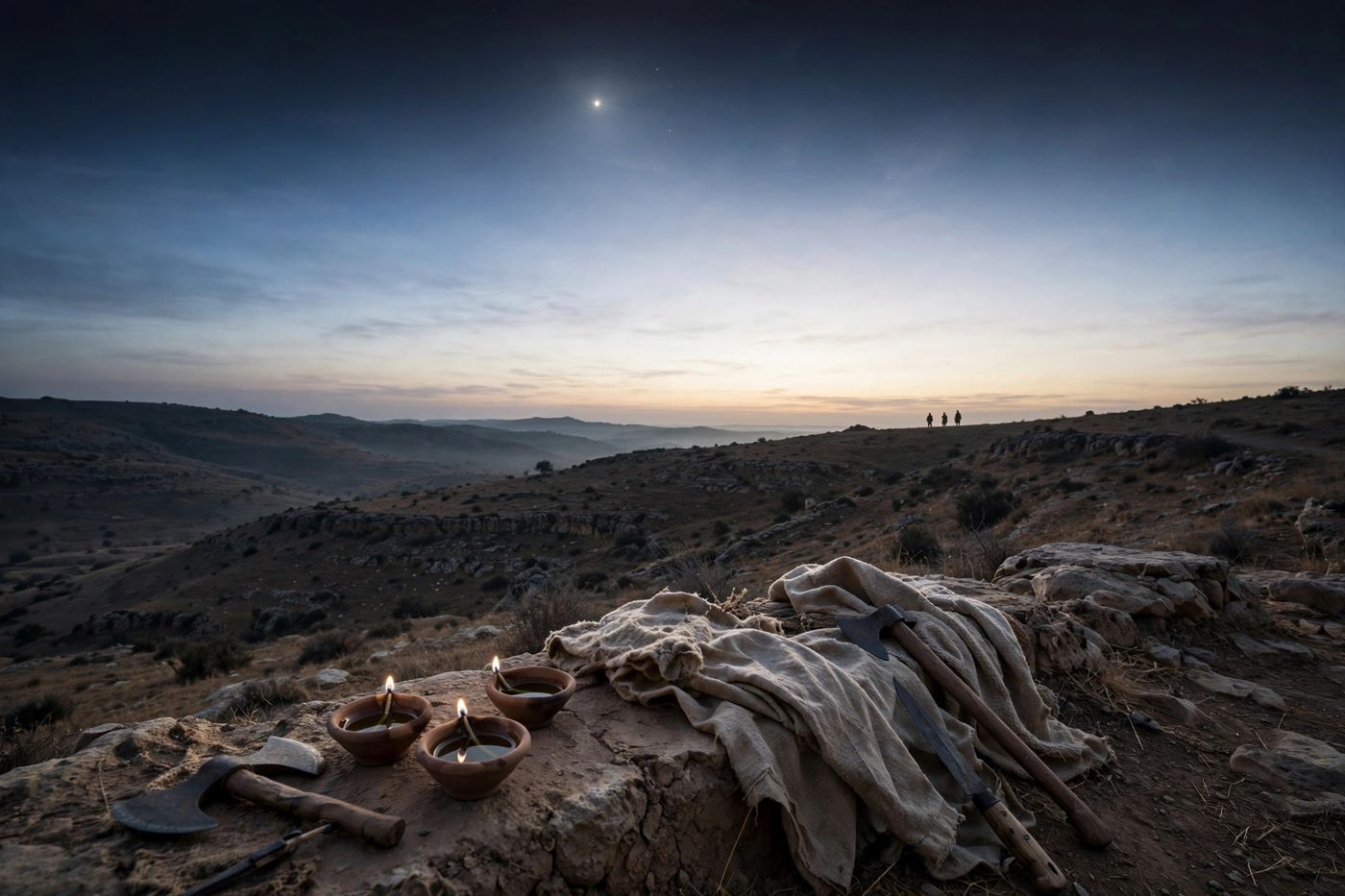
And notice where that road ends. Not in a dramatic duel at heaven's gate. In worms for bedding and a corpse no one buries properly, while people who once shook at his name bend close, squint, and ask, "Is this the man?" The fall of the proud in this song is not mostly thunder. It is smallness revealed. What looked like a star was a man. What looked eternal was a reign. Carry that squint and that question into every news cycle and every feud you will ever watch: God is not nervous about any of them, and you are invited not to be either.
But this page does not end on Babylon, because the passage doesn't. It ends, twice, on rest: the whole earth at rest and singing (14:7); the poor of his people trusting in founded Zion (14:32), the needy lying down in safety (14:30). And between stands the mercy: "the LORD will have mercy on Jacob, and will yet choose Israel." Yet choose — after everything. If you come to this passage as Jacob — God's person, aware of how much of chapters 1–12's indictment could be read over your own life — hear that God does not merely refrain from destroying his people. He chooses them yet. And if you come as a stranger — an outsider to the covenant, reading someone else's family Bible — hear your own invitation printed inside the first oracle of the nations section: strangers shall be joined, shall cleave. The door into Jacob's house is not Jacob's achievement. It is the LORD's mercy, and it stands open in the same chapter as the fall of Babylon.
LORD of hosts — You have purposed, and who shall disannul it? Take the five "I will"s out of my heart one by one, and teach me the poor man's posture instead: lying down in safety in a Zion I did not found. Thank You that Your choosing is mercy, that Your mercy has room for strangers, and that no shining, trembling-making power in heaven or earth outlasts Your word. Let me rest where Your poor rest, and sing where Your earth sings. In Jesus' name, amen.
12. FOR DISCUSSION — OR FOR YOUR JOURNAL
With a group, work these aloud. Alone, they're yours — answer them in your journal or in prayer; they lose nothing in the quiet.
- Babylon was not yet Judah's enemy-superpower when this oracle was given, yet God addressed her end first. What does it do to your fears to know God speaks to the threat that hasn't risen yet — not only the one at the gate?
- Name the five "I will"s of 14:13–14 in your own words. Which rung of that ladder is most tempting in your own life right now — being above correction, being indispensable, being noticed, being your own final authority? Be specific.
- The LORD "will yet choose Israel" (14:1) after everything chapters 1–12 recorded, and strangers are joined to Jacob in the same breath. Where do you need to receive mercy as a gift rather than a wage — and is there a "stranger" you have been slow to believe God could cleave to his people?
- Philistia is warned against rejoicing because a rod is broken while the serpent's root still lives (14:29). Where are you tempted to celebrate too soon — over a problem paused rather than healed, in your life, your family, or the world? And what would resting in founded Zion (14:32) look like instead of either panic or premature party?
13. THE WALK-OUT — T: Transfer to today
Meaning is settled. Now — and only now — application, and it must cross the bridge honestly. Run the five Transfer Tests on this passage:
- Same covenant? The oracles were preached to old-covenant Judah between Assyria's yoke and Babylon's unborn empire; we live on the far side of the cross, among the "strangers joined" this passage promised. So the mercy-and-joining strand reaches us more directly than it reached its first hearers, while the specific political promises to national Israel in her land belong to their setting and are received by us through Christ, not re-addressed to any modern state by this text.
- Same audience? The judgment words are addressed to Babylon, Assyria, and Philistia; the comfort words to Jacob and Zion's poor. Keep the mail in the right boxes: believers receive the comfort and the pride-warning (we are capable of the five "I will"s); no reader is authorised to aim Babylon's doom at personal enemies of their choosing.
- Same genre rules? Oracle and taunt-song: poetry of judgment and reversal, not a political programme. It yields trust, humility, and hope — never a timetable for modern empires, never a licence to gloat. The song is Israel's, sung by the delivered at God's direction; our echo is thanksgiving, not cruelty.
- Repeated or rooted? God's humbling of the exalted: repeated from Hannah's song and Proverbs to Mary's "he hath put down the mighty from their seats" and James's "God resisteth the proud." His purpose standing unannulled: rooted and repeated. Strangers gathered in: rooted in Abraham's promise, repeated to the Bible's last chapter. These cross.
- Ten verses either side? Every application below is drawn from this passage read whole — Babylon, Jacob, the song, the oath, and Philistia together. Nothing hangs on verse 12 torn out of its song.
What crosses — and lands:
Led, as this course always leads, by what God has done — the indicative before the imperative:
- God has purposed, and no one disannuls it. Before this passage asks anything of you, it announces: the LORD of hosts hath sworn; what he thought "shall come to pass" (14:24, 27). The fall of proud powers and the keeping of his people are sworn purpose, not hopes pinned on circumstances. Trust here is not optimism about empires improving; it is rest in a God whose hand no coalition turns back.
- Pride's ladder has one destination, and God has shown it to you in advance. The five "I will"s end in the pit — every time, in every century, in every heart. That is a map given to keep you off a road whose end is worms and squinting onlookers. Naming your own rung early, while it is still a whisper in the heart (14:13 — "thou hast said in thine heart"), is wisdom this passage exists to give.
- The poor rest in a founded Zion. The passage's last word about God's people is not their cleverness but their address: founded by the LORD, trusted in by the poor (14:32). Your security is a foundation you did not lay. When every Babylon in the headlines looks permanent, the application is not frantic empire-watching. It is feeding, lying down, and trusting — the postures of 14:30.
The passage's two cities, laid side by side — the contrast every practice below grows from:
| Babylon (13:19–22; 14:20–23) | Zion (14:30, 32) | |
|---|---|---|
| Founded by | Human pride — "the glory of kingdoms" | The LORD — "the LORD hath founded Zion" |
| King | Brought down to the pit, unburied | Her Founder does not fall |
| Inhabitants at the end | Wild beasts in the houses, marsh birds in the pools | "The poor of his people shall trust in it" — feeding, lying down in safety |
Practices — what the gate lets through, made concrete this week:
- Audit the ladder. Twenty unhurried minutes with 14:13–14 open. Write out the five "I will"s, then under each one honest sentence about where that climb appears in your own heart, work, or home. Confess the one that costs most to admit — specifically, by name.
- Intercede against empire-fear. Pick the one large power — a government, a company, a movement, a person — whose permanence has been frightening you. Pray 14:27 over it daily this week, in its own fragment: the LORD of hosts has purposed, and no hand turns his back. Watch what happens to the fear's volume.
- Welcome one stranger. This week, perform the small, concrete version of 14:1: one outsider — new to your church, workplace, street, or family table — deliberately joined by you: a name learned, a meal shared, a seat saved.
- Refuse the premature party. Where you have been rejoicing that a rod broke — a pressure eased, a problem paused — ask the Philistia question first: is the root dealt with, or only the rod? Take one unglamorous root-step this week: the apology, the appointment, the conversation, the habit actually addressed.
- Memorise Isaiah 14:27. Carry the oath in its own words (Recap Card, §14). Let its questions become your reflex when any power — out there or in your own chest — announces itself as final.
What does not cross: dating or naming modern nations as "Babylon" on this text's authority; singing the taunt over contemporary fallen figures as entertainment; claiming 14:12 as a complete doctrine of Satan's origin (§7's labels and §10's verdict govern); and reading 14:2's reversal as permission to dominate anyone. The gate is not there to shrink the Bible's claims on you — it is there to make sure the claims that land are the ones God actually made.
Praise Him
Praise the LORD of hosts, who musters the nations and calls them his own; who darkens the proud man's heaven and sweeps his palace with the besom of destruction; whose whole earth rests when the oppressor ceases. Praise him who will yet choose Jacob, who joins the stranger and sets the captive home; who hath sworn, and whose purpose shall stand upon the whole earth. Praise him who founded Zion — and in her, the poor feed, the needy lie down in safety, and no stretched-out hand of his is ever turned back.
14. THE RECAP CARD — this study on one page
Print it. Keep it where you'll see it this week.
- The passage: Isaiah 13:1–14:32 — the burden of Babylon: her day, Jacob's mercy, the taunt over her king, God's sworn purpose, and a warning to Philistia.
- Say It Plain: God announces Babylon's fall before her rise, names the Medes as her end, turns the oracle into mercy for Jacob and joining for strangers, sings the proud morning star down to the pit, swears Assyria's breaking, warns Philistia against early rejoicing, and rests his poor in founded Zion.
- The AIM: Isaiah opens the oracles against the nations with Babylon to teach God's people that the LORD of hosts has purposed the fall of every proud empire — and that same sworn purpose is mercy for Jacob, a home for cleaving strangers, and rest for the poor in the Zion God himself has founded.
- Key terms: massa' — burden, the heavy oracle-title of chapters 13–23 · mashal — the proverb/taunt-song taken up against Babylon's king · helel ben-shachar — "shining one, son of dawn," the morning star the KJV calls Lucifer.
- The Misread, in one line: Isaiah 14:12 is a taunt over Babylon's king first, with the church's Satan-reading honoured and labelled POSITION · Babylon's fall was not failed but unfolded across her long dwindling · the oracles judge pride in every nation and join strangers — they are not God's hatred of the nations.
- Memory verse: "For the LORD of hosts hath purposed, and who shall disannul it? and his hand is stretched out, and who shall turn it back?" — Isaiah 14:27
- This week's practice: the ladder audit — the five "I will"s searched against your own heart — and one stranger deliberately joined, one premature celebration replaced with a root-step.
15. CHECK YOURSELF — five questions
Answer from the study, not from instinct. (Answers live in the Teacher Edition.)
- In your own words: what is the AIM of Isaiah 13:1–14:32?
- Why is Babylon's place at the head of the oracles startling in Isaiah's own day, and how does 13:17 sharpen the question of the oracle's horizon? Name the labels this study puts on the superscription, the critical inference, and the program's reading.
- According to the taunt-song itself, who is the "thou" of 14:12–15? Give the two framing verses, and state how the church's Satan-reading should be labelled and handled.
- A friend says Babylon's prophecy failed because the city was still inhabited centuries after 539 BC. Answer from the study: what are the facts, and what kind of claim is the "mapping" between text and timeline?
- Philistia is told not to rejoice over a broken rod (14:29). What is the warning's picture, and what does the passage's last verse put in the place of both panic and premature rejoicing?
16. GO DEEPER
Optional — for readers who want the machinery. The lesson is complete without it.
From the Sources — Babylon's fall in Babylon's own records
The Babylonian Chronicle tradition — cuneiform tablets kept by Babylonian scribes — gives the fall of Babylon to Cyrus in 539 BC from the inside: the Persian advance, the city taken, a new ruler installed [25, 30]. FACT: an eastern power took Babylon in 539 BC, suddenly, ending Babylonian world-rule — the political core of Isaiah 13's oracle, attested in the conquered city's own archive. FACT: the same record tradition shows a city that continued, diminished, after its fall [30, 32]. Both facts stand side by side, which is why §7 teaches the fall and the dwindling together.
The two facts, side by side:
| The fall | The dwindling |
|---|---|
| 539 BC — Babylon taken by Cyrus's Medo-Persian power; Babylonian world-rule ends [25, 30] | The city continues, diminished, under Persian and Greek rule, declining over centuries into abandonment [16, 32] |
The Honest Argument — who saw Babylon fall, and when?
This is the authorship question (§2) at its sharpest local point, argued with the lights on. The critical case, at full strength: the oracle fits Babylon's rise, supremacy, and 539 fall so exactly — naming even the Medes (13:17) — that the most natural literary explanation is a setting in or after the exile; on that reading the oracle as we have it was shaped in the sixth century, whatever older Isaianic material it may carry, and the critical commentaries in this registry argue exactly that [9, 10]. Note the premise doing quiet work inside the case: that specific, accurate, long-range prediction is not how prophecy happens — a philosophical INFERENCE, brought to the text, not a fact found in it. The unity case, at full strength: the book's own superscription attributes the oracle to "Isaiah the son of Amoz" (13:1) 1; the prophet who already speaks of Babylonian exile as Judah's future (ch. 39, Lesson 19) is being read whole when this oracle is read as his far sight; the naming of the Medes — a people no exilic writer seeking credibility after the event would have needed to single out over Persia's king, who dominates chapters 44–45 — reads as a detail staked ahead of events; and the great scroll from Qumran already holds Isaiah as one book centuries before Christ. POSITION — this program's, labelled: Isaiah's witness read whole, its far sight being the book's own claim (§2). DISPUTED — and left disputed here: the compositional history of the oracle as we have it. What no honest reader on either side may do is pretend the other side has no evidence. Name your premises. That rule will serve you on every hard text in this book.
The Word Underneath — helel, the shining one
Isaiah 14:12's helel is a rare word — it appears in this form only here in the Hebrew Bible — built on a root whose wider family means to shine and, in another branch, to boast or make a show [19, 20]. That double family is almost too fitting: the shining one whose shining was his boasting. The Septuagint, the ancient Greek translation, rendered it with its own morning-star term, heōsphoros — "dawn-bearer" 24 — and Jerome's Latin lucifer, "light-bearer," is the same astronomical picture in Latin dress 37. FACT: at every stage of the ancient translations, the word was about the morning star. INFERENCE: the picture's point, in a taunt over a king who "didst weaken the nations," is the star's daily biography — brightest before dawn, extinguished by the dawn itself. The king is not outshone by a rival star. He is outshone by day — by the arrival of the true light his little light could not survive.
Go Read
- Oswalt, The Book of Isaiah, Chapters 1–39 (NICOT) 2 — the fullest evangelical treatment of chapters 13–14 in this registry: the Babylon oracle, the taunt, and the authorship case argued from the text.
- Walton, Matthews & Chavalas, The IVP Bible Background Commentary: Old Testament, on Isaiah 13–14 16 — Babylon's world, the mount of the congregation, Lebanon's cedars, and the ancient Near Eastern furniture of the song.
17. SOURCES & REFERENCES
Numbered citations in this lesson key to this list — the course standard: every sourced claim carries its number, and every number can be checked. 1. The KJV text itself — Holy Bible, King James Version (eBible.org KJV, 1769 text). Scripture quotations are from the King James Version (KJV), which is in the public domain in the United States; the full passage is always assigned as reading. Cross-references within Scripture cite this number.
-
Oswalt, The Book of Isaiah, Chapters 1–39 (NICOT) — John N. Oswalt (Eerdmans). The leading evangelical commentary on the first half; defends essential unity of authorship and reads the book as a finished theological whole. Detailed notes on the Assyrian-period history (Ahaz, Hezekiah, Sennacherib).
-
Motyer, The Prophecy of Isaiah — J. Alec Motyer (IVP). A one-volume commentary by an evangelical scholar who argues the whole book breathes the mind of the eighth-century prophet; especially strong on the book's structure, its repeated refrains, and the Servant.
-
Blenkinsopp, Isaiah 1–39, Isaiah 40–55, Isaiah 56–66 (Anchor Bible) — Joseph Blenkinsopp (Doubleday). Mainstream-critical commentary across all three traditional divisions; a fair statement of the multiple-authorship case and of post-exilic settings.
-
Wildberger, Isaiah 1–12, Isaiah 13–27, Isaiah 28–39 (Continental Commentary) — Hans Wildberger (Fortress). The fullest German critical commentary on the first half; detailed on the oracles against the nations and on textual questions.
-
Walton, Matthews & Chavalas, The IVP Bible Background Commentary: Old Testament — John H. Walton, Victor H. Matthews, Mark W. Chavalas (IVP). Verse-by-verse ancient Near Eastern background: Assyrian siege practice, Babylonian religion, treaty and coronation customs, geography.
-
Brown, Driver & Briggs, Hebrew and English Lexicon of the Old Testament (BDB) — The standard older Hebrew lexicon; word senses and usage ranges for the Terms sections.
-
Koehler & Baumgartner, The Hebrew and Aramaic Lexicon of the Old Testament (HALOT) — The standard modern Hebrew lexicon; the control on BDB for contested senses (e.g., 'almah).
-
The Septuagint (LXX) — Rahlfs–Hanhart edition. The ancient Greek Isaiah (2nd century BC): itself already one book of 66 chapters, and the Bible of the early church; its renderings (e.g., parthenos at 7:14) argued in the open where they matter.
-
Pritchard (ed.), Ancient Near Eastern Texts Relating to the Old Testament (ANET) — James B. Pritchard (Princeton). Translations of the primary records: Sennacherib's annals, the Babylonian Chronicle, the Cyrus Cylinder, treaty and hymn texts.
-
Grayson, Assyrian and Babylonian Chronicles — A. Kirk Grayson (J.J. Augustin). The Babylonian Chronicle series, including the fall of Babylon to Cyrus in 539 BC and the reign of Nebuchadnezzar.
-
Herodotus, Histories — The Greek historian on Babylon's city and fall, Cyrus, and the customs of the Persian world (used with his known limits as a storyteller).
-
Calvin, Commentary on Isaiah — John Calvin (public domain). Reformation exegesis; a control on interpretation and a voice in the Long View.
-
Jerome, Commentary on Isaiah — Jerome (c. AD 408–410). The early church's fullest Isaiah commentary; Jerome transmits the Hebrew learning of his day and treats Isaiah as one prophet's book.