
One study, one walk — the universal FIRM format. The passage first and whole; then its world; then the Walk (Context · Observe · Genre · Terms · Entire Canon); the meaning taught straight; the AIM sentence; the misread exposed and answered; and the walk-out, where application has to pass the Transfer Tests before it reaches your week. The same skeleton serves a book, a chapter, a single verse, or a whole subject. In the early studies the moves are labeled as they happen. The labels fade as the walk becomes yours.
THE WEEK WITH THIS STUDY — six bites
Day 1 — Read the passage · Say It Plain · The World (§§1–2) · Day 2 — Observe · Genre (§§3–4) · Day 3 — Terms · Entire Canon (§§5–6) · Day 4 — The Meaning · the AIM Sentence · Say It Back (§§7–9) · Day 5 — The Misread · From Word to Walk (§§10–11 — add For Discussion, §12, if you're with others) · Day 6 — The Walk-Out · the Recap Card (§§13–14). Go Deeper (§16) any evening you want the basement.
BEFORE YOU READ — Open My Eyes
Lord GOD, You lay stones and draw lines, and no refuge of lies stands before You. Lay Your tried stone under my trust before You expose the ones I built myself. Let the deaf hear the words of the book — begin with me. Open my eyes to wonder in Your law. Amen.
§ means “section” — the numbered parts of your lesson. Each bite above names the sections for that day.
1. READ THE PASSAGE — Isaiah 28:1–29:24 (KJV)
Read it all, slowly, before any teaching. In this course the passage always prints once, in full, at the head of the lesson. Everything after this is commentary — this is the text.
1 Woe to the crown of pride, to the drunkards of Ephraim, whose glorious beauty is a fading flower, which are on the head of the fat valleys of them that are overcome with wine!
2 Behold, the Lord hath a mighty and strong one, which as a tempest of hail and a destroying storm, as a flood of mighty waters overflowing, shall cast down to the earth with the hand.
3 The crown of pride, the drunkards of Ephraim, shall be trodden under feet:
4 And the glorious beauty, which is on the head of the fat valley, shall be a fading flower, and as the hasty fruit before the summer; which when he that looketh upon it seeth, while it is yet in his hand he eateth it up.
5 In that day shall the LORD of hosts be for a crown of glory, and for a diadem of beauty, unto the residue of his people,
6 And for a spirit of judgment to him that sitteth in judgment, and for strength to them that turn the battle to the gate.
7 But they also have erred through wine, and through strong drink are out of the way; the priest and the prophet have erred through strong drink, they are swallowed up of wine, they are out of the way through strong drink; they err in vision, they stumble in judgment.
8 For all tables are full of vomit and filthiness, so that there is no place clean.
9 Whom shall he teach knowledge? and whom shall he make to understand doctrine? them that are weaned from the milk, and drawn from the breasts.
10 For precept must be upon precept, precept upon precept; line upon line, line upon line; here a little, and there a little:
11 For with stammering lips and another tongue will he speak to this people.
12 To whom he said, This is the rest wherewith ye may cause the weary to rest; and this is the refreshing: yet they would not hear.
13 But the word of the LORD was unto them precept upon precept, precept upon precept; line upon line, line upon line; here a little, and there a little; that they might go, and fall backward, and be broken, and snared, and taken.
14 Wherefore hear the word of the LORD, ye scornful men, that rule this people which is in Jerusalem.
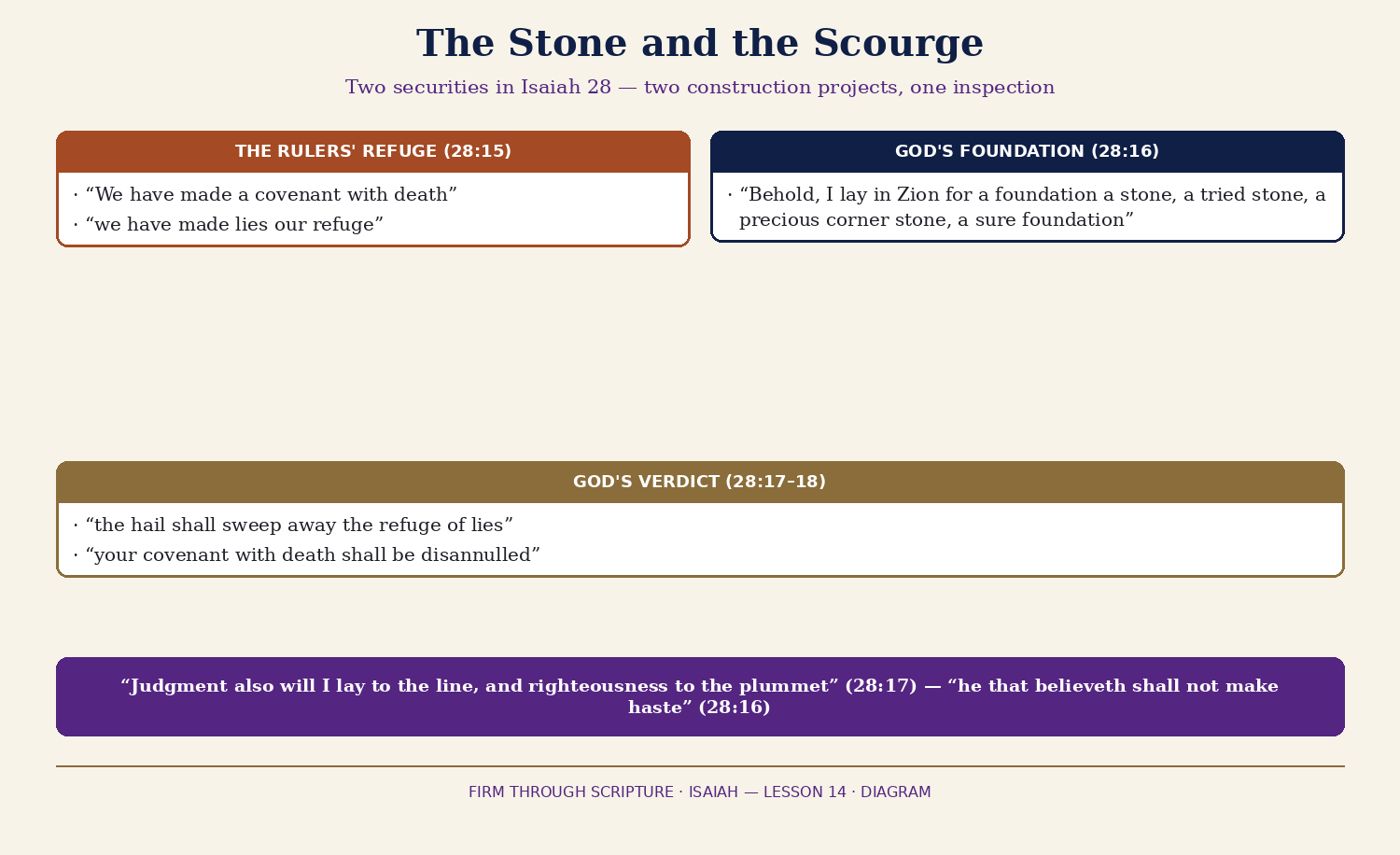
15 Because ye have said, We have made a covenant with death, and with hell are we at agreement; when the overflowing scourge shall pass through, it shall not come unto us: for we have made lies our refuge, and under falsehood have we hid ourselves:
16 Therefore thus saith the Lord GOD, Behold, I lay in Zion for a foundation a stone, a tried stone, a precious corner stone, a sure foundation: he that believeth shall not make haste.
17 Judgment also will I lay to the line, and righteousness to the plummet: and the hail shall sweep away the refuge of lies, and the waters shall overflow the hiding place.
18 And your covenant with death shall be disannulled, and your agreement with hell shall not stand; when the overflowing scourge shall pass through, then ye shall be trodden down by it.
19 From the time that it goeth forth it shall take you: for morning by morning shall it pass over, by day and by night: and it shall be a vexation only to understand the report.
20 For the bed is shorter than that a man can stretch himself on it: and the covering narrower than that he can wrap himself in it.
21 For the LORD shall rise up as in mount Perazim, he shall be wroth as in the valley of Gibeon, that he may do his work, his strange work; and bring to pass his act, his strange act.
22 Now therefore be ye not mockers, lest your bands be made strong: for I have heard from the Lord GOD of hosts a consumption, even determined upon the whole earth.
23 Give ye ear, and hear my voice; hearken, and hear my speech.
24 Doth the plowman plow all day to sow? doth he open and break the clods of his ground?
25 When he hath made plain the face thereof, doth he not cast abroad the fitches, and scatter the cummin, and cast in the principal wheat and the appointed barley and the rie in their place?
26 For his God doth instruct him to discretion, and doth teach him.
27 For the fitches are not threshed with a threshing instrument, neither is a cart wheel turned about upon the cummin; but the fitches are beaten out with a staff, and the cummin with a rod.
28 Bread corn is bruised; because he will not ever be threshing it, nor break it with the wheel of his cart, nor bruise it with his horsemen.
29 This also cometh forth from the LORD of hosts, which is wonderful in counsel, and excellent in working.
— Chapter 29 begins here: the woe turns from Ephraim to Ariel, God's own city. —
1 Woe to Ariel, to Ariel, the city where David dwelt! add ye year to year; let them kill sacrifices.
2 Yet I will distress Ariel, and there shall be heaviness and sorrow: and it shall be unto me as Ariel.
3 And I will camp against thee round about, and will lay siege against thee with a mount, and I will raise forts against thee.
4 And thou shalt be brought down, and shalt speak out of the ground, and thy speech shall be low out of the dust, and thy voice shall be, as of one that hath a familiar spirit, out of the ground, and thy speech shall whisper out of the dust.
5 Moreover the multitude of thy strangers shall be like small dust, and the multitude of the terrible ones shall be as chaff that passeth away: yea, it shall be at an instant suddenly.
6 Thou shalt be visited of the LORD of hosts with thunder, and with earthquake, and great noise, with storm and tempest, and the flame of devouring fire.
7 And the multitude of all the nations that fight against Ariel, even all that fight against her and her munition, and that distress her, shall be as a dream of a night vision.
8 It shall even be as when an hungry man dreameth, and, behold, he eateth; but he awaketh, and his soul is empty: or as when a thirsty man dreameth, and, behold, he drinketh; but he awaketh, and, behold, he is faint, and his soul hath appetite: so shall the multitude of all the nations be, that fight against mount Zion.
9 Stay yourselves, and wonder; cry ye out, and cry: they are drunken, but not with wine; they stagger, but not with strong drink.
10 For the LORD hath poured out upon you the spirit of deep sleep, and hath closed your eyes: the prophets and your rulers, the seers hath he covered.
11 And the vision of all is become unto you as the words of a book that is sealed, which men deliver to one that is learned, saying, Read this, I pray thee: and he saith, I cannot; for it is sealed:
12 And the book is delivered to him that is not learned, saying, Read this, I pray thee: and he saith, I am not learned.
13 Wherefore the Lord said, Forasmuch as this people draw near me with their mouth, and with their lips do honour me, but have removed their heart far from me, and their fear toward me is taught by the precept of men:
14 Therefore, behold, I will proceed to do a marvellous work among this people, even a marvellous work and a wonder: for the wisdom of their wise men shall perish, and the understanding of their prudent men shall be hid.
15 Woe unto them that seek deep to hide their counsel from the LORD, and their works are in the dark, and they say, Who seeth us? and who knoweth us?
16 Surely your turning of things upside down shall be esteemed as the potter's clay: for shall the work say of him that made it, He made me not? or shall the thing framed say of him that framed it, He had no understanding?
17 Is it not yet a very little while, and Lebanon shall be turned into a fruitful field, and the fruitful field shall be esteemed as a forest?
18 And in that day shall the deaf hear the words of the book, and the eyes of the blind shall see out of obscurity, and out of darkness.
19 The meek also shall increase their joy in the LORD, and the poor among men shall rejoice in the Holy One of Israel.
20 For the terrible one is brought to nought, and the scorner is consumed, and all that watch for iniquity are cut off:
21 That make a man an offender for a word, and lay a snare for him that reproveth in the gate, and turn aside the just for a thing of nought.
22 Therefore thus saith the LORD, who redeemed Abraham, concerning the house of Jacob, Jacob shall not now be ashamed, neither shall his face now wax pale.
23 But when he seeth his children, the work of mine hands, in the midst of him, they shall sanctify my name, and sanctify the Holy One of Jacob, and shall fear the God of Israel.
24 They also that erred in spirit shall come to understanding, and they that murmured shall learn doctrine.
SAY IT PLAIN — the passage in everyday words: Woe to proud, drunken Ephraim in the north — Samaria's beauty is a fading flower and a ripe fig about to be swallowed whole — but God Himself will be the crown of the people who remain. In Jerusalem the priests and prophets are drunk too, and the leaders sneer at Isaiah's clear teaching as baby-talk for toddlers. God answers: fine — hear My word in a foreign invader's language instead, and the teaching you mocked will become the tripwire you fall over. The rulers boast a deal — a covenant with death itself — so the scourge will pass them by. God answers that too: I am laying a foundation stone in Zion, a tried, precious cornerstone; whoever believes will not panic. His line and plummet will expose their refuge of lies, their deal with death will be annulled, and the LORD will do His strange work — fighting against His own city, as once He fought for Israel at Perazim and Gibeon. Then a farmer explains God's ways: no ploughing forever, each grain threshed with only the force it needs — God's judgments are measured, not wild. Chapter 29 turns on Jerusalem, called Ariel: God will besiege His own city, bring her voice to a whisper in the dust — then suddenly scatter her enemies like a dream. But the leaders are spiritually asleep; God's vision is a sealed book to them, because their worship is lips-only, hearts far away. And the passage ends with a turn: the deaf will hear the words of the book, the blind will see, the meek will have joy, and Jacob's children will hallow God's name. That's the whole passage. Everything after this teaches from it — nothing will change what you just read.
2. THE WORLD — C: Context & Audience
A text can never mean what it never meant — so before we ask what these verses mean, we stand where their first hearers stood.
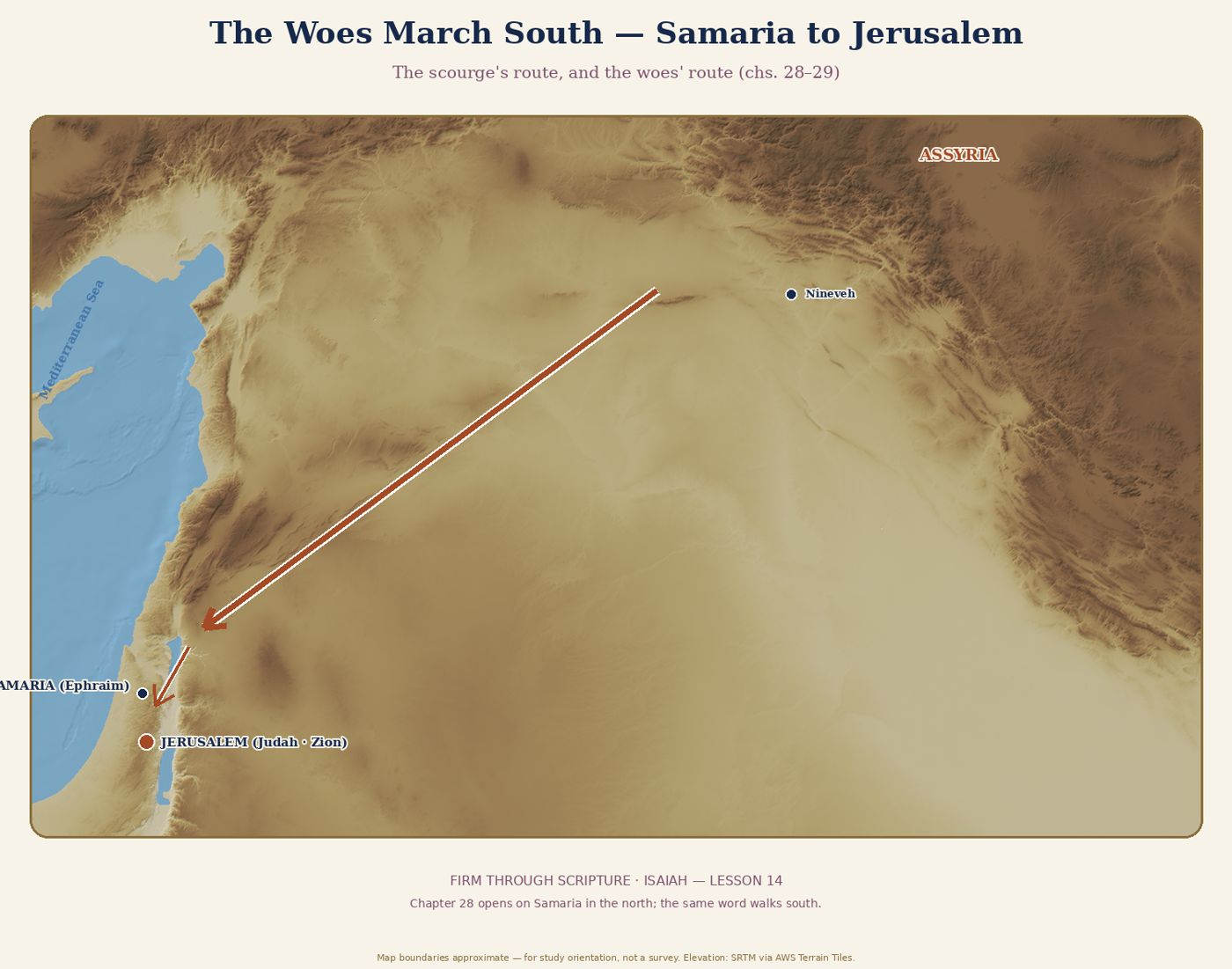
Where you are in the book. Lessons 01–08 heard Isaiah's charges against Judah; Lessons 09–12 marched through the oracles against the nations; Lesson 13 widened the lens to the whole earth. Now, in chapters 28–33, the camera comes home. This stretch is sometimes called the book of woes: oracles opening with "Woe" — to Ephraim (28:1), to Ariel-Jerusalem (29:1), and, in lessons ahead, to those who run down to Egypt (30:1; 31:1). They march south and land on God's own people, city, and leaders. [2, 11]
Two kingdoms, one family, one empire over both. After Solomon died, Israel split in two. The northern kingdom — here called Ephraim, after its largest tribe — had its capital at Samaria. The southern kingdom, Judah, kept Jerusalem and David's royal line. Over both loomed Assyria, the superpower of the age, based in what is now northern Iraq, expanding westward decade by decade, swallowing nations and deporting peoples. Assyria is the "overflowing scourge" on this passage's horizon — the flood Jerusalem's rulers are sure they have insured themselves against (28:15, 18). [2, 11, 14]
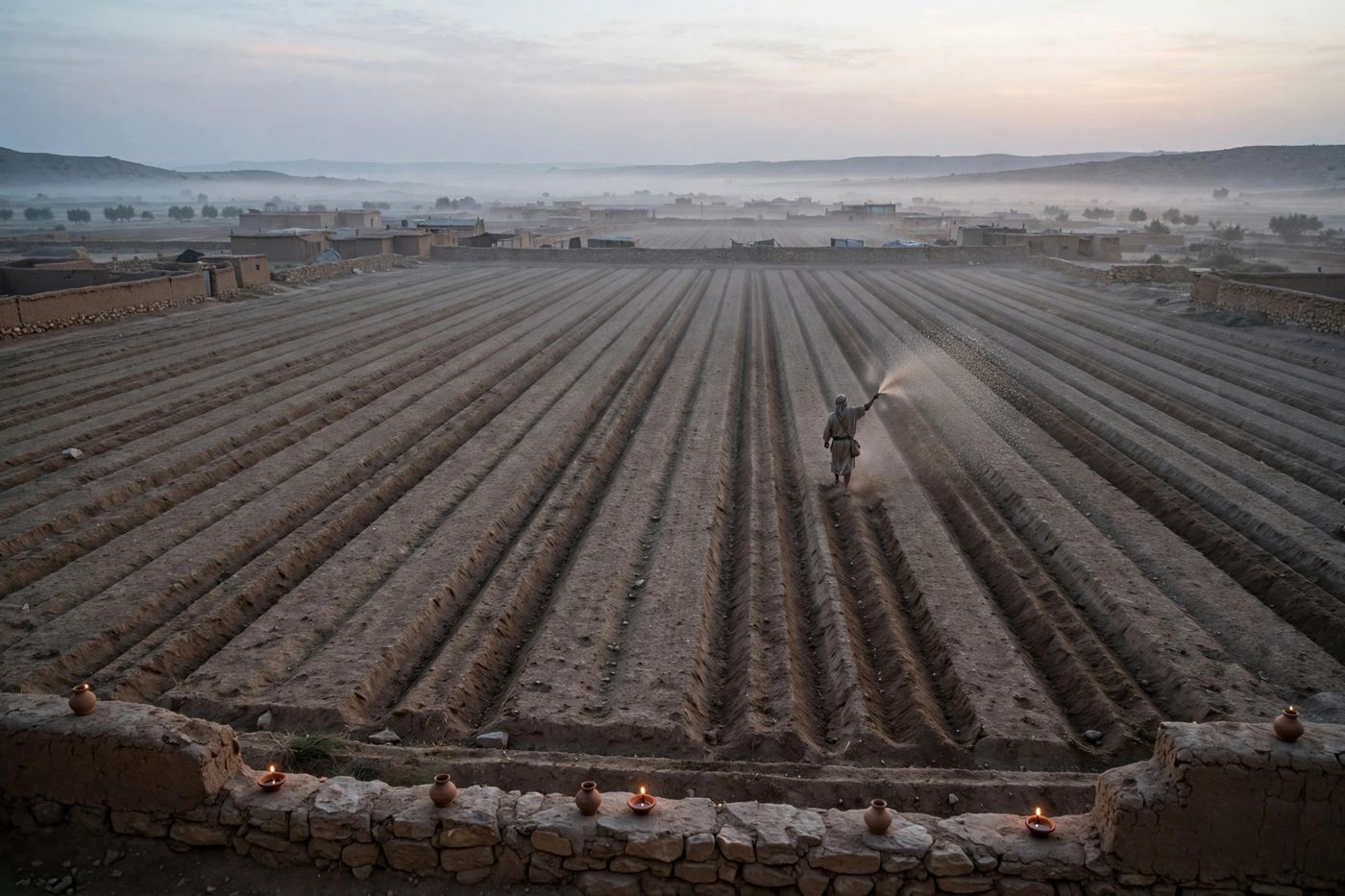
Ephraim's crown was real — and already fading when Isaiah spoke. Chapter 28 opens north, before Samaria fell. The city sat above fertile valleys — "the fat valleys" of verse 1, fat meaning rich and productive. Its ruling class was wealthy, feasting, and (Isaiah says it three ways in seven verses) drunk. Samaria fell to Assyria in 722 BC, its people deported, its kingdom ended. FACT: that fall is the shared testimony of the biblical record and the Assyrian records alike, and commentators across the spectrum date the Ephraim oracle of 28:1–4 before or around it, while the Jerusalem material that follows belongs to the years when Judah stood in Assyria's path. [2, 11] Isaiah preaches Samaria's funeral so Jerusalem will hear her own warning in it: the same pride, wine, and scoffing — now in the south.
The drinking is not local colour — it is the leadership diagnosis. Read verses 7–8 without flinching: the priest and the prophet — the offices charged with teaching God's law and speaking God's word — "have erred through strong drink," they "err in vision, they stumble in judgment," and "all tables are full of vomit." A drunk priest cannot tell clean from unclean; a drunk prophet cannot be trusted with a vision. Chapter 29 will say the same sickness in another metaphor — "the spirit of deep sleep" poured out on the seers (29:9–10). One disease in two pictures: the people appointed to see cannot see. [2, 4]
The politics under the poetry: insurance against Assyria. Verse 15 is a policy statement wearing a boast: "When the overflowing scourge shall pass through, it shall not come unto us." Behind it stood the real diplomacy of the day: alliances, tribute, and above all Egypt — the old superpower to the southwest, forever promising horses against Assyria. Lessons 15 and 16 will take that policy apart; here Isaiah goes underneath it to its theology: "We have made a covenant with death, and with hell are we at agreement." What exactly they had done — an Egyptian treaty, a literal pagan rite, or neither — is genuinely disputed, argued honestly in §16; the posture is not disputed at all. They had found a security that let them stop listening to God. [2, 11, 14]
Zion, and why a stone laid there matters. Zion is the hill of Jerusalem where David's city and God's temple stood — in Isaiah's preaching, much more than geography: the place God chose, the address of His promises to David's house. That is why verse 16 is a building announcement: "Behold, I lay in Zion for a foundation a stone." Jerusalem's rulers are builders too — of a "refuge" of lies (28:15, 17). Two construction projects compete: theirs, of falsehood, and God's, of one tried stone. [4, 11]
That is the world. Now we open the text itself.
3. OBSERVE — O: what the text actually does
Before meaning comes observation. Most bad interpretation is not deep error; it is shallow reading — people answering a text they never actually looked at. So look:
- The shape. Two chapters, seven movements: Ephraim's crown and the counter-crown (28:1–6); the drunk teachers and their mockery (28:7–13); the covenant with death and God's stone (28:14–22); the farmer's parable (28:23–29); Ariel besieged and delivered (29:1–8); the sealed book (29:9–16); and the turn (29:17–24). Both chapters end facing hope.
-
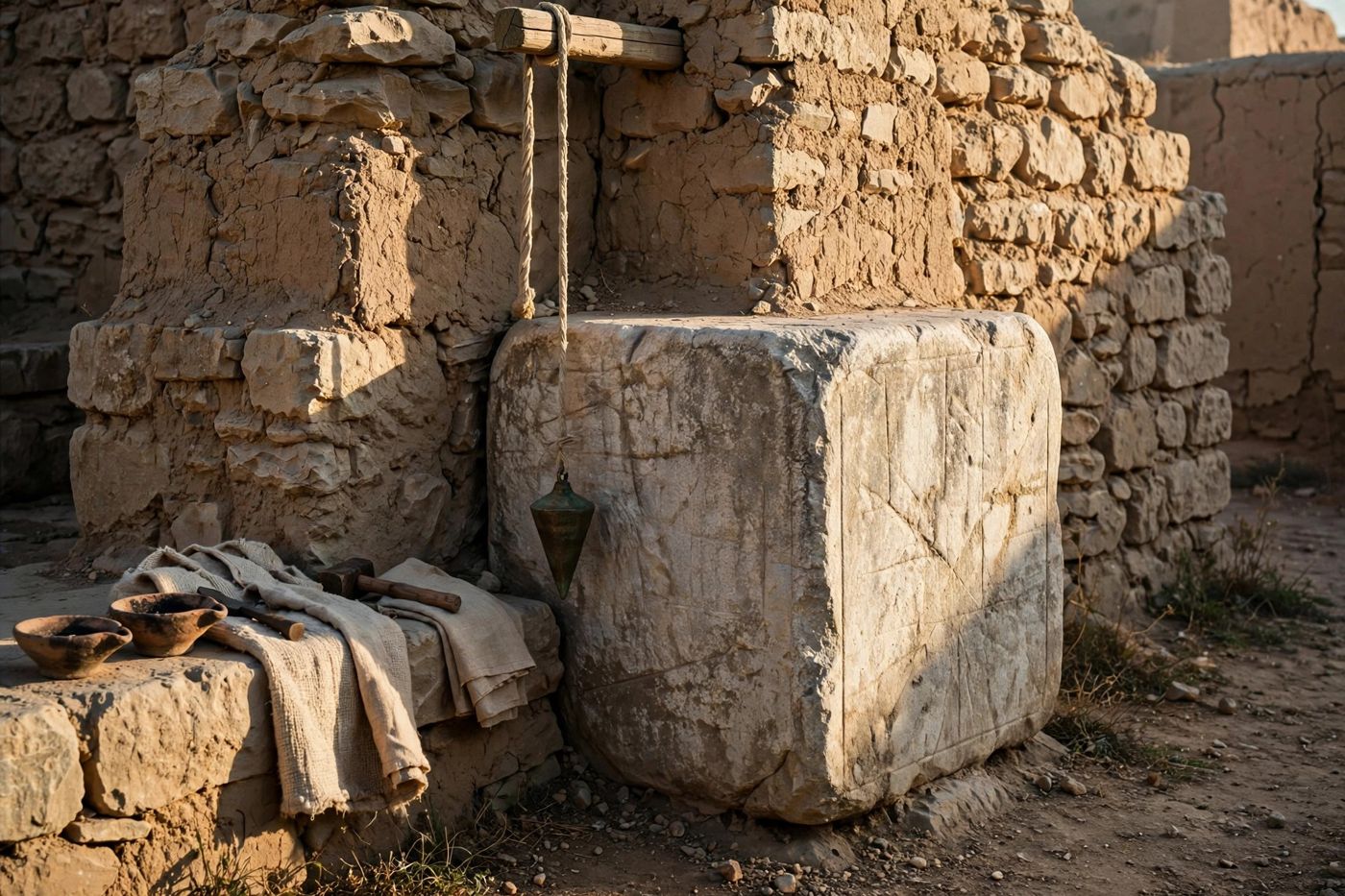
Building language runs everywhere. A stone laid, a foundation, a line, a plummet (a weight on a string, hung to test whether a wall stands true), a refuge, a bed too short (28:16–20). Isaiah argues about trust in the vocabulary of construction: every security is a structure, and God inspects structures.
-
Ears and eyes fail, then open. The leaders "would not hear" (28:12); the seers' eyes are covered (29:10); the book is sealed to learned and unlearned alike (29:11–12). Then the last movement reverses the senses: "the deaf hear the words of the book, and the eyes of the blind shall see" (29:18).
4. GENRE — N: note the genre (woe oracle, satire, and parable)
Three genres share this lesson, each with its own rules:
- The woe oracle. Prophecy in Isaiah is forthtelling first — God's verdict spoken into his own generation's ears. 2 "Woe" announces judgment the way a funeral announces a death. Woe oracles name the sin precisely (pride, drunkenness, scoffing, false security) before announcing the sentence — skipping the charges to get to the comfort reverses the prophet's order.
- Satire and quoted speech. Isaiah lets the leaders speak in their own voice — the singsong of 28:10, the boast of 28:15, the whispered "Who seeth us?" of 29:15 — and their own words convict them. Quoted speech must be read for who is talking. Not every sentence in a true book is a true sentence; some are exhibits.
- The agricultural parable. Verses 23–29 slow the passage into a farm lesson. A parable teaches by one main likeness — here, measured, purposeful work — not by assigning a secret meaning to every seed and tool.
A reading rule follows from all three: keep each voice in its mouth, each picture at its size, and each charge attached to its sin.
5. TERMS — T: the words in the writer's mouth
Four terms carry this passage. Learn what they meant in Isaiah's mouth, and half the fog lifts:
- The cornerstone cluster — foundation stone, tried stone, pinnah. Verse 16 stacks descriptions of one stone: laid "for a foundation," "a tried stone" — tested, proved under weight — "a precious corner stone," "a sure foundation." The "corner" word is pinnah: the stone that locks two walls together and sets the building's lines. [19, 20] In ancient building it was placed first, and everything else was measured from it. God does not offer Zion a decoration. He sets the one stone by which the whole structure is squared — and the rulers' rival structure will be tested against His line, not theirs (28:17).
- Tsav latsav, qav laqav (28:10, 13). That is roughly how the Hebrew of "precept upon precept, line upon line" sounds: tsav latsav, tsav latsav, qav laqav, qav laqav — short, hammering, babyish syllables. The words themselves are ordinary teaching words (a tsav is a command or precept; a qav is a measuring line). Strung together and repeated, they become a sound-play: this is how Isaiah's patient teaching sounded to educated men who had stopped listening — a nursery chant for children "weaned from the milk" (28:9). The scoffers are doing an impression of the prophet droning at toddlers; the mockery is the meaning, and the form of the line is the sound of contempt. [19, 20, 2] §6 shows why this matters beyond the chapter: Paul quotes verse 11 — God's answer to the mockery — on tongues.
- "Ariel" (29:1). Jerusalem's prophetic nickname, and its meaning is honestly double in the commentaries. Ariel can be heard as "lion of God" — ari, lion, plus El, God — a name of royal strength. It can also be heard against the word for an altar-hearth — and verse 2 leans toward the hearth: "it shall be unto me as Ariel," a city turned into God's own altar of fire. FACT: both associations are carried in the lexica and the commentaries; either way the chapter plays the name against the city's pride — the lion becomes the hearth. [19, 20, 11] Which sense Isaiah intended first is DISPUTED; that the name is ironic is plain from the verses around it.
Method note — the word-study guardrail: a word means what its author uses it to mean, in its sentence, in its century — not what its oldest root once meant, and not everything it can mean anywhere. The terms above were settled by Isaiah's usage in Isaiah 28–29 — which is why tsav latsav is taught from its speakers and its sound, not from a dictionary alone.
TRANSLATION NOTE — "shall not make haste," or "shall not be ashamed"? (28:16)
Your KJV ends verse 16: "he that believeth shall not make haste." Open Romans 9:33 or 1 Peter 2:6 in the same KJV and the same stone promises something different: the one who believes on Him "shall not be confounded" / "shall not be ashamed." Is somebody misquoting? No — two honest witnesses stand behind the two wordings, and the labels matter: FACT: the Hebrew text of Isaiah 28:16 says the believer shall not make haste — the verb pictures hurrying, panicking, fleeing in alarm; the one resting on God's stone does not need to run for another security. [19, 20] FACT: the Septuagint — the ancient Greek translation of Isaiah, made centuries before Christ — rendered the line as "shall not be ashamed," and it is that Greek form that Paul and Peter quote, word for word, in the New Testament. [24, 1] FACT: Paul, in Romans 9:33, weaves Isaiah 28:16 together with Isaiah 8:14 — the stone of stumbling — into one quotation. [1, 2]
So the difference is not a mistake in your Bible, nor a correction of Isaiah. It is translation history in the open: the KJV's Old Testament follows the Hebrew wording; its New Testament follows the apostles, who quoted the Greek translation their world read. And the wordings are cousins — the man who panics and runs is headed for shame; the man who rests on the stone is neither panicked nor put to shame.
6. ENTIRE CANON — E: where this passage sits in the whole story
No passage lives alone — and the New Testament keeps reaching back to these two chapters:
- The stone is named Christ — by the apostles, in so many words. Paul quotes this verse for Israel's stumbling: "Behold, I lay in Sion a stumblingstone and rock of offence: and whosoever believeth on him shall not be ashamed" (Romans 9:33) — Isaiah 28:16 fused with Isaiah 8:14, as the Translation Note described. [1, 24] Peter quotes the verse at length: the stone is Christ, "a living stone," and believers are built on Him as living stones (1 Peter 2:4–7). 1 Psalm 118:22's rejected stone become "the head stone of the corner" stands behind both, and Jesus had already joined that psalm to His own rejection (Matthew 21:42). 1 The canon does not leave you guessing: the New Testament reads the cornerstone of Christ, by name, three times over.
- Tongues as a sign of judgment — Paul argues it from this text. In 1 Corinthians 14:21 Paul writes "In the law it is written" and quotes Isaiah 28:11–12: with men of other tongues God will speak to this people, "and yet for all that will they not hear me." His conclusion (v. 22): "tongues are for a sign, not to them that believe, but to them that believe not." 1 Follow the logic back into Isaiah: foreign speech in Israel's streets was the sound of the Assyrian invader — God's word arriving in a language His people had forced Him to use because they mocked His plain speech in their own. Tongues, in Paul's argument, carry that signature: they confront unbelief; they are no badge of spiritual rank.
- Jesus quotes 29:13 — against lips without hearts. Isaiah aimed "this people draw near me with their mouth... but have removed their heart far from me" at Jerusalem's rote religion; Jesus takes it up word for word against His own day's tradition-keepers: "Well hath Esaias prophesied of you hypocrites" (Mark 7:6; Matthew 15:8–9). 1 Divided lips and heart were hypocrisy in both centuries, and the Lord's quotation makes this verse the standing definition.
- Paul quotes 29:14 — the marvellous work that perishes wisdom. "For the wisdom of their wise men shall perish" becomes, in 1 Corinthians 1:19, Paul's banner over the cross: "I will destroy the wisdom of the wise." 1 God's answer to a people of sealed books finds its climax, in Paul's reading, at a cross the wise call foolishness.
- Perazim and Gibeon point backwards before they point forward. When God rises "as in mount Perazim" and is wroth "as in the valley of Gibeon" (28:21), He cites His own battle honours: at Baal-perazim David broke through the Philistines "like the breaking of waters" (2 Samuel 5:20); at Gibeon God fought for Joshua with hailstones (Joshua 10:10–11). 1 Both are memories of God fighting for Israel. The strangeness of the "strange work" is the reversal: the same rising, now turned toward His own city.
The stone's journey through the canon, laid out flat:
| The text says… | In… | Which means… |
|---|---|---|
| "I lay in Zion for a foundation a stone, a tried stone, a precious corner stone" | Isaiah 28:16 | God Himself sets the one sure foundation |
| "The stone which the builders refused is become the head stone of the corner" | Psalm 118:22 | The rejected one becomes the corner |
| "whosoever believeth on him shall not be ashamed" | Romans 9:33 | The stone divides: stumbling to unbelief, no shame to belief |
| "he that believeth on him shall not be confounded" | 1 Peter 2:6–7 | Believers are built on Christ, the living stone |
7. THE MEANING — what the passage teaches
The Walk has established what the text says and where it sits. Now its payload, taught straight — the doctrines this passage actually carries, in the passage's own order.
A fading flower, and the counter-crown (28:1–6)
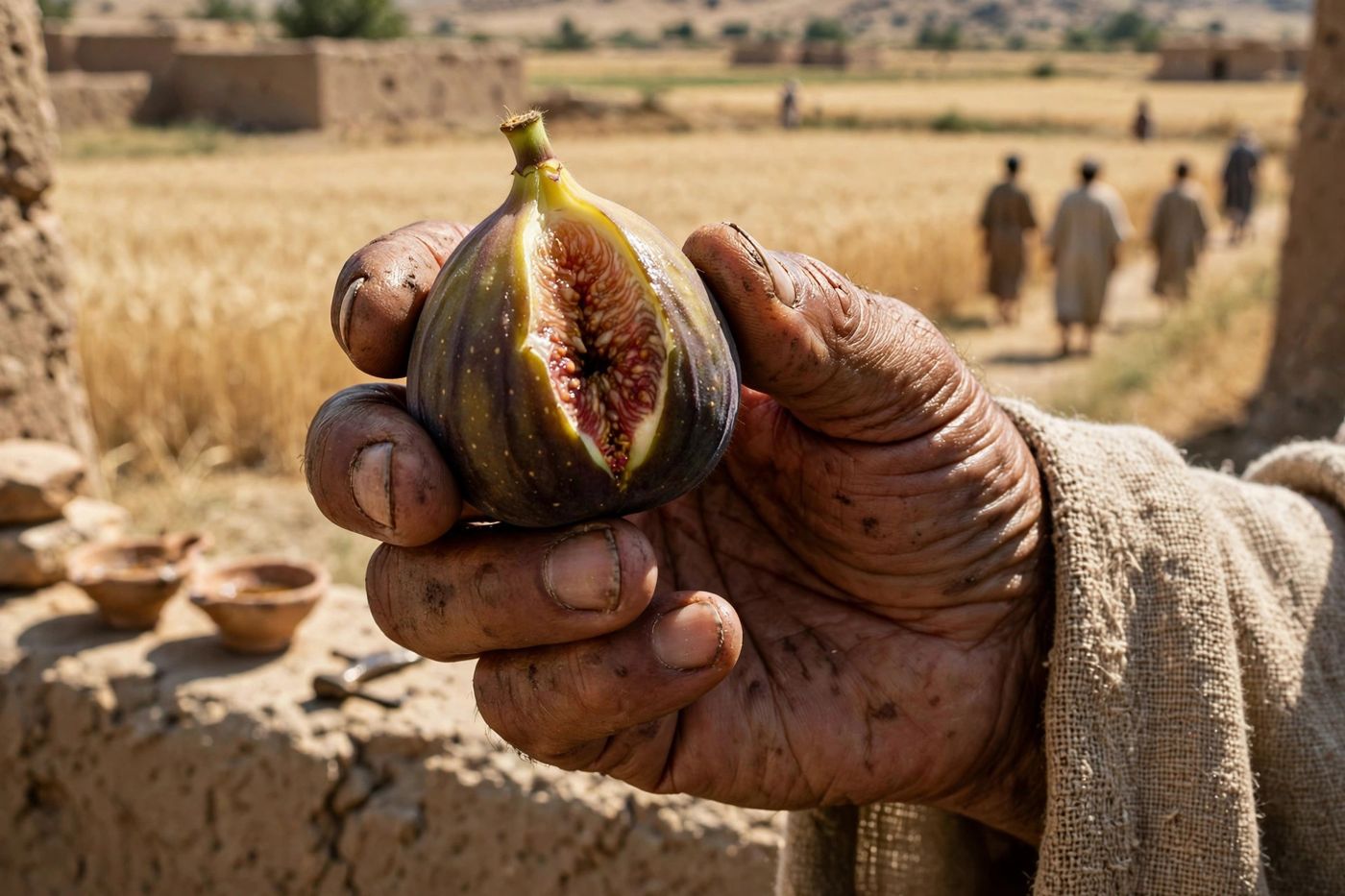
Samaria's "glorious beauty is a fading flower" — a garland worn by drunkards, already wilting on the head that wears it (28:1). Verse 4 presses the picture to its end: the city's glory is "as the hasty fruit before the summer" — the firstripe fig, which a passer-by spots, plucks, and swallows while it is still in his hand. That is how Assyria would take Samaria. And the agent is named in verse 2 — "the Lord hath a mighty and strong one," the invader as God's instrument, coming "as a tempest of hail... as a flood of mighty waters overflowing." The scourge has a Sender. [2, 4]
Then verse 5 turns the picture over: "In that day shall the LORD of hosts be for a crown of glory, and for a diadem of beauty, unto the residue of his people." The residue is the remnant — God's people left after judgment has sifted them (Isaiah's son Shear-jashub means "a remnant shall return"). The exchange is plain: a fading flower on a drunkard's head — or the LORD of hosts Himself as the crown. Human glory wilts because it is picked; God's glory is the crown because He gives Himself. And it comes with equipment: "a spirit of judgment to him that sitteth in judgment, and for strength to them that turn the battle to the gate" (28:6) — clear heads for judges, strength for defenders: everything Ephraim's drunk leaders could not supply. [2, 11]
The scoffing classroom (28:7–13)
Now the woe crosses the border. "But they also" (28:7) — Judah's priest and prophet are in the same cups. Then Isaiah records the audience review. Verse 9 is the leaders talking: "Whom shall he teach knowledge?... them that are weaned from the milk, and drawn from the breasts." Translation: who does this prophet think he's lecturing — toddlers? Verse 10 is their impersonation of his teaching, in the babyish sounds the Terms section unpacked. [2, 14]
See what they mock. Not falsehood — nobody accuses Isaiah of lying. They mock plainness and patience: teaching that insists on the same unwelcome verdict in small, undeniable pieces. Their sophistication is the sin; they are too grown for the word as God sent it.
God's answer is exact, and chilling: He accepts their terms. "For with stammering lips and another tongue will he speak to this people" (28:11). You find My speech in your own language beneath you? Then hear speech you cannot sneer at — the invader's language, barking orders in your streets. Verse 12 states what they refused: God had offered "the rest wherewith ye may cause the weary to rest... yet they would not hear." Rest was on the table, in simple syllables. Verse 13 delivers the verdict: "the word of the LORD was unto them precept upon precept... that they might go, and fall backward, and be broken, and snared, and taken." The teaching received as a joke becomes the mechanism of their fall — a word despised does not go away; it goes to judgment. Five verbs of falling: the biography of a scoffer, written in advance. [2, 4, 14]
The covenant with death (28:14–15)
Verse 14 names the audience: "ye scornful men, that rule this people which is in Jerusalem" — the classroom's disease, now in the council chamber. Verse 15 quotes their policy as a boast — §2 has already put its opening words in front of you.
Hold the identification honestly, as §16 argues at full length. DISPUTED: what concrete arrangement Isaiah describes — a diplomatic alliance (Egypt the leading candidate), a covenant ceremony invoking pagan powers of the dead, or prophetic rhetoric re-naming an alliance by its true spiritual address. Commentators defend each option; this study does not pretend it is settled. [2, 11, 14] What is not disputed is the posture, stated in their own words: they have a refuge, and it is lies; an agreement, and its counterparty is death. A covenant was the most binding word in their world — sworn, witnessed, death-sanctioned. To make one with death is to purchase exemption from the flood at the price of belonging to the realm of the dead while still alive. Isaiah lets the sentence stand in their mouths until its horror is heard. Then God speaks.
The stone God lays (28:16)
"Therefore thus saith the Lord GOD" — therefore, because of that covenant — "Behold, I lay in Zion for a foundation a stone, a tried stone, a precious corner stone, a sure foundation: he that believeth shall not make haste."
Watch the grammar of grace. God does not negotiate with the covenant of death; He out-builds it. His answer is a construction project announced in the present tense: I lay — not "I will lay, if you improve," but a foundation being set down in Zion while the rulers still boast. The stone is tried — tested, fit to bear weight. It is precious — valued by the Builder, not by the moment's market (Psalm 118's builders would refuse it; heaven's valuation stands). It is the corner stone, setting the lines for everything built afterwards. And it is itself "a sure foundation": resting on the stone is resting on the foundation. [2, 4, 11]
The human side is one verb: "he that believeth." Not he that builds, buys, negotiates, or insures. Believes — and its fruit is the Translation Note's phrase: he "shall not make haste." The rulers of verse 15 are the lesson's picture of hurry — men who could not wait on God, so they signed with death. The believer of verse 16 is their opposite: weight settled on a stone God laid, and therefore still. Rest is not the reward for believing after the danger passes; it is what believing looks like while the scourge is still on the road.
The Christ Thread
This passage earns the Christ thread the honest way — not by invented symbolism, but by the apostles' own citations, traced in §6. Peter names Isaiah's stone: the Lord Jesus, "a living stone, disallowed indeed of men, but chosen of God, and precious" (1 Peter 2:4) — precious, Isaiah's own word — and quotes verse 16 over Him. 1 Paul shows the stone's other face: to those who will not believe it is "a stumblingstone and rock of offence" (Romans 9:33) — fallen over, exactly as 28:13's scoffers fell backward over the word they mocked. 1 One stone, two outcomes, sorted by one question: is He rested on, or stumbled at? And the turn of 29:18 becomes part of Jesus' own evidence that the promised age has dawned (Matthew 11:5). 1 No hidden Christ is smuggled in here. The New Testament, in the open, builds the church on the stone God announced.
The line, the plummet, and the annulled covenant (28:17–20)
God's inspection follows His announcement. "Judgment also will I lay to the line, and righteousness to the plummet" (28:17) — the builder's stretched line and hanging plummet (a weighted cord testing whether a wall stands true), turned into instruments of judgment. Against God's straight line the refuge of lies fails inspection, and weather does the demolition: "the hail shall sweep away the refuge of lies, and the waters shall overflow the hiding place." The very flood the rulers insured against enters their hiding place. Verse 18 is their policy's legal obituary: "your covenant with death shall be disannulled." Disannulled — wiped out, from the root used for a charge being covered and cancelled. Death cannot hold God to the contract; He was never a party to it, and the scourge it was written against belongs to Him. [2, 19]
Verses 19–20 describe life under the annulled covenant: the scourge passes "morning by morning... by day and by night," and the proverb lands: "the bed is shorter than that a man can stretch himself on it." Every false security, examined at 3 a.m., is that bed — almost long enough, never long enough. Isaiah measures the rulers' accommodation for Assyria's night, and it does not fit a man.
The strange work (28:21–22)
"For the LORD shall rise up as in mount Perazim, he shall be wroth as in the valley of Gibeon, that he may do his work, his strange work." §6 set the memories: Perazim, where God broke the Philistines for David; Gibeon, where He rained hailstones for Joshua. Now the same rising falls on Jerusalem. Isaiah does not call it strange because it is uncharacteristic of God's justice — the charges are proved. He calls it strange because of its direction: the covenant God fighting His covenant city; the Deliverer of the exodus besieging (29:3 — "I will camp against thee") the people He delivered. Judgment on God's own house is His alien work — necessary, announced, measured, never His delight or His last word: verse 22 still pleads, "be ye not mockers, lest your bands be made strong," in the same breath as "a consumption, even determined upon the whole earth." [2, 4]
The farmer's wisdom — judgment in measure (28:23–29)
After the storm, a schoolroom. "Give ye ear, and hear my voice" (28:23) — the hearing the leaders refused is the parable's entrance requirement. A ploughman does not plough all year merely to plough: ploughing is for sowing, so it stops. On the levelled ground he sows each seed its own way — the small seeds (the KJV's "fitches," a small aromatic seed crop, and cummin) broadcast, the wheat, barley, and rie (an older grain, spelt) in their appointed places (28:25). Verse 26 names the teacher: "his God doth instruct him to discretion." Farming is heaven's tuition. 2
Then threshing — separating grain from husk, the ancient world's picture of judgment itself. The genius is in the dosage. The delicate small seeds are not threshed with the heavy sledge or crushed under a cart wheel; they are beaten out gently, "with a staff... with a rod" (28:27). Bread corn is bruised — harder treatment for a hardier grain — "because he will not ever be threshing it": even the heaviest threshing has a term, a point where the farmer stops because more force would only destroy the harvest (28:28). 16
Apply the likeness at its one main point, as §4 instructed: God's judgments are proportioned the way His own taught farmer's work is proportioned. Different instruments for different materials; no endless ploughing; no threshing past its purpose. The scourge is real and terrible — and it comes from the LORD of hosts, "which is wonderful in counsel, and excellent in working" (28:29). The parable answers two errors at once: that God's judgment is random cruelty (no — it is husbandry), and that it grinds forever (no — the farmer threshes for the grain).
Ariel — besieged by God, delivered in an instant (29:1–8)
Chapter 29 re-aims the woe at the capital under her nickname: "Woe to Ariel, to Ariel, the city where David dwelt!" The religious calendar still runs — "add ye year to year; let them kill sacrifices" (29:1) — while God announces, "Yet I will distress Ariel" (29:2), and names the besieger in verse 3: "And I will camp against thee round about." Whatever army history brought to Jerusalem's walls — in 701 BC Sennacherib's Assyria would come, Lesson 18's story — the siege is God's own act against His own city, and Ariel will be brought so low her voice comes up "low out of the dust" (29:4). [2, 11]
Then — the turn inside the oracle, sudden as its own sentence: "yea, it shall be at an instant suddenly" (29:5). Ariel's enemies become "like small dust" and "as chaff that passeth away"; the city is "visited of the LORD of hosts with thunder, and with earthquake, and great noise" (29:6) — the visitation that threatened her now falls for her — and the besiegers end as a hungry man's dream of eating: vivid in the night, empty by morning (29:7–8). Isaiah's readers would watch 701 BC trace this pattern in their streets — Lesson 18 will walk that night in full. INFERENCE — the fitting of 29:5–8 to 701 is the reading the book's own narrative chapters invite, stated as inference, not as the oracle's date. [2, 11] Remember the shape of it when we get there.
The sealed book (29:9–16)
Chapter 29's second half goes indoors, from the walls to the mind. "They are drunken, but not with wine" (29:9) — chapter 28's staggering, now diagnosed as spiritual: "the LORD hath poured out upon you the spirit of deep sleep, and hath closed your eyes: the prophets and your rulers, the seers hath he covered" (29:10). A people who would not hear (28:12) are given over to the not-hearing they chose, their appointed seers blindest of all. Then the book scene: God's whole vision has become "as the words of a book that is sealed." Hand it to the learned man: "he saith, I cannot; for it is sealed." Hand it to the unlearned: "he saith, I am not learned" (29:11–12). The excuses differ; the outcome is identical: God's book stays shut — by a seal on one side, a shrug on the other. [4, 14]
Verse 13 gives the cause, in God's own voice — the verse Jesus would quote verbatim (§6): "this people draw near me with their mouth, and with their lips do honour me, but have removed their heart far from me, and their fear toward me is taught by the precept of men." The mouth is near; the heart is removed — a thing they did, not a distance that happened to them. Their reverence is secondhand, rote, learned from other people instead of from God. A sealed book and a rote religion are one condition from two sides: where the heart will not approach, the book will not open.
God's reply (29:14) is not to shout louder but to act stranger: "I will proceed to do a marvellous work among this people... for the wisdom of their wise men shall perish." Paul hears it rightly when he takes it up for the cross (§6): God's answer to credentialed blindness is a deed so "foolish" by the wise men's measures that their measures are exposed. Verses 15–16 close with the potter. Woe to the counsellors who plan in the dark, murmuring "Who seeth us?" — the sealed-book people have stopped believing they are known, even as they complain they cannot read. The rebuke is the classic Creator-creature reversal: "shall the work say of him that made it, He made me not?" The clay's theology is always a compliment to itself: my Maker has no understanding really means I decline to be made. [2, 4]
The turn (29:17–24)
Then the passage does what Isaiah's judgments keep doing — it turns, on one phrase: "Is it not yet a very little while..." (29:17). Lebanon, the forested range famous for cedars, "shall be turned into a fruitful field, and the fruitful field shall be esteemed as a forest": the whole landscape re-sorted by God, not by man's gardening. Then the senses come back: "in that day shall the deaf hear the words of the book, and the eyes of the blind shall see out of obscurity, and out of darkness" (29:18). The sealed book opens — not because the learned pick the lock, but because God gives ears. And the beneficiaries are not verse 14's wise men: "The meek also shall increase their joy in the LORD, and the poor among men shall rejoice in the Holy One of Israel" (29:19) — Isaiah's signature name for God. [4, 2]
The social reversal matches: "the terrible one is brought to nought, and the scorner is consumed" (29:20) — the scorners of 28:14 and verse 21's courtroom predators, who "make a man an offender for a word" and ambush the honest man who reproves "in the gate," where courts sat. Their era ends. The chapter closes with a family restored: "Jacob shall not now be ashamed... when he seeth his children, the work of mine hands... they shall sanctify my name" (29:22–23) — a generation that hallows God's name instead of scoffing at His prophet. Verse 24 is the last word: "they that murmured shall learn doctrine." The classroom of mockers becomes, by grace, a classroom of learners.
The Long View — what the church has believed
You are not this passage's first reader, and the centuries have left a consistent trail. The early church read Isaiah's stone christologically as a matter of course, following the apostles: Romans 9 and 1 Peter 2 made 28:16 a cornerstone confession, and Jerome treated the verse as the prophets' own witness to Christ the foundation. 37 The Reformers kept that centre and sharpened the other edge: Calvin pressed 29:13 as Scripture's standing definition of hypocrisy — worship measured by heart-distance, not lip-distance — a reading Jesus Himself authorised. 36
Where the centuries have honestly differed is exactly where this lesson posted its labels: the identity of the "covenant with death," and the Hebrew–Septuagint wording at 28:16. POSITION — this course reads with the church's historic centre: one Isaiah, the stone fulfilled in Christ, labels kept where the evidence divides.
That is the payload. The next section compresses it into the one sentence you are meant to carry out of this study.
8. THE AIM SENTENCE — X: eXplain the intent
Everything observed now compresses into one sentence — the author's intended meaning, stated before any application is allowed near it:
Against a drunken, scoffing people who insured themselves with a covenant with death, God announces the only security He honours: He Himself is the residue's crown, He lays in Zion a tried cornerstone — believed on, a sure foundation and no panic; refused, a judgment measured by line and plummet — and He ends by opening His sealed book to the deaf, the blind, and the meek.
If a sermon, a post, or a devotional uses Isaiah 28–29 to say something that cannot be traced back to that sentence, it is not this passage talking. That is the whole skill this course exists to build — and the next section is where you watch it work.
9. SAY IT BACK
Close the book and say the AIM sentence from section 8 in your own words — out loud, or written in your notes, without looking. Then say, in one more sentence, what it asks of you this week.
If your version quietly changes the meaning — if the stone becomes merely "be calm," or the covenant with death becomes other people's politics — open the lesson and walk it again. This exercise feels small. It is the entire course in miniature: meaning first, in the author's words become your words, then — and only then — your life.
10. THE MISREAD — the guardrail, with verdicts
Three live misuses of this passage. Each gets a fair hearing, the evidence, and a verdict.
Misread 1: "'Precept upon precept, line upon line' is God's own endorsement of slow, repetitive, tedious teaching — dull, spoon-fed instruction is the biblical method, and wanting more is rebellion." Why it sounds right: the phrase is in the Bible, twice, in a passage about teaching (28:9–10, 13), and has been quoted for generations as a motto for plodding instruction. The evidence: read who is speaking. Verse 10's singsong sits inside the mockers' speech — the scoffing leaders' impersonation of Isaiah, baby-talk sounds and all (§5). Verse 13 repeats the phrase as God's judicial sentence: the word they mocked becomes to them an instrument of falling — "that they might go, and fall backward, and be broken." In neither verse is it a curriculum recommendation; in the first it is contempt, in the second, judgment on contempt. God's teaching in the passage is the opposite of tedious: plain, patient, aimed at rest (28:12) — and rest refused, not repetition embraced, is the sin. Verdict: the motto is a mockery quoted out of its mouth. The phrase condemns the teachers' despisers, not their students.
Misread 2: "Isaiah 29:13 — confirmed by Jesus — condemns liturgy, set forms, creeds, and inherited worship. Real worship is spontaneous; forms are the precept of men." Why it sounds right: verse 13 really does attack worship whose "fear toward me is taught by the precept of men," and Jesus really does wield it (Matthew 15:8–9). The evidence: look where Isaiah and Jesus locate the fault. Not form but distance: "this people draw near me with their mouth... but have removed their heart far from me." Verse 13's worshippers are keeping verse 1's feasts — forms God Himself commanded; He never rebukes the sacrifices for existing. He rebukes hearts that used them as a substitute for approach. "Taught by the precept of men" names reverence learned by rote from men instead of from God. That disease infects every style equally: a creed can be recited by a present heart, and the most spontaneous prayer performed by an absent one. Jesus' application (Matthew 15) lands on commandments of men that void God's word — the test is displacement of God, not the form's age or shape. Verdict: the verse aims at heart-distance, not at liturgy. Forms can carry a present heart, and spontaneity can hide an absent one — Isaiah 29:13 measures the distance between lips and heart, and pronounces on nothing else.
Misread 3: "'He that believeth shall not make haste' (28:16) promises that true believers never hurry or feel time pressure — if you're rushing, you're not believing." Why it sounds right: the clause is short, memorable, and really is attached to believing. Read as a temperament proverb, it seems to canonise calm and indict every deadline. The evidence: the verse is not about temperament; it is about foundations. The "haste" of the Hebrew (§5) is panic-flight — the scramble for another security when the scourge appears. Its contrast is not the busy person but the treaty-signers of verse 15, whose covenant with death was hurry in its purest form — a rushed purchase of safety by men who could not rest on God's word. The believer "makes no haste" because his weight is already settled on a stone God laid. The promise is not "you will never move fast." It is "you will never need to flee." Verdict: the stone is Christ, and belief rests instead of panicking for other securities. Rest is the fruit of being founded, not of being slow.
11. FROM WORD TO WALK
A reflection page — the lesson is not finished until the passage has had its say with you.
Sit with the two buildings, because Isaiah built this passage as a choice between addresses. In one, men who rule God's city sign, in effect, with death. They are not irreligious men. They sacrifice year by year at Ariel's altar; they simply keep a second policy for the real emergency, a refuge God did not build, stocked with lies they tell each other until the lies sound like strategy. Before judging them, do the inventory the passage is quietly conducting on you: what is your verse 15? Where have you arranged — in money, in a relationship, in a habit, in a silence — an exemption from the flood you most fear, one that works only as long as God does not inspect it with His line? Nobody's covenant with death is labelled that on the paperwork. It is labelled being realistic, keeping options open. Isaiah's label is the true one, given so you can annul your agreement before God has to (28:18).
Then look at the other building — or rather at its one stone, which is the whole building's beginning. God's answer to your private insurance policy is not a better policy. It is a foundation He laid Himself, before you asked, while you were still boasting: Behold, I lay in Zion... The order matters: you do not rest on the stone because you finally stopped panicking; you stop panicking — slowly, honestly, sometimes only a little less each day — because the stone was laid, is tried, is precious, and is sure, apart from your feelings on a given morning. The farmer would understand your season: the ploughing you are under is not the whole year. What He is doing in you is measured by the hand that measured cummin with a rod instead of a cart wheel — not because He is soft, but because He is skilled, and the grain, not the threshing, is His object.
And if God's word itself has felt sealed to you lately (29:11–12), hear how the story ends: the book opens not for the clever but for the deaf-who-hear and the meek-who-rejoice (29:18–19).
Lord GOD of hosts — be my crown, since every crown I have made for myself is a fading flower. I name before You the refuge I built of half-truths, and I ask You to annul the agreement I made with fear. Lay my weight on Your tried stone until I stop making haste. Unseal Your book to me — not to make me learned, but to make me Yours: heart near, lips honest, ears open. In the name of the Cornerstone, amen.
12. FOR DISCUSSION — OR FOR YOUR JOURNAL
With a group, work these aloud. Alone, they're yours — answer them in your journal or in prayer; they lose nothing in the quiet.
- Verse 15's rulers had a genuine threat and a real policy — their sin was the refuge, not the concern. What is the difference between prudent preparation and a covenant with death — in your own current arrangements?
- When has God's word felt beneath you — too simple, too familiar, too slow (28:9–10) — and what was that feeling protecting?
- Isaiah 29:13 measures worship by the distance between mouth and heart. What most reliably closes that distance in you — and what widens it while looking like devotion?
- The farmer's parable (28:23–29) teaches that God proportions His work. How does that change a hard season: what would it mean to ask "what is the grain here?" instead of only "when does this stop?"
13. THE WALK-OUT — T: Transfer to today
Meaning is settled. Now — and only now — application, and it must cross the bridge honestly. Run the five Transfer Tests on this passage:
- Same covenant? Isaiah addresses the covenant nation under Sinai's sanctions. We live after the stone has been named: the church is built on Christ the cornerstone (1 Peter 2) under the new covenant. The sanctions do not transfer as national predictions; the God who lays foundations and annuls death-covenants transfers exactly, because He does not change. 1
- Same audience? The oracles address a kingdom about to fall, Jerusalem's ruling class, and God's city. Applications beginning "God is speaking to my nation exactly as to Ephraim" fail this test; applications beginning "I recognise verse 15 in my own arrangements" pass it.
- Same genre rules? Woe oracle, satire, and parable: quoted boasts are exhibits, not promises; the parable yields its one main likeness (measured judgment), not a doctrine of every seed.
- Repeated or rooted? Resting on Christ rather than self-made securities is commanded across the New Testament (Matthew 7:24–27; 1 Corinthians 3:11; Ephesians 2:20) and rooted in God's character. Heart-near worship over lip-service is repeated by the Lord Himself. These cross at full strength. 1
- Ten verses either side? Every application below is drawn from these fifty-three verses read whole — stone with scourge, sealed book with opened ears. Verse 16 never travels without verse 15.
The whole lesson's choice, laid out flat:
| The rulers' word (28:15) | God's word (28:16) | |
|---|---|---|
| Security | "a covenant with death" — lies for a refuge | "a tried stone, a precious corner stone" |
| Posture | hurry: exemption bought before the flood | rest: "he that believeth shall not make haste" |
What crosses — and lands:
- God has laid His foundation first. Before any practice: the indicative. The stone is laid — present tense, God's act, finished before your response begins (28:16). Every practice below is resting, not building your way in.
- False refuges are annulled by mercy before they are annulled by hail — if you will let them be. Verse 18 is promise as much as verdict: the covenant with death shall be disannulled. The believer's part is to stop renewing it. A refuge of lies does not become safe by being old, expensive, or respectable.
- God proportions His work. The farmer's God instructs discretion (28:26): His people are worked on in measure, by a hand that stops when the purpose is reached. Despair misreads the threshing as endless; presumption, as unreal. The passage forbids both.
Practices — what the gate lets through, made concrete this week:
- The verse-15 audit. Thirty unhurried minutes, journal open. Write one sentence in Isaiah's grammar: "My covenant with death is __; I trust it to keep ____ from reaching me." Write verse 18 over it — shall be disannulled — and take one concrete step this week that stops renewing it: the call, the confession, the told truth.
- Pray the stone, morning by morning. Each morning this week, before news or messages, pray verse 16 back to God in its two wordings — some mornings in the Hebrew's form ("I shall not make haste"), others in the apostles' ("I shall not be ashamed"). Let the two forms tutor each other, as §5 taught.
- Line-upon-line, received. Choose one short portion of Scripture you have found beneath you — too familiar, too plain — and read it slowly every day this week, out loud, asking only: what rest is offered here that I would not hear? (28:12).
- Memorize Isaiah 28:16 — the stone verse as printed in the Recap Card, learned with verse 15's boast in view.
- Close one distance. Identify one act of worship this week where your mouth habitually travels without your heart; prepare one sentence of honest approach beforehand, and say it to God in the moment. Small, specific, real.
What does not cross: reading 28:16 as a promise that believers never act quickly; wielding 29:13 against other people's worship styles while your own heart stays distant; claiming the deliverance of 29:5–8 as a template God owes your circumstances; and assigning the "covenant with death" to political opponents — Isaiah aimed it at God's own city, and the first application is always in the mirror.
Praise Him
Praise the LORD of hosts, who gives Himself as the residue's crown of glory. Praise the Lord GOD, who lays stones instead of signing treaties — a tried stone, a precious corner stone, a sure foundation in Zion. Praise the Teacher of ploughmen, wonderful in counsel and excellent in working, who threshes no grain one stroke past its need. Praise the Opener of the sealed book, who makes the deaf hear the words of the book and gives the meek increase of joy in the Holy One of Israel — until Jacob is no more ashamed, and murmurers learn doctrine. Praise Him.
14. THE RECAP CARD — this study on one page
Print it. Keep it where you'll see it this week.
- The passage: Isaiah 28:1–29:24 — the woes march south: Ephraim's fading crown, the scoffing classroom, the covenant with death and God's cornerstone, the farmer's measure, Ariel, the sealed book, and the turn.
- Say It Plain: Jerusalem's rulers insure themselves with lies and mock God's plain teaching; God lays His own foundation stone in Zion, measures their refuge with line and plummet, annuls their covenant with death — and opens His book to the deaf, the blind, and the meek.
- The AIM: Against a scoffing people insured by a covenant with death, God announces the only security He honours: He is the residue's crown, and He lays in Zion a tried cornerstone — believed on, a sure foundation and no panic; refused, judgment by line and plummet — and He ends by opening His sealed book to the deaf, the blind, and the meek.
- Key terms: pinnah — the corner stone that sets the building's lines · tsav latsav, qav laqav — the scoffers' baby-talk impression of God's teaching (28:10, 13) · Ariel — "lion of God" / the altar-hearth, Jerusalem's nickname
- The Misread, in one line: "precept upon precept" is the mockers' line, not a teaching method · 29:13 measures heart-distance, not worship styles · "shall not make haste" promises rest on the stone, not a life without urgency.
- Memory verse: "Therefore thus saith the Lord GOD, Behold, I lay in Zion for a foundation a stone, a tried stone, a precious corner stone, a sure foundation: he that believeth shall not make haste." — Isaiah 28:16
- This week's practice: the verse-15 audit — name your covenant with death, write verse 18 over it, and take one step that stops renewing it.
15. CHECK YOURSELF — five questions
Answer from the study, not from instinct. (Answers live in the Teacher Edition.)
- In your own words: what is the AIM of Isaiah 28–29?
- Who is speaking in Isaiah 28:10, and who in 28:13 — and why does the difference decide what "precept upon precept" means?
- State the "covenant with death" (28:15) honestly: what is DISPUTED about it, and what is not?
- Isaiah 28:16 ends "shall not make haste," but Romans 9:33 reads "shall not be ashamed." Which text stands behind each wording, and why is neither an error?
- In the farmer's parable (28:23–29), what decides which instrument is used on which grain — and what one main likeness does it teach about God's judgments?
16. GO DEEPER
Optional — for readers who want the machinery. The lesson is complete without it.
From the Sources — The annulment word
Verse 18's promise that the covenant with death "shall be disannulled" uses a Hebrew verb from the root that elsewhere serves for atonement and blotting out a charge. FACT: the lexica list the sense "be annulled / wiped away" for this form alongside the root's wider range. [19, 20] Oswalt and Motyer pause on the irony: the death-contract is not merely outmatched; it is atoned away. [2, 4]
The Honest Argument — What was the "covenant with death"?
Three identifications contend, and §7's DISPUTED label stands on their disagreement. Option one — the Egyptian alliance. "Death" and "hell" (Sheol, the realm of the dead) are Isaiah's contemptuous re-naming of a diplomatic treaty: Judah bought Assyrian insurance from Egypt, and the prophet addresses the treaty by its true spiritual address. Clements and Smith give this reading its weight — the pro-Egypt policy is the documented temptation of Hezekiah's court, and chapters 30–31 argue against it in the open. [14, 11] Option two — a literal death-covenant. The rulers participated in a pagan rite invoking powers of the dead for protection, of a kind the ancient Near East knew, where treaty and cult were never cleanly separate. Oswalt states this possibility with its evidence: covenant with death itself is unusually concrete for mere metaphor, and death-cult practice was a live temptation in Isaiah's Jerusalem and Manasseh's after him. [2, 16] Option three — defiant rhetoric. Isaiah coins the phrase as prophetic characterization: whatever the rulers had signed, the prophet names the posture — security purchased at any price, from any source but God. Motyer leans here: "we have made lies our refuge" reads as Isaiah's exposure of the policy's real substance. 4
Weigh them. Option one explains the politics best and the vocabulary least; option two, the vocabulary best, but requires a rite the text never narrates; option three, the rhetoric best, but risks dissolving a concrete sin into metaphor. DISPUTED — genuinely, across the commentaries this course cites. POSITION — this study's: the phrase names, at minimum, a real policy of purchased security whose true counterparty Isaiah exposes; the doctrine does not wait on the identification, because Isaiah builds nothing on the paperwork and everything on the posture — refuge taken in lies, against refuge given in the stone.
The Word Underneath — lo yachish, "shall not make haste"
The Translation Note (§5) gave the translation history; here is the word itself. The Hebrew verb at the end of 28:16 pictures hurrying under alarm — the haste of a man who runs because where he stands is not safe. [19, 20] FACT: the Septuagint's "shall not be ashamed" is not a mistranslation but an interpretive translation of the outcome: the man who does not have to run is the man who will not end in shame, and the Greek translators read the verse by its destination. 24 INFERENCE: the two apostolic handlings teach this course's citation ethic — the apostles quote the Scripture of their day faithfully, weave it knowingly, and never pretend a weave is a transcript.
Go Read
- Oswalt, The Book of Isaiah, Chapters 1–39 (NICOT) 2 — the fullest evangelical walk through chapters 28–29.
- Motyer, The Prophecy of Isaiah 4 — the woes' southward march and the counter-crown.
- Clements, Isaiah 1–39 (NCB) 14 — the critical counterweight.
- Smith, Isaiah 1–39 (NAC) 11 — Assyrian-period history and the disputes.
17. SOURCES & REFERENCES
Numbered citations in this lesson key to this list — the course standard: every sourced claim carries its number, and every number can be checked.
-
The KJV text itself — Holy Bible, King James Version (eBible.org KJV, 1769 text). Scripture quotations are from the King James Version (KJV), which is in the public domain in the United States; the full passage is always assigned as reading. Cross-references within Scripture cite this number.
-
Oswalt, The Book of Isaiah, Chapters 1–39 (NICOT) — John N. Oswalt (Eerdmans). The leading evangelical commentary on the first half; defends essential unity of authorship and reads the book as a finished theological whole. Detailed notes on the Assyrian-period history (Ahaz, Hezekiah, Sennacherib).
-
Motyer, The Prophecy of Isaiah — J. Alec Motyer (IVP). A one-volume commentary by an evangelical scholar who argues the whole book breathes the mind of the eighth-century prophet; especially strong on the book's structure, its repeated refrains, and the Servant.
-
Smith, Isaiah 1–39 and Isaiah 40–66 (New American Commentary) — Gary V. Smith (B&H). Evangelical commentary with strong historical notes (the Assyrian and Babylonian records) and an even-handed survey of the authorship debate.
-
Clements, Isaiah 1–39 (New Century Bible) — R. E. Clements (Eerdmans). Critical commentary notable for its redactional reading of the eighth-century core and its later expansions.
-
Walton, Matthews & Chavalas, The IVP Bible Background Commentary: Old Testament — John H. Walton, Victor H. Matthews, Mark W. Chavalas (IVP). Verse-by-verse ancient Near Eastern background: Assyrian siege practice, Babylonian religion, treaty and coronation customs, geography.
-
Brown, Driver & Briggs, Hebrew and English Lexicon of the Old Testament (BDB) — The standard older Hebrew lexicon; word senses and usage ranges for the Terms sections.
-
Koehler & Baumgartner, The Hebrew and Aramaic Lexicon of the Old Testament (HALOT) — The standard modern Hebrew lexicon; the control on BDB for contested senses (e.g., 'almah).
-
The Septuagint (LXX) — Rahlfs–Hanhart edition. The ancient Greek Isaiah (2nd century BC): itself already one book of 66 chapters, and the Bible of the early church; its renderings (e.g., parthenos at 7:14) argued in the open where they matter.
-
Calvin, Commentary on Isaiah — John Calvin (public domain). Reformation exegesis; a control on interpretation and a voice in the Long View.
-
Jerome, Commentary on Isaiah — Jerome (c. AD 408–410). The early church's fullest Isaiah commentary; Jerome transmits the Hebrew learning of his day and treats Isaiah as one prophet's book.