
One study, one walk — the universal FIRM format. The passage first and whole; then its world; then the Walk (Context · Observe · Genre · Terms · Entire Canon); the meaning taught straight; the AIM sentence; the misread exposed and answered; and the walk-out, where application has to pass the Transfer Tests before it reaches your week. The same skeleton serves a book, a chapter, a single verse, or a whole subject. In the early studies the moves are labeled as they happen. The labels fade as the walk becomes yours.
THE WEEK WITH THIS STUDY — six bites
Day 1 — Read the passage · Say It Plain · The World (§§1–2) · Day 2 — Observe · Genre (§§3–4) · Day 3 — Terms · Entire Canon (§§5–6) · Day 4 — The Meaning · the AIM Sentence · Say It Back (§§7–9) · Day 5 — The Misread · From Word to Walk (§§10–11 — add For Discussion, §12, if you're with others) · Day 6 — The Walk-Out · the Recap Card (§§13–14). Go Deeper (§16) any evening you want the basement.
BEFORE YOU READ — Open My Eyes
LORD, we have taken counsel everywhere except at Your mouth. Open my eyes to the embassy I keep sending — and to the God who waits to be gracious to people who would not rest. Teach my ears to hear the word behind me: This is the way. In Jesus' name, amen.
§ means “section” — the numbered parts of your lesson. Each bite above names the sections for that day.
1. READ THE PASSAGE — Isaiah 30:1–31:9 (KJV)
Read it all, slowly, before any teaching. In this course the passage always prints once, in full, at the head of the lesson. Everything after this is commentary — this is the text.
1 Woe to the rebellious children, saith the LORD, that take counsel, but not of me; and that cover with a covering, but not of my spirit, that they may add sin to sin:
2 That walk to go down into Egypt, and have not asked at my mouth; to strengthen themselves in the strength of Pharaoh, and to trust in the shadow of Egypt!
3 Therefore shall the strength of Pharaoh be your shame, and the trust in the shadow of Egypt your confusion.
4 For his princes were at Zoan, and his ambassadors came to Hanes.
5 They were all ashamed of a people that could not profit them, nor be an help nor profit, but a shame, and also a reproach.
6 The burden of the beasts of the south: into the land of trouble and anguish, from whence come the young and old lion, the viper and fiery flying serpent, they will carry their riches upon the shoulders of young asses, and their treasures upon the bunches of camels, to a people that shall not profit them.
7 For the Egyptians shall help in vain, and to no purpose: therefore have I cried concerning this, Their strength is to sit still.
8 Now go, write it before them in a table, and note it in a book, that it may be for the time to come for ever and ever:
9 That this is a rebellious people, lying children, children that will not hear the law of the LORD:
10 Which say to the seers, See not; and to the prophets, Prophesy not unto us right things, speak unto us smooth things, prophesy deceits:
11 Get you out of the way, turn aside out of the path, cause the Holy One of Israel to cease from before us.
12 Wherefore thus saith the Holy One of Israel, Because ye despise this word, and trust in oppression and perverseness, and stay thereon:
13 Therefore this iniquity shall be to you as a breach ready to fall, swelling out in a high wall, whose breaking cometh suddenly at an instant.
14 And he shall break it as the breaking of the potters' vessel that is broken in pieces; he shall not spare: so that there shall not be found in the bursting of it a sherd to take fire from the hearth, or to take water withal out of the pit.
15 For thus saith the Lord GOD, the Holy One of Israel; In returning and rest shall ye be saved; in quietness and in confidence shall be your strength: and ye would not.
16 But ye said, No; for we will flee upon horses; therefore shall ye flee: and, We will ride upon the swift; therefore shall they that pursue you be swift.
17 One thousand shall flee at the rebuke of one; at the rebuke of five shall ye flee: till ye be left as a beacon upon the top of a mountain, and as an ensign on an hill.
18 And therefore will the LORD wait, that he may be gracious unto you, and therefore will he be exalted, that he may have mercy upon you: for the LORD is a God of judgment: blessed are all they that wait for him.
19 For the people shall dwell in Zion at Jerusalem: thou shalt weep no more: he will be very gracious unto thee at the voice of thy cry; when he shall hear it, he will answer thee.
20 And though the Lord give you the bread of adversity, and the water of affliction, yet shall not thy teachers be removed into a corner any more, but thine eyes shall see thy teachers:
21 And thine ears shall hear a word behind thee, saying, This is the way, walk ye in it, when ye turn to the right hand, and when ye turn to the left.
22 Ye shall defile also the covering of thy graven images of silver, and the ornament of thy molten images of gold: thou shalt cast them away as a menstruous cloth; thou shalt say unto it, Get thee hence.
23 Then shall he give the rain of thy seed, that thou shalt sow the ground withal; and bread of the increase of the earth, and it shall be fat and plenteous: in that day shall thy cattle feed in large pastures.
24 The oxen likewise and the young asses that ear the ground shall eat clean provender, which hath been winnowed with the shovel and with the fan.
25 And there shall be upon every high mountain, and upon every high hill, rivers and streams of waters in the day of the great slaughter, when the towers fall.
26 Moreover the light of the moon shall be as the light of the sun, and the light of the sun shall be sevenfold, as the light of seven days, in the day that the LORD bindeth up the breach of his people, and healeth the stroke of their wound.
27 Behold, the name of the LORD cometh from far, burning with his anger, and the burden thereof is heavy: his lips are full of indignation, and his tongue as a devouring fire:
28 And his breath, as an overflowing stream, shall reach to the midst of the neck, to sift the nations with the sieve of vanity: and there shall be a bridle in the jaws of the people, causing them to err.
29 Ye shall have a song, as in the night when a holy solemnity is kept; and gladness of heart, as when one goeth with a pipe to come into the mountain of the LORD, to the mighty One of Israel.
30 And the LORD shall cause his glorious voice to be heard, and shall shew the lighting down of his arm, with the indignation of his anger, and with the flame of a devouring fire, with scattering, and tempest, and hailstones.
31 For through the voice of the LORD shall the Assyrian be beaten down, which smote with a rod.
32 And in every place where the grounded staff shall pass, which the LORD shall lay upon him, it shall be with tabrets and harps: and in battles of shaking will he fight with it.
33 For Tophet is ordained of old; yea, for the king it is prepared; he hath made it deep and large: the pile thereof is fire and much wood; the breath of the LORD, like a stream of brimstone, doth kindle it.
— Isaiah 31 —
1 Woe to them that go down to Egypt for help; and stay on horses, and trust in chariots, because they are many; and in horsemen, because they are very strong; but they look not unto the Holy One of Israel, neither seek the LORD!
2 Yet he also is wise, and will bring evil, and will not call back his words: but will arise against the house of the evildoers, and against the help of them that work iniquity.
3 Now the Egyptians are men, and not God; and their horses flesh, and not spirit. When the LORD shall stretch out his hand, both he that helpeth shall fall, and he that is holpen shall fall down, and they all shall fail together.
4 For thus hath the LORD spoken unto me, Like as the lion and the young lion roaring on his prey, when a multitude of shepherds is called forth against him, he will not be afraid of their voice, nor abase himself for the noise of them: so shall the LORD of hosts come down to fight for mount Zion, and for the hill thereof.
5 As birds flying, so will the LORD of hosts defend Jerusalem; defending also he will deliver it; and passing over he will preserve it.
6 Turn ye unto him from whom the children of Israel have deeply revolted.
7 For in that day every man shall cast away his idols of silver, and his idols of gold, which your own hands have made unto you for a sin.
8 Then shall the Assyrian fall with the sword, not of a mighty man; and the sword, not of a mean man, shall devour him: but he shall flee from the sword, and his young men shall be discomfited.
9 And he shall pass over to his strong hold for fear, and his princes shall be afraid of the ensign, saith the LORD, whose fire is in Zion, and his furnace in Jerusalem.
SAY IT PLAIN — the passage in everyday words: Judah's leaders, terrified of Assyria, send ambassadors and treasure-caravans south to buy Egypt's protection — without asking God. God calls the plan sin added to sin: Egypt cannot profit them, and He gives the ally a mocking name, Rahab-that-sits-still. He orders the warning written into a book for all time, because the people are ordering His prophets to preach only smooth things — and a word despised like that will crack like a bulging wall and smash like a clay pot. The road refused was short: return and rest, and you will be saved. They would not. So God announces the passage's strangest thing — He will wait, in order to be gracious — promising a day when the Teacher is seen, a voice says "This is the way," idols are thrown away, wounds are bound up, and Assyria falls by a sword no man wields. Chapter 31 says it again, sharper: Egyptians are men, not God; their horses flesh, not spirit; and the LORD who comes down like a lion will hover over Jerusalem like a bird — defending, delivering, passing over, preserving. Everything after this teaches from it — nothing will change what you just read.
2. THE WORLD — C: Context & Audience
A text can never mean what it never meant — so before we ask what these verses mean, we stand where their first hearers stood.
The fear had a name, and the name was Assyria. Assyria — the empire centred on the Tigris River in what is now northern Iraq — had swallowed the northern kingdom of Israel whole (722 BC) and was the standing terror of the region. Judah, the southern kingdom ruled from Jerusalem by King Hezekiah, was a hill-country state with a few walled towns and no great army. Isaiah 28–33 is a chain of woes spoken into exactly that pressure, as every court in the region shopped for allies [2, 11]. Chapters 30–31 are usually placed just before Assyria's invasion of Judah in 701 BC, while the Egyptian embassy was still a live policy — an INFERENCE from their fit with the crisis chapters 36–37 later narrate, not a date the text stamps [2, 11].
Egypt was the obvious shop. South-west of Judah lay Egypt: ancient, wealthy, famous for horses and chariots, and no friend of Assyria. Egypt in these years was a divided kingdom of local dynasts rather than one strong Pharaoh — FACT, as the period's record shows a fragmented delta of competing rulers [16, 11] — so the "strength of Pharaoh" was thinner than its thousand-year-old reputation. To a frightened court, Egyptian cavalry looked like arithmetic that could save them: our walls plus their horses equals survival. Isaiah's whole argument is that the arithmetic leaves out the only number that matters.
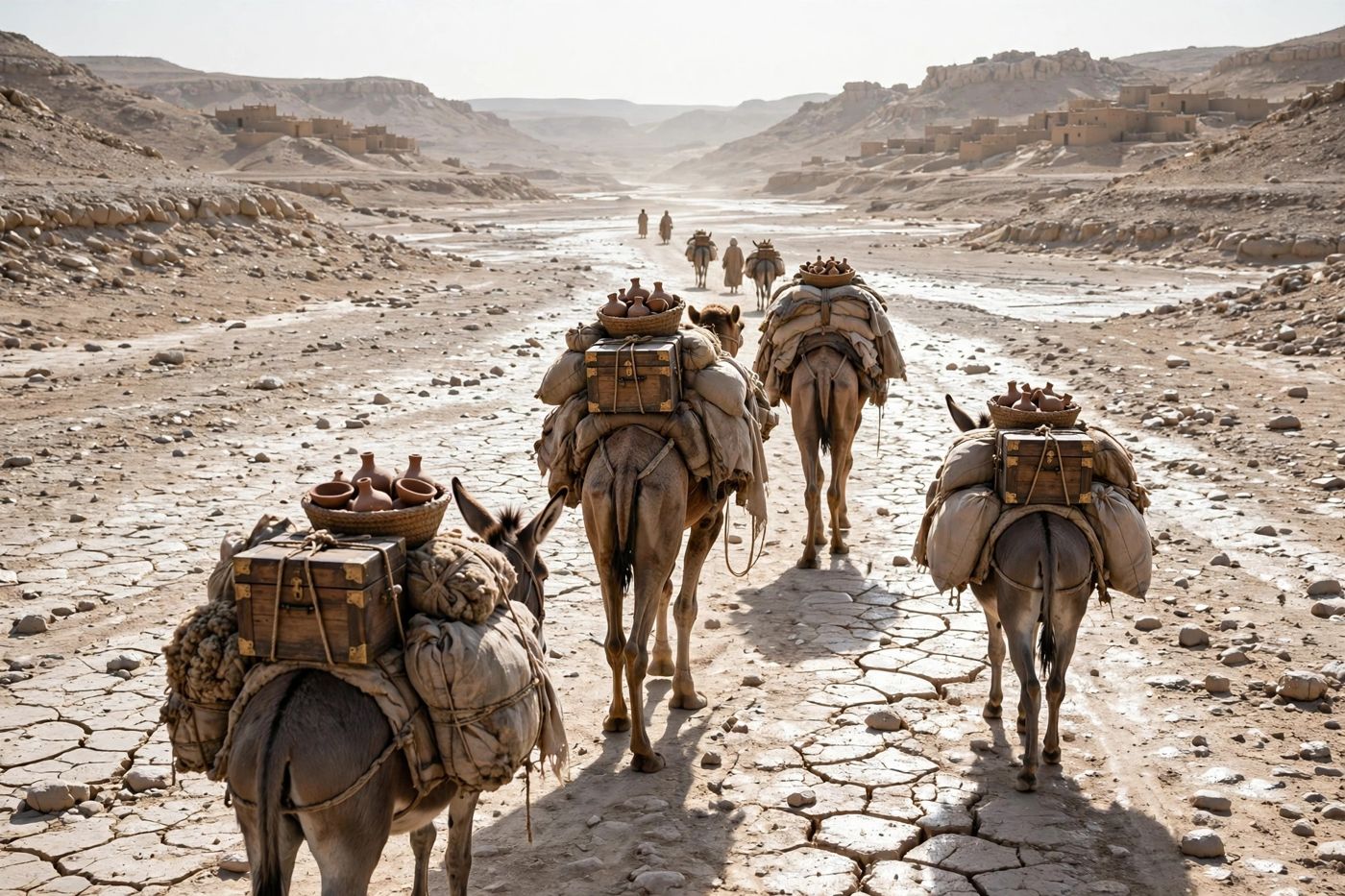
The embassy was real, expensive, and already on the road. Judah's "princes were at Zoan, and his ambassadors came to Hanes" (30:4). Zoan — Tanis — was a royal city in the north-eastern Nile delta; Hanes is usually identified with a city further south, though its exact site is debated — an INFERENCE; the embassy is the text's plain statement [16, 2]. Verse 6 shows the payment moving: donkeys and camels loaded with riches, crossing "the land of trouble and anguish" — the Negev, south of Judah, home to lions, vipers, and "fiery flying serpents" (venomous desert snakes). The gifts meant to purchase safety were hauled through danger to a buyer who, God says in advance, "shall not profit them."
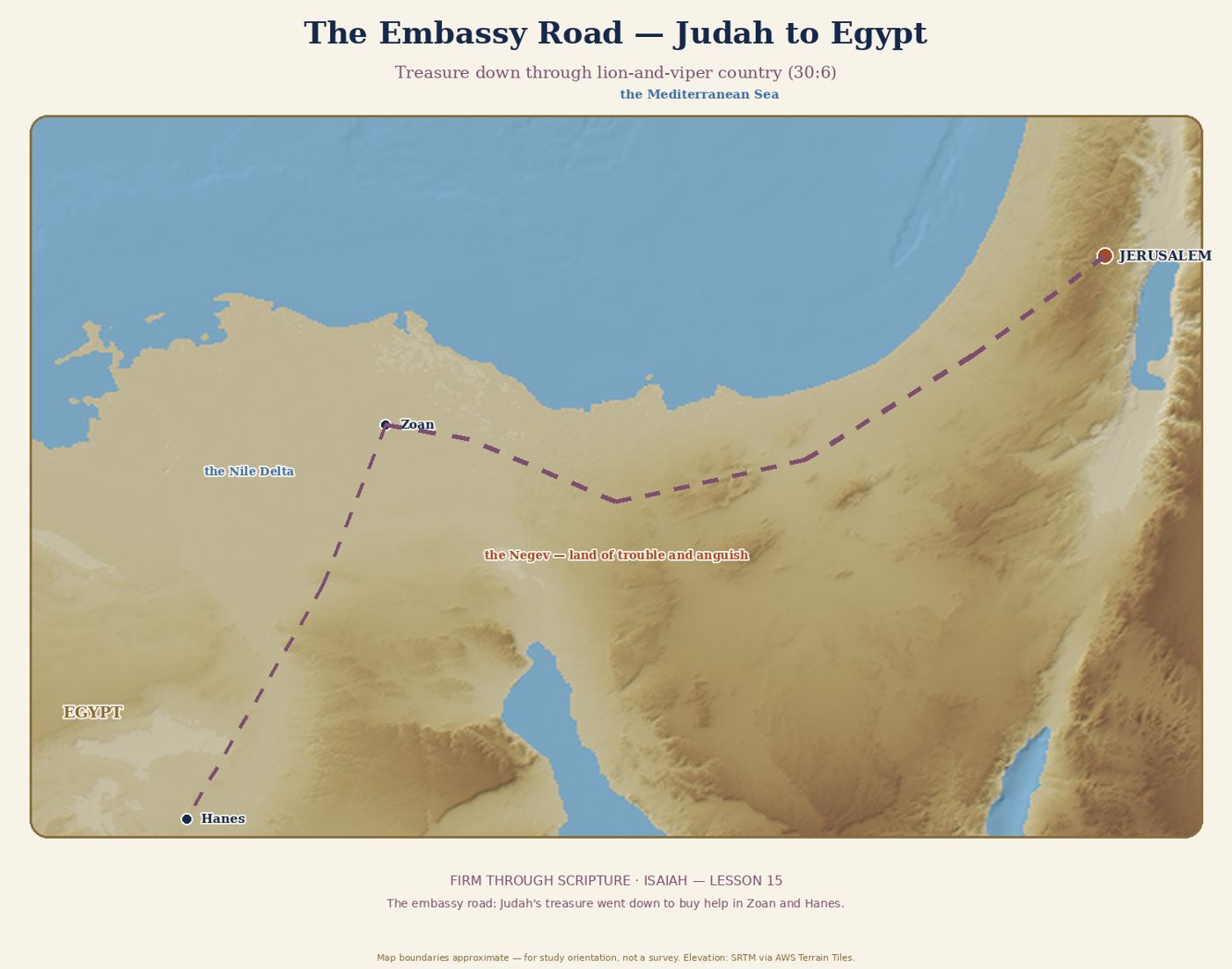
Alliances were religion, not just politics. In the ancient Near East, treaties were sworn before gods; an alliance meant practical reliance on a nation's army — and behind its army, its gods [16, 55]. That is why verse 1 charges the embassy as a spiritual act: they "take counsel, but not of me." And it stings with history: Egypt was the house Israel had been rescued from. Running back down to Egypt for safety was the exodus story run backwards — the rescued knocking on the slave-master's door asking to be protected. Ezekiel would later picture Egypt as a reed staff that pierces the hand that leans on it — same ally, same verdict 1.
Two more names you need. Zion is the hill in Jerusalem where the temple stood — the name carries the city and its people, God's chosen dwelling. And the Holy One of Israel is Isaiah's signature name for God, sounding like a drumbeat (30:11, 12, 15; 31:1). He is not distant; He is theirs, named by His covenant with them, holy — set apart, not manageable. The scandal is that they have a God with that name and are shopping elsewhere anyway.
That is the world. Now open the text itself and watch what it does.
3. OBSERVE — O: what the text actually does
Before meaning comes observation. Most bad interpretation is shallow reading. So look:
- Two woes frame one argument. Chapter 30 opens "Woe to the rebellious children"; chapter 31 opens "Woe to them that go down to Egypt for help." The second chapter is the same sermon re-preached, compressed and sharpened — as if the prophet knows the first hearing did not take. When Scripture repeats itself this closely, the repetition is the emphasis.
- The geography runs one way, then God reverses it. Everything human moves down — down to Egypt (30:2; 31:1; "go down" is also literal, from Jerusalem's hills to Egypt's lowlands). Everything divine moves the other way: the LORD's name "cometh from far" (30:27); the LORD of hosts will "come down to fight for mount Zion" (31:4). Judah goes down to Egypt; God comes down to Zion. The whole passage is in those two directions.
- "Strength" and "shadow" keep changing owners. Judah seeks "the strength of Pharaoh" and "the shadow of Egypt" (30:2) — and is promised Pharaoh's strength as their shame, Egypt's shadow as their confusion (30:3). Then Egypt's own strength gets its true description: "to sit still" (30:7). Watch words get repossessed like that; Isaiah does it constantly 52.
- The book knows it is a book. Mid-sermon, God interrupts: "Now go, write it before them in a table, and note it in a book, that it may be for the time to come for ever and ever" (30:8). The prophecy orders its own preservation — section 7 teaches from it.
- The people's only speeches are refusals. Judah speaks twice in chapter 30, and both speeches are no: the order to the prophets, "speak unto us smooth things" (30:10–11), and the answer to God's offer, "No; for we will flee upon horses" (30:16). Against those two speeches stands one divine speech that outlasts them: "therefore will the LORD wait, that he may be gracious unto you" (30:18). The passage's drama is a contest of speeches.
- Promises pile up in creation language. Once grace speaks in 30:18, the images turn Eden-ward: rain, seed, fat pastures, streams on every hill, sunlight sevenfold, God binding up "the breach of his people" (30:23–26). Observation refuses to shrink that into a weather forecast.
- Chapter 31 ends where the fire is. The Assyrian's princes flee "the ensign," and the reason given is a hearth: "saith the LORD, whose fire is in Zion, and his furnace in Jerusalem" (31:9). A fire in Zion answers the fire of Tophet prepared for the king (30:33). Two fires, two cities' fates. The passage bookends its judgment in flame.
4. GENRE — N: note the genre (prophetic woe-oracle and salvation oracle, interwoven)
These chapters are prophecy — mostly forthtelling before foretelling: a covenant prosecutor speaking God's word into a present crisis, naming the sin, announcing the consequence, and — astonishingly — promising grace on the far side of it 51. Three genre features do the heavy lifting here:
- The woe-oracle. "Woe to..." is the prophet's funeral cry spoken over the still-living — judgment announced as lament. Isaiah fires woes through chapters 28–33 like a drumbeat (28:1; 29:1, 15; 30:1; 31:1; 33:1), each aimed at a specific policy, not at random sinners. A woe is a death notice with time still on the clock — which is why a call to turn can stand inside the same chapters (31:6) [51, 17].
- Poetry that argues in pictures. Nearly everything here is Hebrew poetry — parallel lines, compressed images, names turned into verdicts. Such poetry is not vaguer than prose; it is denser. A bulging wall, a smashed pot, a hovering bird, a do-nothing dragon — each image is an argument to feel in your body before you can recite it. The images are the reasoning, not the decoration 52.
- Salvation oracle inside judgment oracle. Without apology, the sermon that announces the wall's collapse promises rain, healing, and a Teacher no longer hidden (30:18–26). That interweaving is Isaiah's signature: the grace is announced to the same people, in the same breath, as the judgment their policy earned. If your reading separates "the angry part" from "the nice part," the genre corrects you.
5. TERMS — T: the words in the writer's mouth
Three words carry this passage. Learn what they meant in Isaiah's mouth:
- Rahab (RAH-hab) — a name with a biography. In Israel's older poetry, Rahab is the great sea-monster of chaos, the dragon God defeated: "the helpers of Rahab do stoop" under God (Job 9:13); Rahab lies wounded in the ancient victory (Psalm 89:10) 1. Egypt had already borrowed the name as a nickname — Psalm 87:4 lists "Rahab" simply meaning Egypt 1 — and Isaiah 51:9 welds the two together, pleading with God's arm to cut Rahab as at the Red Sea, where God defeated Egypt and the monster in one act 1. Now watch Isaiah 30:7 deflate that terrifying name. FACT — the arc is in the texts: cosmic dragon → Egypt's nickname → this verse's punchline, a Rahab whose whole strength is sitting still. The dragon Judah is paying to protect them does not move. Mythology turned into mockery, on purpose [52, 4].
- Wait — the passage's surprise word, and its direction is the sermon. In verse 18 the verb is used of God first: the LORD waits — deliberately holds back — "that he may be gracious unto you." The same root then describes the blessed people: "blessed are all they that wait for him" [19, 21]. God's waiting is not hesitation or indifference; it is a held-back hand with a purpose clause attached — in order to be gracious, in order to have mercy. The people's waiting is the matching posture: not passive drifting, but expectant staying, refusing to run to Egypt in the interval. Isaiah 40:31's famous promise spends a word this chapter has already defined [1, 21].
- Tophet (TOH-fet) — a real place, told plainly. Tophet was a burning-place in the valley of Hinnom, south of Jerusalem, where at Judah's worst some had burned their own children as offerings to Molech — a horror Jeremiah names and Josiah later desecrated to shut it down (Jeremiah 7:31; 2 Kings 23:10) [1, 16]. So verse 33 lands with full weight: a Tophet "ordained of old," made "deep and large," kindled by God's own breath — and prepared "for the king." Whose king is argued in Go Deeper; in context the Assyrian king is the primary referent — an INFERENCE from the flow (30:31–33 moves from Assyria's beating straight to the pyre) [2, 4].
Method note — the word-study guardrail: a word means what its author uses it to mean, in its sentence, in its century — not what its oldest root once meant, and not everything it can mean anywhere. Rahab was settled by Isaiah's use of Rahab across this book, checked against the older poems. That discipline keeps word studies honest.
TRANSLATION NOTE — "Their strength is to sit still" (30:7)
Your KJV's last line of verse 7 is smooth: Egypt's strength "is to sit still." Underneath sits a compact Hebrew phrase most modern translations print as a name: Rahab-Hem-Shebeth — "Rahab-that-sitteth-still," or as some versions render it, "Rahab the Do-Nothing." The Hebrew is so compressed that translators must choose between giving you the sense (the KJV's choice) and giving you the insult as a coined name (the modern choice) [19, 20, 23]. Neither is dishonest — but the KJV's smoothness can let you walk past the jeer. Hear the coined name: the dragon, sitting. That is the Egyptian policy in three words.
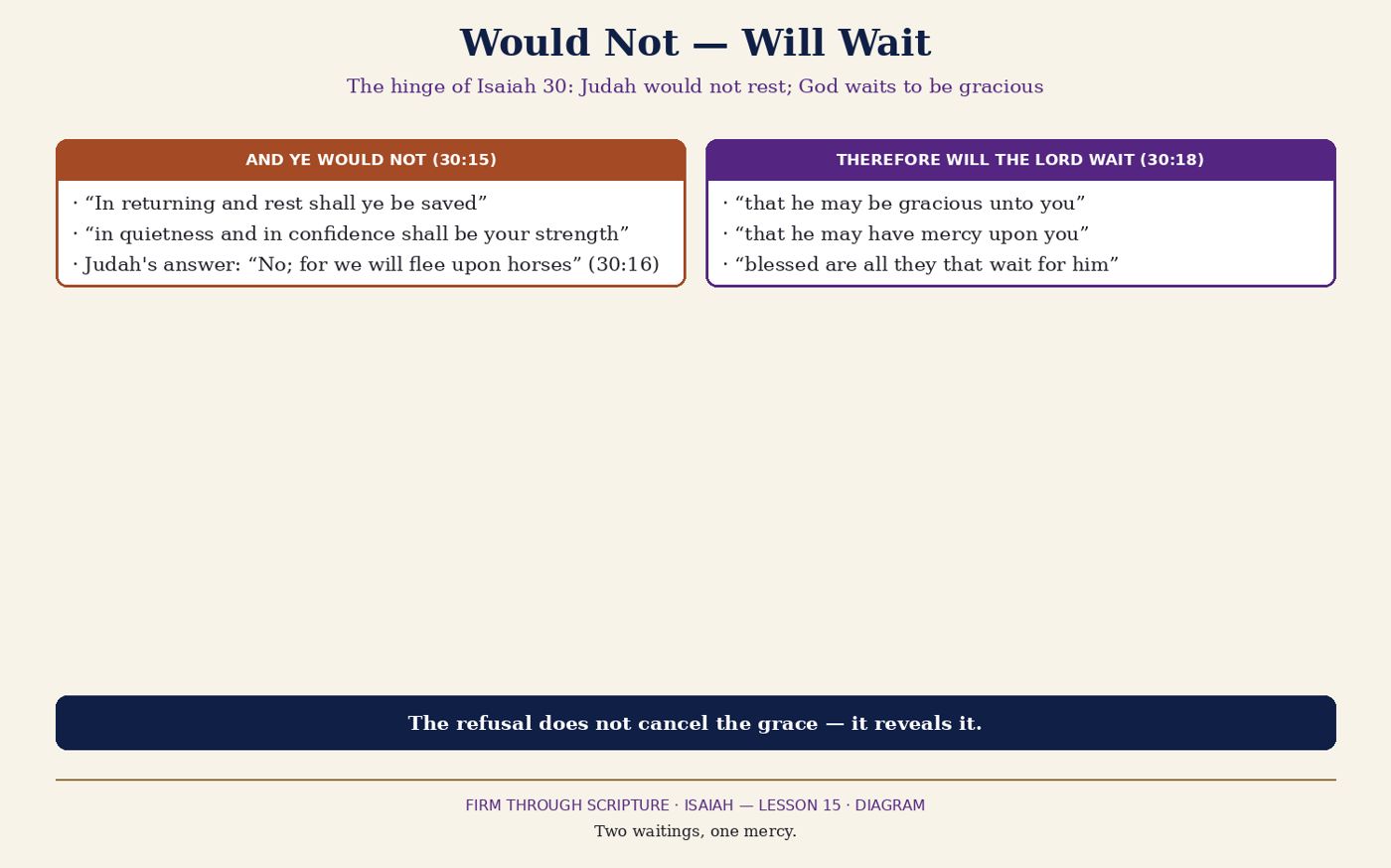
Hold the wait of verse 18 and the refusal of verse 15 side by side before we move on — the diagram below is the passage's hinge, and section 7 will walk through it:
6. ENTIRE CANON — E: where this passage sits in the whole story
No passage lives alone. Isaiah 30–31 is a knot where several of the Bible's oldest threads cross:
- The reverse exodus. God's law for Israel's kings said it in advance: the king "shall not multiply horses to himself, nor cause the people to return to Egypt... Ye shall henceforth return no more that way" (Deuteronomy 17:16) 1. The embassy is a return trip down a road God had closed by name, to buy the very horses the law flagged — and the covenant curses pictured that road's end: a people carried back toward Egypt in judgment (Deuteronomy 28:68) 1. Hearers who knew their Torah heard a covenant case already half-decided.
- Rahab's arc completes the exodus thread. Isaiah 51:9–10 pleads with God to awake "as in the ancient days" and cut Rahab again — "Art thou not it which hath dried the sea... that the redeemed of the LORD shall return?" 1. Isaiah 30:7 spends that memory as satire; Isaiah 51 spends it as prayer [52, 4].
- "Passing over" is Passover's own verb. Chapter 31:5 says the LORD, "passing over," will preserve Jerusalem. The Hebrew verb is the one Exodus 12 spends on the night the LORD passed over the blood-marked houses in Egypt (Exodus 12:13, 23, 27) [1, 19]. Teach the reversal as the text's own echo, not a reader's invention: the God who passed over Israelite houses in Egypt will now pass over Jerusalem against Egypt's claimant and Assyria's army alike. FACT — the verb is shared; INFERENCE — that Isaiah intends hearers to hear the exodus in it, an inference the shared vocabulary makes very hard to refuse.
- The Assyrian fall is narrated, not just promised. Chapter 31:8 promises Assyria will fall "with the sword, not of a mighty man"; chapters 36–37 narrate the night it happened in 701 BC, without a Judahite sword swung 1. And Assyria's own records, boasting of Hezekiah shut up "like a bird in a cage," never claim Jerusalem fell 26 — the emperor's bird-line meeting 31:5's God who protects Jerusalem as birds flying.
- The idol-casting refrain. Twice the future day dawns with hands throwing idols away (30:22; 31:7) — a song Isaiah sang before (2:20) 1. The pattern teaches: deliverance in Isaiah is never God rescuing people with their idols intact. The casting away is part of the salvation, not its optional sequel.
- Where this sits in Isaiah's own argument. Chapters 28–33 are the woe-sequence against Hezekiah's court; chapters 36–39 then show the crisis in prose [2, 12]. Our passage is the sequence's theological centre — the policy's fullest exposure and the book's tenderest promise before chapter 40: verses 18–26 are a window in the judgment wall, showing the comfort country beyond.
7. THE MEANING — what the passage teaches
The Walk has established what the text says and where it sits. Now its payload, taught straight, in the passage's own order.
Counsel taken everywhere except at My mouth
The indictment's first charge is not the embassy itself. It is the silence that preceded it: they "take counsel, but not of me," and "have not asked at my mouth" (30:1–2). Judah's court was not irreligious — it had priests, sacrifices, a temple in sight of the palace. What it had not done was ask. The policy was formed entirely inside the room where Egypt made sense. Verse 1 names the result: a plan made without God is a covering "not of my spirit" — a shelter that shelters nothing — and the policy compounds: "that they may add sin to sin." That is Isaiah's arithmetic for the whole scheme: fear was unbelief; the embassy added deceit; the deceit will require defending; the defence will require silencing prophets. Verses 9–11 show the addition happening [2, 4].
The promised return on the investment is stated before the gifts arrive: Pharaoh's strength "shall be your shame," trust in Egypt's shadow "your confusion" (30:3). A shadow cast by something with no substance left is the shape of protection with nothing in it 52 — and Egypt was that: an old empire's outline, a divided delta, a cavalry reputation [16, 11]. Verse 5 states the shame in the past tense — "they were all ashamed" — while the caravan is still in the desert. The outcome is that certain.
The record, and the demand for smooth things
Then the passage talks about itself: "Now go, write it before them in a table, and note it in a book, that it may be for the time to come for ever and ever" (30:8). Why written and kept? Not primarily for the generation that rejected it. It is a standing witness for "the time to come": future readers can check, when Egypt fails and Assyria falls as announced, that the word was spoken beforehand and refused knowingly. The book knows it is a book; its filing purpose is testimony — and you, reading centuries later, are one of the readers it was filed for [4, 11].
What the record preserves, first of all, is the people's order to their preachers: "Prophesy not unto us right things, speak unto us smooth things, prophesy deceits" (30:10). Sit with the honesty of that sentence. This is not a congregation deceived against its will; it is a demand — false prophecy's supply side exists because a market ordered it. They do not ask the seers to stop prophesying; religion will continue, the forms will be filled. They ask only that the content be sanded — right things out, smooth things in, deceits knowingly labelled and accepted in advance. Verse 11 completes the order: "cause the Holy One of Israel to cease from before us." It is not finally the prophets they are dismissing, but the Holy One the prophets keep bringing into the room — the God who cannot be trimmed, removed so the programme can continue comfortably [2, 13].
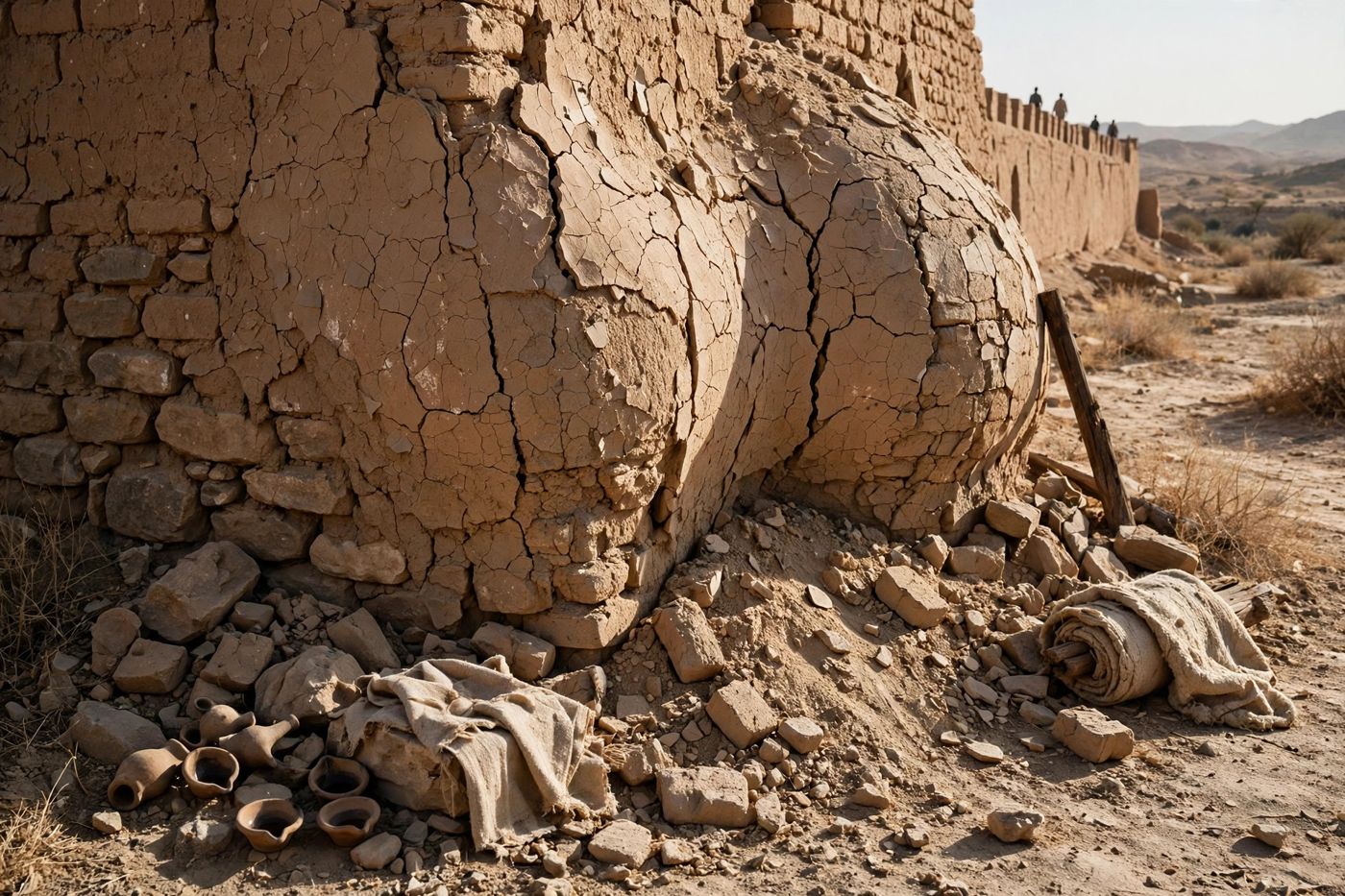
God's answer is a verdict and two pictures. The verdict: "ye despise this word, and trust in oppression and perverseness, and stay thereon" (30:12) — they lean (stay) on a crooked wall of their own building. Then the pictures preach. The wall: this iniquity will be "as a breach ready to fall, swelling out in a high wall, whose breaking cometh suddenly at an instant" (30:13). A bulging wall leans for years, defended by its owners as perfectly sound — then is rubble in one second; the suddenness is the judgment's signature. The pot: smashed so thoroughly "that there shall not be found in the bursting of it a sherd to take fire from the hearth, or to take water withal out of the pit" (30:14). A broken pot usually leaves a useful shard. This breaking leaves nothing usable — no shard big enough to carry one coal or one cup of water. The Egypt policy will not fail partially. It will fail to the last fragment, because it was built against the word [4, 16].
The road not taken
At the passage's centre stands the offer — and note how short God's road is compared with the caravan's. "In returning and rest shall ye be saved; in quietness and in confidence shall be your strength" (30:15). Four nouns do the work. Returning — the Bible's great repentance word, turning back around 21. Rest — settled stillness, the opposite of the embassy's frantic motion. Quietness — the calm of a people not scrambling. Confidence — trust: the very thing they were trying to buy in Egypt, offered free at home. God is not proposing a strategy to compete with Pharaoh's cavalry on Pharaoh's terms. He is cancelling the whole fear-market: come back, settle, be quiet, trust — and the strength you are shopping for will be yours as a by-product of the posture, not a purchase.
"And ye would not" (30:15) — three words, and the saddest summary of a nation in the book. What they chose instead, verse 16 gives in their own voice: "No; for we will flee upon horses... We will ride upon the swift." God's reply is grim wordplay — you want flight? You shall have it: "therefore shall ye flee... therefore shall they that pursue you be swift." The horses bought to escape Assyria become the horses of a rout: a thousand fleeing at the rebuke of one, then of five (30:17), until what is left is "a beacon upon the top of a mountain" — a lone pole on a bare hilltop, a flagstaff with the army gone. Self-rescue ends not with a smaller army but with a signpost — which is a strange mercy in disguise, because a beacon is still standing, still visible, and still God's to gather people back to [2, 52].
Grace waiting — the Teacher, the voice, and the bound-up wound
Verse 18 begins with the least expected word in the passage: "And therefore will the LORD wait." Therefore — because of all that? The embassy, the smooth-things order, the No of verse 16? Yes. Not that judgment is cancelled — the wall will fall, Assyria is already moving — but that God's next act toward this people, outlasting the judgment, is a deliberate waiting: He holds Himself in the posture of grace, exalted precisely in this, "that he may have mercy upon you." Then the ground: "for the LORD is a God of judgment" — "blessed are all they that wait for him." The God who waits to be gracious and the God of judgment are not two Gods taking turns. He will not let the Egypt policy stand — and He will not let the people who ran it be the final word about themselves either [4, 3].
What the waiting God promises, verses 19–26 unfold in a rising sequence — every step answering a wound the earlier verses opened:
- Tears ended by a hearing God. "Thou shalt weep no more: he will be very gracious unto thee at the voice of thy cry" (30:19). The people who would not ask at His mouth (30:2) will be answered at the first cry's sound.
- Adversity becomes the school, and the Teacher comes out of hiding. "Though the Lord give you the bread of adversity, and the water of affliction, yet shall not thy teachers be removed into a corner any more, but thine eyes shall see thy teachers" (30:20). The adversity is given — the hard years are not withdrawn from the promise but repurposed as the classroom. In place of the prophets ordered away (30:10–11) stands a Teacher seen, not hidden.
- A voice from behind. "Thine ears shall hear a word behind thee, saying, This is the way, walk ye in it, when ye turn to the right hand, and when ye turn to the left" (30:21). Not a map to memorise but a living voice in the moment of straying — behind the walker, because the walker is already on the road, needing direction at the turnings. Guidance here is accompaniment.
- Idols out, by their own hands. "Ye shall defile also the covering of thy graven images of silver... thou shalt cast them away as a menstruous cloth; thou shalt say unto it, Get thee hence" (30:22). What they once overlaid with silver and gold they now handle like something unclean. Nobody confiscates the idols; the healed people throw them — the surest sign the healing is real [4, 52].
- Creation itself recovers. Rain for the seed, bread "fat and plenteous," cattle in large pastures, streams on every high hill (30:23–25) — and over it all, light turned up past nature: the sun sevenfold, "in the day that the LORD bindeth up the breach of his people, and healeth the stroke of their wound" (30:26). The bulging wall's breach (30:13) is answered by a breach bound up (30:26) — the same word, carried from judgment to healing. The sevenfold-sun language is POETRY, an image of immeasurable brightening, not an astronomical prediction — and the direction is not in question: the God who smashed the pot binds the wound personally, like a physician dressing an injury by hand [2, 4].
Laid out flat, the answering pattern looks like this:
| The wound (chs. 30–31) | Grace's answer |
|---|---|
| Counsel taken, God never asked (30:1–2) | A cry answered at the sound of it (30:19) |
| The prophets ordered away (30:10–11) | The Teacher seen, the voice behind (30:20–21) |
| Idols overlaid with silver and gold | Idols defiled and cast away by their own hands (30:22) |
| The breach in the bulging wall (30:13) | The breach bound up, the wound healed (30:26) |
The Assyrian's turn — the name from far, and Tophet's pyre
Chapter 30's last movement turns the camera to the empire Judah feared. "Behold, the name of the LORD cometh from far, burning with his anger" (30:27) — God's own presence arriving, breath like an overflowing stream "to sift the nations with the sieve of vanity." Zion's response to this arrival is, of all things, a festival: "Ye shall have a song, as in the night when a holy solemnity is kept" (30:29). Then the sentence the whole policy needed to hear: "through the voice of the LORD shall the Assyrian be beaten down" (30:31). Not through Egyptian cavalry, not through Judah's walls — through a voice, the same instrument Judah had ordered silenced in verse 10. The word despised becomes the weapon deployed [2, 11].
Tophet closes the chapter (30:33) — the pyre prepared of old, deep and large, "for the king," kindled by God's breath "like a stream of brimstone." Set it beside chapter 31's end: Tophet's fire burns for the king who threatened Zion; Zion itself holds God's own fire and furnace (31:9) — a hearth, not a pyre. The fire God kindles against the oppressor and the fire He keeps in His city are the same holiness, experienced from opposite sides of the embassy question — trusted, or fled from.
Chapter 31: the whole sermon in one page — men, not God; a lion; a bird
Chapter 31 re-preaches everything in nine verses — if you missed it at sermon length, here it is at proverb length. The woe returns with the charge itemised: they "stay on horses, and trust in chariots, because they are many; and in horsemen, because they are very strong; but they look not unto the Holy One of Israel, neither seek the LORD!" (31:1). Because they are many, because they are very strong — the reasons of every age: visible numbers, measurable force. Against them stands the passage's most quotable theology: "the Egyptians are men, and not God; and their horses flesh, and not spirit" (31:3). Not an insult — a classification. Any rescue-plan that quietly promotes a creature into the Creator's job fails at exactly the joint of the promotion: "both he that helpeth shall fall, and he that is holpen shall fall down, and they all shall fail together" (31:3). Ally and client go down in one heap, built on a category error [4, 16].
Then two animal pictures close the argument — the passage's tenderest surprise. The lion: as a lion over its prey ignores a shouting crowd of shepherds — "he will not be afraid of their voice" — "so shall the LORD of hosts come down to fight for mount Zion" (31:4). Assyria's noise, Egypt's noise, Judah's panic: all shepherd-shouting to the Lion standing over His own. The birds: "As birds flying, so will the LORD of hosts defend Jerusalem; defending also he will deliver it; and passing over he will preserve it" (31:5). A mother bird hovering over the nest — the picture God chooses for defending the city that would not rest in Him. The verbs stack like hands laid one over another: defend, deliver, pass over, preserve [52, 4].
So chapter 31 lands not on Egypt or Assyria but on a call: "Turn ye unto him from whom the children of Israel have deeply revolted" (31:6). The return refused in 30:15 is offered again — the road not taken still, astonishingly, open. Its evidence is the same as before: hands casting away "his idols of silver, and his idols of gold, which your own hands have made" (31:7) — self-made gods, self-removed, in the day God defends.
The Christ Thread
This passage earns a Christ Thread, but an honest one — and honesty starts with a limit: FACT — no New Testament writer quotes Isaiah 30–31 as a direct prediction of an event in Jesus' life, the way Isaiah 7:14 and 53 are quoted. What the New Testament does is live inside this passage's pattern until the pattern stands up in a Person. POSITION — the church's historic reading, stated as such: the Teacher no longer removed into a corner (30:20) is heard at full clarity when God teaches in the flesh, and the voice that said "this is the way" becomes a voice with a face, saying "follow me." The God who waits to be gracious (30:18) is the God of Jesus' parable — a father watching a road for a returning son. And Jerusalem's defence — defending, delivering, passing over, preserving (31:5) — reaches its fullest statement at the cross and the empty tomb, where God's preservation of His people is accomplished by a sword that falls on the Shepherd instead of the city. None of that invents types Isaiah never drew; it notices that the New Testament's Jesus keeps doing, in person, the things Isaiah's God promised to do — said at exactly that strength, no stronger [57, 4].
Where in the Covenant Story?
This passage stands deep in the kingdom chapter of the covenant story — the monarchy old, Deuteronomy's blessings and curses running as live history. Every element is covenant machinery in the open: the forbidden return to Egypt (Deuteronomy 17:16), the curses as invasion and desolation, the remnant preserved (30:17's lonely beacon is a judgment — and, by the book's wider witness, also a seed, since Isaiah's remnant always survives for something 12), and beyond curse a healed, idol-free, rain-fed people — the blessing side restored by grace, not earned by performance. The embassy is the covenant voided in practice by the covenant partner — which is why the tenderness lands so hard: the covenant's other Partner waits.
The Long View — what the church has believed
Readers have not divided over this passage's centre the way they divide over Isaiah's authorship or chapter 53 — and that itself instructs. Jerome read chapters 30–31 straight: Egypt trusted is Egypt fallen, and verses 18–26 God's certain future for His chastened people 37. Calvin lingered on verse 15's quietness as faith's posture against frantic alliance-building, and on verse 10's smooth things as the corruption of preaching by the hearers' demand 36. The live disagreements are peripheral: how much of verses 23–26 is near-term restoration and how much final glory (the mainstream reading hears both horizons at once [2, 6]); and Tophet's "king" — argued in Go Deeper. The centre has held: the Egypt you trust instead of God will shame you; the God you refused will wait to be gracious; the way back is return, rest, and a voice that still says this is the way.
That is the payload. The next section compresses it into the one sentence you are meant to carry out of this study.
8. THE AIM SENTENCE — X: eXplain the intent
Everything observed now compresses into one sentence — the author's intended meaning, stated before any application:
Isaiah exposes Judah's Egyptian embassy as covenant rebellion — counsel taken without God, a written word refused, smooth preaching demanded — and announces the double outcome: the ally trusted will shame them and the wall will fall suddenly, while the God they would not rest in waits to be gracious, teaching, guiding, healing, and defending Jerusalem Himself, until Assyria falls by no human sword and His people throw their idols away.
If a sermon or devotional uses Isaiah 30–31 to say something untraceable to that sentence, it is not this passage talking. That is the whole skill this course exists to build.
9. SAY IT BACK
Close the book and say the AIM sentence from section 8 in your own words — out loud, or written, without looking. Then say, in one more sentence, what it asks of you this week.
If your version quietly changes the meaning — if the waiting God becomes only comfort, the embassy only someone else's sin, or verse 15's rest a command to do nothing — open the lesson and walk it again. This exercise feels small. It is the entire course in miniature: meaning first, in the author's words become your words, then — and only then — your life.
10. THE MISREAD — the guardrail, with verdicts
Three live misuses of this passage — each gets a fair hearing and a verdict.
Misread 1: "'Smooth things' is about false prophets — other people's preachers, other people's churches. The disease belongs to the suppliers." Why it sounds right: verse 10 does describe prophesying deceits, and Scripture elsewhere condemns false prophets by name. It is natural to file this verse under their corruption. The evidence: read the verse's grammar. The speakers are the people; the seers are being instructed: "Which say to the seers, See not; and to the prophets, Prophesy not unto us right things, speak unto us smooth things" (30:10). Before any prophet smooths anything, a congregation has placed the order — and (v. 11) named the real target: the Holy One removed from before them. Isaiah's charge in verse 9 is against the hearers first: "children that will not hear the law of the LORD." A church gets, over time, the preaching it insists on. Verdict: the demand side is the disease this verse diagnoses. Smooth preaching is a congregational appetite before it is a prophetic product — and the appetite is perennial, not someone else's. The question this text puts to a hearer is not only "is your preacher faithful?" but "what have you ordered him to say?"
Misread 2: "'In quietness and in confidence shall be your strength' — so faith means doing nothing. Stop striving, stop acting, just rest and let God." Why it sounds right: verse 15 really does set rest against frantic activity, and tired people hear permission to stand down entirely. The verse hangs on many walls — usually alone. The evidence: the rest commanded here is a specific refusal — of the Egyptian scheme — not a general suspension of obedience. The same passage shows a prophet ordered to write (30:8), idols cast away by the people's own hands (30:22; 31:7), seed sown (30:23), ears listening at every turning (30:21), and an imperative: "Turn ye" (31:6). Verse 15's first word is returning — motion, toward God. Quietness is faith's posture while it obeys, never faith's substitute. Verdict: verse 15 forbids one frantic thing (the Egypt run) and commands one trusting thing (return); it nowhere blesses doing nothing. Rest is where strength comes from, not a replacement for the life strength is for.
Misread 3: "'Egypt' just means 'the world' — whatever we lean on instead of God. The history is a picture; swap in your own Egypt and preach it." Why it sounds right: the pattern really is transferable — 31:3's logic applies far beyond one alliance — and preachers reach for this text whenever a congregation trusts a substitute saviour. The evidence: the text's Egypt is stubbornly concrete: named cities (Zoan, Hanes), an embassy, a caravan with itemised cargo, a real cavalry, and consequences that arrived in real history when Assyria came and Egypt could not profit them [2, 11]. Isaiah never treats Egypt as a cipher; he treats it as a case, argued from facts, from which the transferable principle (31:3) is drawn. Skip the history and you skip the evidence that makes the principle credible: the principle is trustworthy because the case happened and ended as announced. Verdict: keep the history, transfer the pattern. Egypt is a real failed saviour whose failure teaches; the Transfer Tests in section 13 — not allegory-swapping — are how its pattern lawfully reaches your week.
11. FROM WORD TO WALK
A reflection page — the lesson is not finished until the passage has had its say.
Everyone in this passage is in motion except God and Egypt — Egypt, because it cannot move, and God, because He will not be hurried. Judah is the mover: princes riding to Zoan, caravans crawling through the wadi, messengers, payments, plans. It all looks like diligence — even feels like the responsible thing a government owes its people when an empire is on the horizon. Isaiah's terrible insight is that motion is not the same as faithfulness, and that much of what we call "doing something" is the Egypt run in modern dress: the frantic purchase of a visible strength, precisely because the invisible God has not yet acted on our schedule.
Because that is the unspoken charge under the whole passage: not that God had refused to help, but that He had not helped yet — and the interval was unbearable. Verse 18 turns the interval inside out: the waiting was never God's absence. "Therefore will the LORD wait, that he may be gracious unto you." He was waiting on purpose — and the people who could not bear it filled the silence with horses. Before you judge them, count your own caravans — the compromise signed, the smooth sermon preferred — not because God had failed, but because waiting felt like being abandoned.
And then the bird. God adds to the lion the hovering bird of 31:5 — wings spread over the nest, passing over, preserving. The city that would not rest under His shadow (they preferred Egypt's, 30:2) finds the true shadow was wings all along, and open the whole time. If you are in the interval now — Assyria audible, Egypt tempting, God apparently still — the passage does not tell you the wait is easy. It tells you what the wait is: a God exalted in mercy, a Teacher about to be seen, a voice at the exact turning: This is the way, walk ye in it.
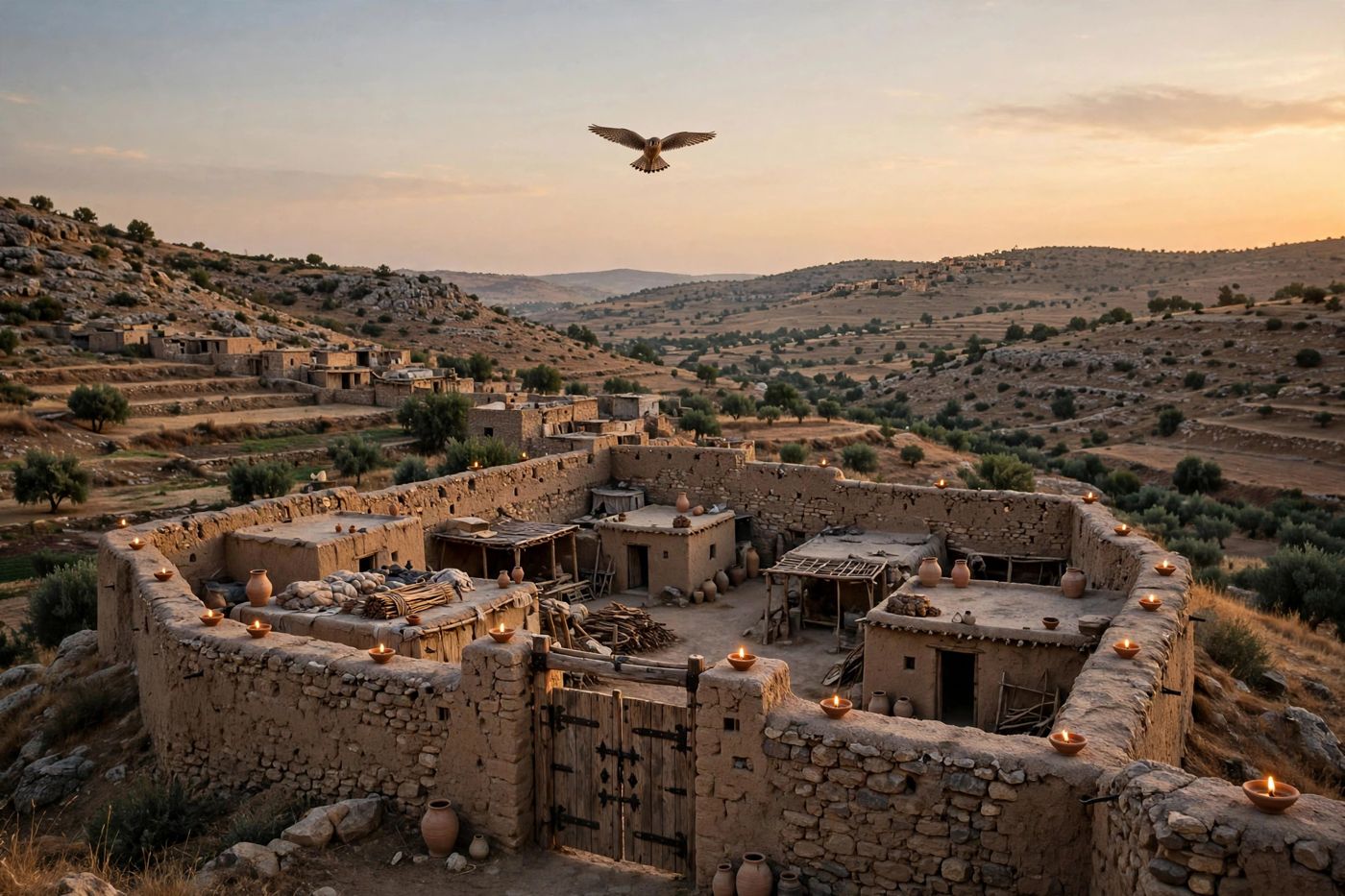
LORD, I confess my caravans — the help I have run to buy while You were waiting to be gracious. Teach me the difference between rest that trusts You and motion that replaces You. Make me a hearer who does not order smooth things. And when I turn to the right or the left this week, let me hear the word behind me — This is the way — and walk in it. In Jesus' name, amen.
12. FOR DISCUSSION — OR FOR YOUR JOURNAL
With a group, work these aloud. Alone, they're yours — answer them in your journal or in prayer; they lose nothing in the quiet.
- Judah's court took counsel everywhere except at God's mouth (30:1–2). Where does God get consulted last in your decision-making — or only informed afterwards? Name one live decision, and what asking first would change.
- The people ordered "smooth things" (30:10). What smooth things does our generation order its preaching, its news, and its friendships to say — and which have you personally ordered lately?
- God waits in order to be gracious (30:18). When has God's delay in your life turned out, in hindsight, to be mercy with a purpose clause — and where are you now in an interval you are tempted to fill with an Egypt run?
- Chapter 31:3 classifies every substitute saviour: "men, and not God... flesh, and not spirit." What is your most trusted Egypt right now — many, and very strong — and what would returning and resting look like instead, this week?
13. THE WALK-OUT — T: Transfer to today
Meaning is settled. Now — and only now — application, and it must cross the bridge honestly. The five Transfer Tests:
- Same covenant? Judah lived under Sinai, its blessings and curses running as national policy. We live under the new covenant in Christ. The specific policy (no Egyptian treaties for the theocracy) does not transfer as foreign-policy law for modern states; the covenant logic — God alone as His people's saviour, idols cast away at deliverance — crosses whole (1 Corinthians 10 retells Israel's Egypt-story expressly "for our admonition") 1.
- Same audience? The first hearers were a covenant nation's leaders making state policy. We are hearers of the filed record (30:8), addressed as God's people, not as a modern government. Applications land first on the church and the believer, not on statecraft.
- Same genre rules? Prophetic poetry argues in pictures; its promises (rain, sevenfold light) carry restoration in image-language, not as a meteorological contract. The realities pictured — God's presence, guidance, provision, defence — cross; the picture's literal surface is not a claim ticket.
- Repeated or rooted? Trust over creaturely strength (Psalm 20:7), refusal of flattering teaching (2 Timothy 4:3 — itching ears accumulating teachers, the demand side exactly as 30:10 diagnosed it), God waiting to be gracious to returning people (Luke 15) — each is repeated across the canon and rooted in God's character. These cross at full strength 1.
- Ten verses either side? Every application below comes from the forty-two verses read whole — verse 15's rest with verse 8's writing and verse 22's idol-throwing beside it; verse 18's grace with the smashed pot of verses 13–14 still in view. Nothing hangs on a torn-out line.
| Test | This passage's result |
|---|---|
| Same covenant? | Policy stays in its covenant; the God-alone logic crosses whole |
| Same audience? | God's people and the believer first — not modern statecraft |
| Same genre rules? | Restoration realities cross; the poetry's surface is not a claim ticket |
| Repeated or rooted? | Trust over substitutes, refused flattery, waiting grace — all rooted in God's character |
| Ten verses either side? | Every application drawn from the forty-two verses read whole |
What crosses — and lands:
- God waits to be gracious — that comes first. The indicative before the imperative: the LORD's settled posture toward His returning people is a purposeful waiting-for-mercy (30:18). You do not thaw God by resting; you rest because God is already like this. Every practice below stands on that ground, or it is the Egypt run with religious cargo.
- Return and rest is the commanded alternative to the substitute saviour. Not passivity (Misread 2's verdict) — the whole weight of your security turned off the many-and-very-strong thing and onto the Holy One of Israel, at the un-franticked pace of quietness and confidence.
- The demand for smooth things is a hearer's sin to confess, not only a preacher's sin to deplore. God's people are responsible for what they order. Wanting right things said — especially unwelcome right things — is discipleship, not consumer preference.
- Deliverance and idol-casting arrive together. The healed people throw their own silver-and-gold coverings away (30:22; 31:7). Expect God's rescue to include your hands letting go of things you once paid to overlay with value — and the letting-go to feel, eventually, like disgust at the thing, not grief for it.
- God defends; Assyria falls by His voice, not by your cavalry (30:31; 31:8). Battles that belong to God are not improved by panic-procurement. Some fights are won by the song sung in the night while God acts (30:29).
Practices — what the gate lets through, made concrete this week:
- Name the caravan. Write down the one "Egypt" your security rides on — the account, the contact, the habit, the approval — and write 31:3 over it in your own words: men, and not God; flesh, and not spirit. Not to destroy the thing (horses are fine as horses), but to demote it in writing from saviour to creature.
- Ask first, once, on the record. Take one live decision formed entirely without prayer and stop it mid-policy: before the next step, spend fifteen minutes asking at God's mouth — passage open, 30:15 and 30:21 prayed aloud — and write down what changes. Even if nothing does, you have broken the embassy pattern at Judah's exact joint.
- Order one right thing. Choose one hard, true word you have been avoiding — a sermon topic, a conversation, a confession — and deliberately receive it this week instead of a smooth one. Tell one person why; hearers who want right things are how faithful preaching survives.
- Throw one idol by hand. Identify one small, concrete, self-made security-object — a subscription, a stash, a feed, a ritual of reassurance — and cast it away this week, physically, saying with 30:22: Get thee hence. Small and real beats grand and theoretical.
- Wait on purpose for one interval. Where God has not acted yet, set a defined practice instead of an Egypt run: ten daily minutes of quietness and confidence (30:15) over one named need, for the rest of this week — no purchasing, no manipulating, no refreshing the feed for Assyria-news. Let the interval be inhabited, not just endured.
What does not cross: verse 15 as a charter for passivity or cancelling work, counsel, medicine, or effort; the embassy as a template for judging modern nations' alliances; the sevenfold light as a prosperity contract; and Tophet (30:33) as a text for gloating over any enemy — Zion's own response in the passage is a festival song of relief, not a taunt. The gate is not there to shrink the Bible's claims on you — it is there to make sure the claims that land are the ones God actually made.
"This is the way, walk ye in it" — the voice of 30:21, still behind the walker, still at the turnings. The Walk-Out does not outrun it; it obeys it.
Praise Him
You waited, LORD, when we would not — and Your waiting was not weakness but mercy taking its time. You are the Holy One of Israel; Egypt is men, and not God; horses are flesh, and not spirit; but You defend as the lion is not afraid, and You preserve as birds flying — passing over Your people with wings we did not hire and could not buy. Blessed are all they that wait for You — for You bind up the breach of Your people and heal the stroke of their wound, and Your fire is in Zion. To You be the song in the night, for ever. Amen.
14. THE RECAP CARD — this study on one page
Print it. Keep it where you'll see it this week.
- The passage: Isaiah 30:1–31:9 — the Egypt embassy on trial, the road not taken, the God who waits.
- Say It Plain: Judah buys Egypt's help without asking God; God names the ally Rahab-that-sits-still, records the refusal in a book, and promises instead to wait in grace — teaching, guiding, healing, defending Jerusalem Himself until Assyria falls by no human sword.
- The AIM: Isaiah exposes Judah's Egyptian embassy as covenant rebellion — counsel taken without God, a written word refused, smooth preaching demanded — and announces the double outcome: the ally trusted will shame them and the wall will fall suddenly, while the God they would not rest in waits to be gracious, teaching, guiding, healing, and defending Jerusalem Himself, until Assyria falls by no human sword and His people throw their idols away.
- Key terms: Rahab — the chaos-dragon's name, given to Egypt and deflated: Rahab-that-sits-still · wait — God's deliberate delay in order to be gracious, and the people's matching expectant staying · Tophet — the prepared burning-place in Hinnom, made deep and large for the king.
- The Misread, in one line: "smooth things" is the hearers' demand, not only the prophets' disease · verse 15's rest refuses the Egypt scheme, it does not bless doing nothing · Egypt is real history first — transfer the pattern, never evaporate the facts.
- Memory verse: "For thus saith the Lord GOD, the Holy One of Israel; In returning and rest shall ye be saved; in quietness and in confidence shall be your strength: and ye would not." — Isaiah 30:15
- This week's practice: name the caravan, demote it in writing (31:3) — and take one live decision to God's mouth before the next step.
15. CHECK YOURSELF — five questions
Answer from the study, not from instinct. (Answers live in the Teacher Edition.)
- In your own words: what is the AIM of Isaiah 30:1–31:9?
- What does the name Isaiah gives Egypt in 30:7 mean, and how does its biography — Job and the Psalms to this verse — turn mythology into mockery?
- The people demanded "smooth things" (30:10). Who is holding the ordering pen in that verse, and why does that matter for how the verse is applied?
- Someone quotes 30:15 to argue faith means doing nothing. Give two things inside this passage the same people are shown doing — and state what verse 15's rest actually refuses.
- In 31:3, why do helper and helped "fail together"? Answer with Isaiah's classification — and name the two pictures of God that close chapter 31.
16. GO DEEPER
Optional — the lesson is complete without it.
From the Sources — Zoan, Hanes, and the price of the road
Zoan (Tanis) was a genuine royal centre of Egypt's fragmented Third Intermediate Period — a court Judah's princes could attend, as 30:4 reports 16. Hanes is usually placed further south (often Herakleopolis), but no consensus site is proven — the location is DISPUTED, the embassy FACT on the text's own statement [16, 2]. The caravan route of 30:6 is priced by the literature on Negev travel: waterless stretches, no fodder, hired animals, desert predators [53, 16]. The "land of trouble and anguish" is a cost line, not a flourish.
The Honest Argument — whose pyre is Tophet, and when was this spoken?
Two disputes, argued in the open. First, "the king" of 30:33. The majority reading takes him as Assyria's king — the verse follows the Assyrian's beating (30:31), and 31:8–9 returns to Assyria's fall [2, 4]. A minority hears a wordplay on Melek/Molech, Tophet's own god; some read both edges at once. DISPUTED — the main text follows the Assyrian reading as a labelled INFERENCE; no doctrine rests on it. Second, the dating. The standard pre-701 placement rests on the chapters treating the Egyptian policy as still open (INFERENCE from tone and fit with chapters 36–39) [2, 11]. Critical scholarship debates how much of these chapters is the eighth-century prophet and how much later editorial shaping; the canonical reading — the book in its final form, read whole — is this course's POSITION, held with the debate named [5, 9].
The Word Underneath — one root, two waitings
Verse 18's music is in its Hebrew. The verb rendered "wait" for God and "wait" for the blessed people is the same root (ḥ-k-h) in both halves of the verse: the LORD waits — deliberately delays — to be gracious, and blessed are all who wait for Him; expectancy answers expectancy [19, 21]. FACT — the shared root is checkable in any lexicon. Qavah, the famous waiting-word of Isaiah 40:31, is not the word here: this chapter's word is about delay with intent. INFERENCE — that Isaiah chose the shared root to weld the two waitings into one doctrine is an inference of the kind an author earns by putting the same verb on both sides of one sentence.
Go Read
- Oswalt, The Book of Isaiah, Chapters 1–39 (NICOT) 2 — the embassy's politics, and 30:18's "therefore" as the book's theological pivot.
- Motyer, The Prophecy of Isaiah 4 — the woe-sequence's structure and the rest/quietness theology of 30:15.
- Ryken, Wilhoit & Longman (eds.), Dictionary of Biblical Imagery 52 — the image-fields kept meeting here: shadow, ensign, wall, potter, bird.
17. SOURCES & REFERENCES
Numbered citations in this lesson key to this list — the course standard: every sourced claim carries its number, and every number can be checked.
- The KJV text itself — Holy Bible, King James Version (eBible.org KJV, 1769 text). Scripture quotations are from the King James Version (KJV), which is in the public domain in the United States; the full passage is always assigned as reading. Cross-references within Scripture cite this number.
- Oswalt, The Book of Isaiah, Chapters 1–39 (NICOT) — John N. Oswalt (Eerdmans). The leading evangelical commentary on the first half; defends essential unity of authorship and reads the book as a finished theological whole. Detailed notes on the Assyrian-period history (Ahaz, Hezekiah, Sennacherib).
- Oswalt, The Book of Isaiah, Chapters 40–66 (NICOT) — John N. Oswalt (Eerdmans). The second volume: the comfort section, the Servant Songs, Cyrus, and the new-creation chapters, read as the deliberate answer to chapters 1–39.
- Motyer, The Prophecy of Isaiah — J. Alec Motyer (IVP). A one-volume commentary by an evangelical scholar who argues the whole book breathes the mind of the eighth-century prophet; especially strong on the book's structure, its repeated refrains, and the Servant.
- Childs, Isaiah (Old Testament Library) — Brevard S. Childs (Westminster John Knox). The canonical-approach reading: the book in its final form as Scripture, whatever its compositional prehistory; a control on both conservative and critical overreach.
- Goldingay, Isaiah (Understanding the Bible / NIBC) — John Goldingay (Hendrickson). A mainstream-critical one-volume commentary; the exilic-community reading of chapters 40–55 stated fairly, with close attention to the poetry.
- Blenkinsopp, Isaiah 1–39, Isaiah 40–55, Isaiah 56–66 (Anchor Bible) — Joseph Blenkinsopp (Doubleday). Mainstream-critical commentary across all three traditional divisions; a fair statement of the multiple-authorship case and of post-exilic settings.
- Smith, Isaiah 1–39 and Isaiah 40–66 (New American Commentary) — Gary V. Smith (B&H). Evangelical commentary with strong historical notes (the Assyrian and Babylonian records) and an even-handed survey of the authorship debate.
- Seitz, Isaiah 1–39 (Interpretation) — Christopher R. Seitz (John Knox). A theological reading alert to the book's editorial shaping and to Isaiah's place in the canon; useful on Zion theology and on chapters 36–39 as the hinge.
- Brueggemann, Isaiah 1–39 and Isaiah 40–66 (Westminster Bible Companion) — Walter Brueggemann (Westminster John Knox). A rhetorical-theological reading for preachers and teachers; strong on the poetry's movement from judgment to hope.
- Walton, Matthews & Chavalas, The IVP Bible Background Commentary: Old Testament — John H. Walton, Victor H. Matthews, Mark W. Chavalas (IVP). Verse-by-verse ancient Near Eastern background: Assyrian siege practice, Babylonian religion, treaty and coronation customs, geography.
- Boda & McConville (eds.), Dictionary of the Old Testament: Prophets — Mark J. Boda and J. Gordon McConville (IVP). Articles on Isaiah's composition, the Servant, Zion, the nations oracles, and the prophetic genres, written across the scholarly spectrum.
- Brown, Driver & Briggs, Hebrew and English Lexicon of the Old Testament (BDB) — The standard older Hebrew lexicon; word senses and usage ranges for the Terms sections.
- Koehler & Baumgartner, The Hebrew and Aramaic Lexicon of the Old Testament (HALOT) — The standard modern Hebrew lexicon; the control on BDB for contested senses (e.g., 'almah).
- Harris, Archer & Waltke (eds.), Theological Wordbook of the Old Testament (TWOT) — Word studies from a conservative-evangelical hand; pastoral-theological range of key terms.
- Biblia Hebraica Stuttgartensia (BHS) — The standard critical edition of the Hebrew text behind the modern translations, with its textual apparatus (the home of the Isaiah variants discussed in the Translation Notes).
- Sennacherib's Annals (the Taylor Prism) — The Assyrian king's own account of his 701 BC campaign, including the siege of Jerusalem and Hezekiah "like a bird in a cage" (Luckenbill, The Annals of Sennacherib; prism in the British Museum).
- Calvin, Commentary on Isaiah — John Calvin (public domain). Reformation exegesis; a control on interpretation and a voice in the Long View.
- Jerome, Commentary on Isaiah — Jerome (c. AD 408–410). The early church's fullest Isaiah commentary; Jerome transmits the Hebrew learning of his day and treats Isaiah as one prophet's book.
- Fee & Stuart, How to Read the Bible for All Its Worth — Gordon D. Fee and Douglas Stuart (Zondervan). The beginner's method book; its prophecy chapter ("a forthtelling first") undergirds the Genre sections.
- Ryken, Wilhoit & Longman (eds.), Dictionary of Biblical Imagery — Leland Ryken et al. (IVP). Isaiah's image-fields — vineyard, highway, banner, potter, watchman — traced across the canon.
- King & Stager, Life in Biblical Israel — Philip J. King and Lawrence E. Stager (Westminster John Knox). Daily life, agriculture, warfare, and worship in Isaiah's world.
- Walton, Ancient Near Eastern Thought and the Old Testament — John H. Walton (Baker). The method book for reading Isaiah beside its world without dissolving it into that world.
- House, Old Testament Theology — Paul R. House (IVP). Isaiah's place in a whole-Bible theology; the book's three movements read as one argument.