
One study, one walk — the universal FIRM format. The passage first and whole; then its world; then the Walk (Context · Observe · Genre · Terms · Entire Canon); the meaning taught straight; the AIM sentence; the misread exposed and answered; and the walk-out, where application has to pass the Transfer Tests before it reaches your week. The same skeleton serves a book, a chapter, a single verse, or a whole subject. In the early studies the moves are labeled as they happen. The labels fade as the walk becomes yours.
THE WEEK WITH THIS STUDY — six bites
Day 1 — Read the passage · Say It Plain · The World (§§1–2) · Day 2 — Observe · Genre (§§3–4) · Day 3 — Terms · Entire Canon (§§5–6) · Day 4 — The Meaning · the AIM Sentence · Say It Back (§§7–9) · Day 5 — The Misread · From Word to Walk (§§10–11 — add For Discussion, §12, if you're with others) · Day 6 — The Walk-Out · the Recap Card (§§13–14). Go Deeper (§16) any evening you want the basement.
BEFORE YOU READ — Open My Eyes
LORD, pour out Your Spirit from on high, and un-dim my eyes. Let me see the King in His beauty, learn the quietness righteousness works, and stop calling things by the wrong names. In Jesus' name, amen.
§ means “section” — the numbered parts of your lesson. Each bite above names the sections for that day.
1. READ THE PASSAGE — Isaiah 32:1–33:24 (KJV)
Read it all, slowly, before any teaching. In this course the passage always prints once, in full, at the head of the lesson. Everything after this is commentary — this is the text.
1 Behold, a king shall reign in righteousness, and princes shall rule in judgment.
2 And a man shall be as an hiding place from the wind, and a covert from the tempest; as rivers of water in a dry place, as the shadow of a great rock in a weary land.
3 And the eyes of them that see shall not be dim, and the ears of them that hear shall hearken.
4 The heart also of the rash shall understand knowledge, and the tongue of the stammerers shall be ready to speak plainly.
5 The vile person shall be no more called liberal, nor the churl said to be bountiful.
6 For the vile person will speak villany, and his heart will work iniquity, to practise hypocrisy, and to utter error against the LORD, to make empty the soul of the hungry, and he will cause the drink of the thirsty to fail.
7 The instruments also of the churl are evil: he deviseth wicked devices to destroy the poor with lying words, even when the needy speaketh right.
8 But the liberal deviseth liberal things; and by liberal things shall he stand.
9 Rise up, ye women that are at ease; hear my voice, ye careless daughters; give ear unto my speech.
10 Many days and years shall ye be troubled, ye careless women: for the vintage shall fail, the gathering shall not come.
11 Tremble, ye women that are at ease; be troubled, ye careless ones: strip you, and make you bare, and gird sackcloth upon your loins.
12 They shall lament for the teats, for the pleasant fields, for the fruitful vine.
13 Upon the land of my people shall come up thorns and briers; yea, upon all the houses of joy in the joyous city:
14 Because the palaces shall be forsaken; the multitude of the city shall be left; the forts and towers shall be for dens for ever, a joy of wild asses, a pasture of flocks;
15 Until the spirit be poured upon us from on high, and the wilderness be a fruitful field, and the fruitful field be counted for a forest.
16 Then judgment shall dwell in the wilderness, and righteousness remain in the fruitful field.
17 And the work of righteousness shall be peace; and the effect of righteousness quietness and assurance for ever.
18 And my people shall dwell in a peaceable habitation, and in sure dwellings, and in quiet resting places;
19 When it shall hail, coming down on the forest; and the city shall be low in a low place.
20 Blessed are ye that sow beside all waters, that send forth thither the feet of the ox and the ass.
— Isaiah 33 —
1 Woe to thee that spoilest, and thou wast not spoiled; and dealest treacherously, and they dealt not treacherously with thee! when thou shalt cease to spoil, thou shalt be spoiled; and when thou shalt make an end to deal treacherously, they shall deal treacherously with thee.
2 O LORD, be gracious unto us; we have waited for thee: be thou their arm every morning, our salvation also in the time of trouble.
3 At the noise of the tumult the people fled; at the lifting up of thyself the nations were scattered.
4 And your spoil shall be gathered like the gathering of the caterpiller: as the running to and fro of locusts shall he run upon them.
5 The LORD is exalted; for he dwelleth on high: he hath filled Zion with judgment and righteousness.
6 And wisdom and knowledge shall be the stability of thy times, and strength of salvation: the fear of the LORD is his treasure.
7 Behold, their valiant ones shall cry without: the ambassadors of peace shall weep bitterly.
8 The highways lie waste, the wayfaring man ceaseth: he hath broken the covenant, he hath despised the cities, he regardeth no man.
9 The earth mourneth and languisheth: Lebanon is ashamed and hewn down: Sharon is like a wilderness; and Bashan and Carmel shake off their fruits.
10 Now will I rise, saith the LORD; now will I be exalted; now will I lift up myself.
11 Ye shall conceive chaff, ye shall bring forth stubble: your breath, as fire, shall devour you.
12 And the people shall be as the burnings of lime: as thorns cut up shall they be burned in the fire.
13 Hear, ye that are far off, what I have done; and, ye that are near, acknowledge my might.
14 The sinners in Zion are afraid; fearfulness hath surprised the hypocrites. Who among us shall dwell with the devouring fire? who among us shall dwell with everlasting burnings?
15 He that walketh righteously, and speaketh uprightly; he that despiseth the gain of oppressions, that shaketh his hands from holding of bribes, that stoppeth his ears from hearing of blood, and shutteth his eyes from seeing evil;
16 He shall dwell on high: his place of defence shall be the munitions of rocks: bread shall be given him; his waters shall be sure.
17 Thine eyes shall see the king in his beauty: they shall behold the land that is very far off.
18 Thine heart shall meditate terror. Where is the scribe? where is the receiver? where is he that counted the towers?
19 Thou shalt not see a fierce people, a people of a deeper speech than thou canst perceive; of a stammering tongue, that thou canst not understand.
20 Look upon Zion, the city of our solemnities: thine eyes shall see Jerusalem a quiet habitation, a tabernacle that shall not be taken down; not one of the stakes thereof shall ever be removed, neither shall any of the cords thereof be broken.
21 But there the glorious LORD will be unto us a place of broad rivers and streams; wherein shall go no galley with oars, neither shall gallant ship pass thereby.
22 For the LORD is our judge, the LORD is our lawgiver, the LORD is our king; he will save us.
23 Thy tacklings are loosed; they could not well strengthen their mast, they could not spread the sail: then is the prey of a great spoil divided; the lame take the prey.
24 And the inhabitant shall not say, I am sick: the people that dwell therein shall be forgiven their iniquity.
SAY IT PLAIN — the passage in everyday words: A king is coming who will actually rule in righteousness, and under him people will shelter other people the way a great rock shelters a traveller — eyes will see, ears will listen, stammerers will speak clearly, and things will be called by their true names again: the vile man will no longer be flattered as generous. But first, a warning to the comfortable: within a year and some days the vintage will fail, thorns will take the pleasant fields, and the palaces will stand empty — until the Spirit is poured out from on high. Then the wilderness blooms, righteousness produces peace and quietness for ever, and God's people live in safe, quiet homes. Chapter 33 turns toward the invader: woe to the treacherous spoiler, who will be spoiled himself; God's people pray for grace and a saving arm every morning; the LORD rises and becomes the stability of their times. The land mourns, the highways empty — and then sinners in Zion itself ask the terrifying question: who can live with the devouring fire? The answer is the man who walks uprightly, refuses bribes and blood-talk, and shuts his eyes to evil — he will live on high, fed and watered, safe in rock fortresses. And your eyes will see the King in His beauty: the siege clerks gone, Zion a quiet, unmoving habitation, the LORD Himself judge, lawgiver, and king — and the last word is not sickness or merit, but forgiveness. Everything after this teaches from it — nothing will change what you just read.
2. THE WORLD — C: Context & Audience
A text can never mean what it never meant — so before we ask what these verses mean, we stand where their first hearers stood.
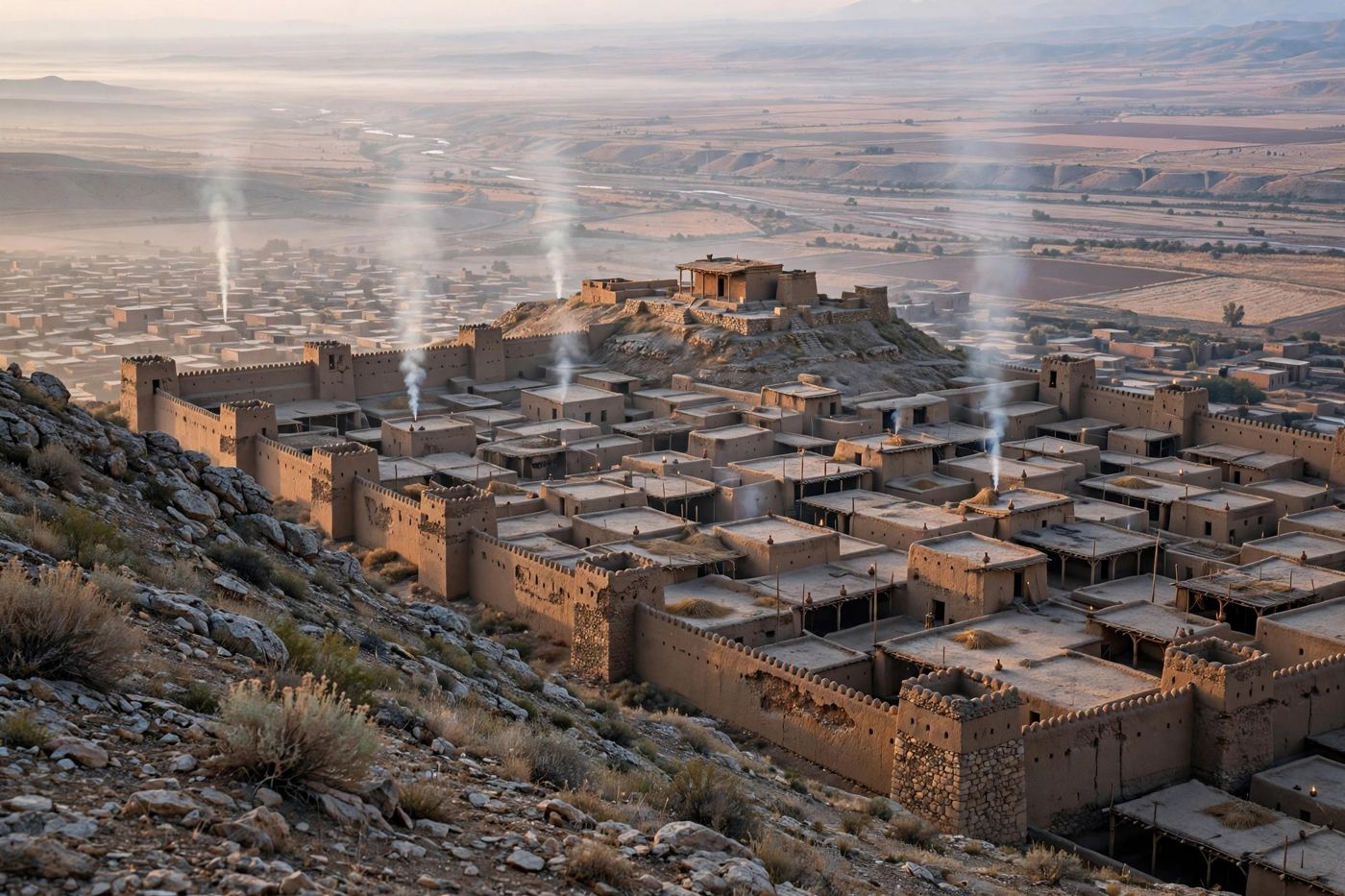
Where we are in the book. These two chapters stand near the end of a long chain of woes in Isaiah 28–33, spoken while Assyria — the empire centred on the Tigris River in what is now northern Iraq, the great military power of Isaiah's lifetime — pressed harder on the little kingdom of Judah, ruled from Jerusalem by kings of David's line [2, 11]. The previous lesson watched Judah's leaders trying to buy safety from Egypt. Chapters 32–33 answer that panic from the other side: not which empire will save us? but what kind of king, and what kind of people, will there be when God Himself settles the matter? How much of chapter 32 addresses Isaiah's own generation and how much reaches beyond it is a real argument — section 16 states it in the open. Hold the setting: a frightened court, an approaching empire, and a prophet insisting Judah's deepest problem is not its army but its righteousness [2, 4].
Zion, the name you will meet on every page. Zion is the hill in Jerusalem where the temple stood; by Isaiah's day the name carries the whole city and its people, the place God chose to dwell among them. When chapter 33 speaks of "sinners in Zion" (33:14), it means religious insiders — people who live at God's address — and when it promises Zion "filled… with judgment and righteousness" (33:5), it means God rebuilding His city from the inside, not merely defending its walls [4, 11].
A king and princes were not an abstraction. Judah was a monarchy. Every hearer of chapter 32 had lived under real kings — some decent, some disastrous — and under "princes," the officials through whom a king's rule reached ordinary people: men who could protect a widow or squeeze her. When Isaiah opens, "Behold, a king shall reign in righteousness, and princes shall rule in judgment" (32:1), he is not describing a theory of government. He is describing what his hearers either longed for or had stopped believing possible: a throne where the verdicts are straight, all the way down. A king was also expected to be a shelter — the strong man's shadow under which the weak could stand — and verse 2 spends exactly that picture, as section 7 will show [16, 52].
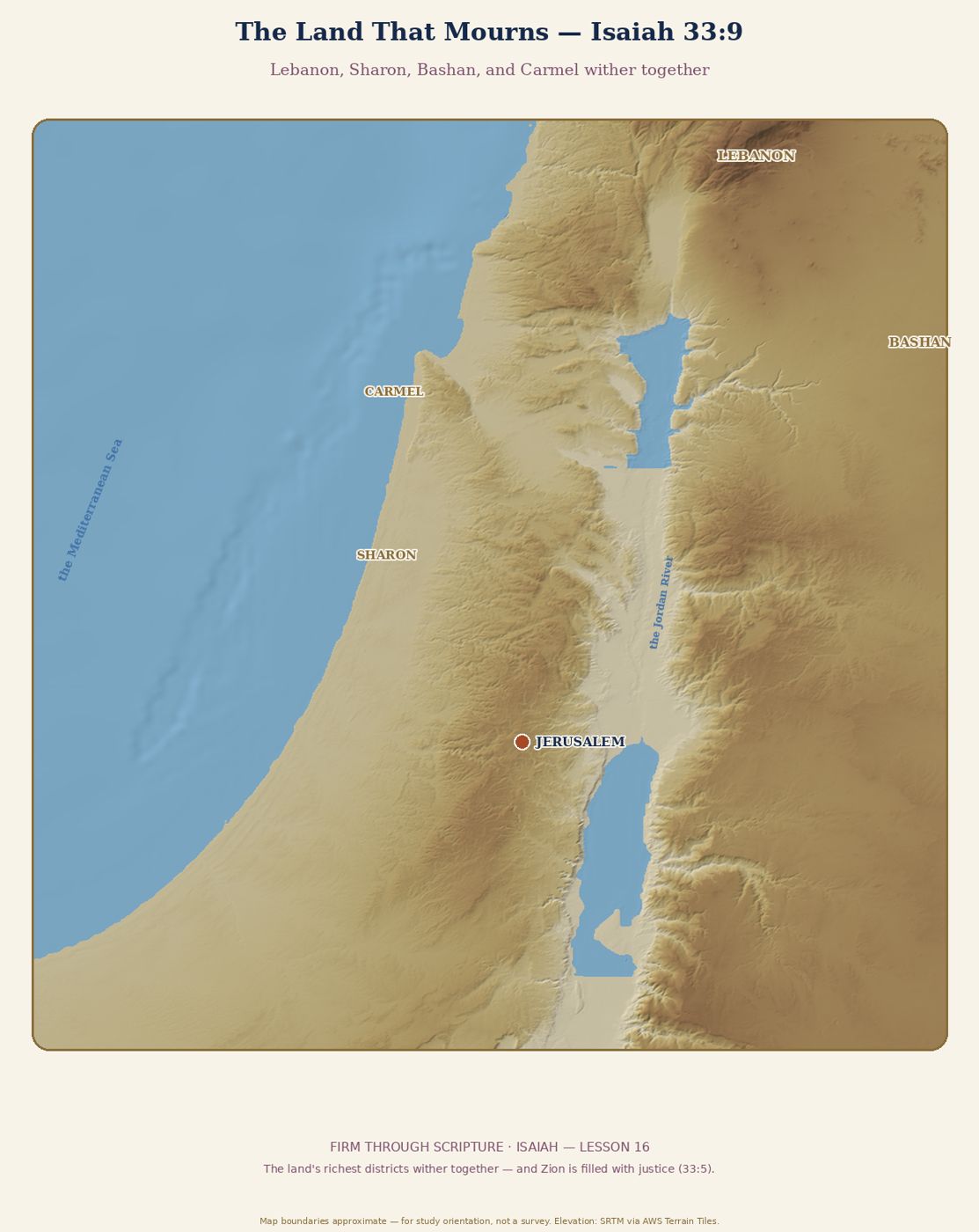
The geography of the mourning (33:9). Verse 9 names four districts, and a first-time reader needs them placed, because the verse is a map of loss. Lebanon, in the far north, was famous for its cedar forests. Sharon was the fertile coastal plain, known for pasture and wildflowers. Bashan, east of the Jordan River, was rich cattle country with oak forests. Carmel was the green ridge running down to the sea, proverbial for fruitfulness [16, 52]. Isaiah picks the land's showpieces, one from each direction. When the whole frame of the land mourns at once, the judgment is total — and it makes the fruitful-field promise of 32:15 land with its full contrast.
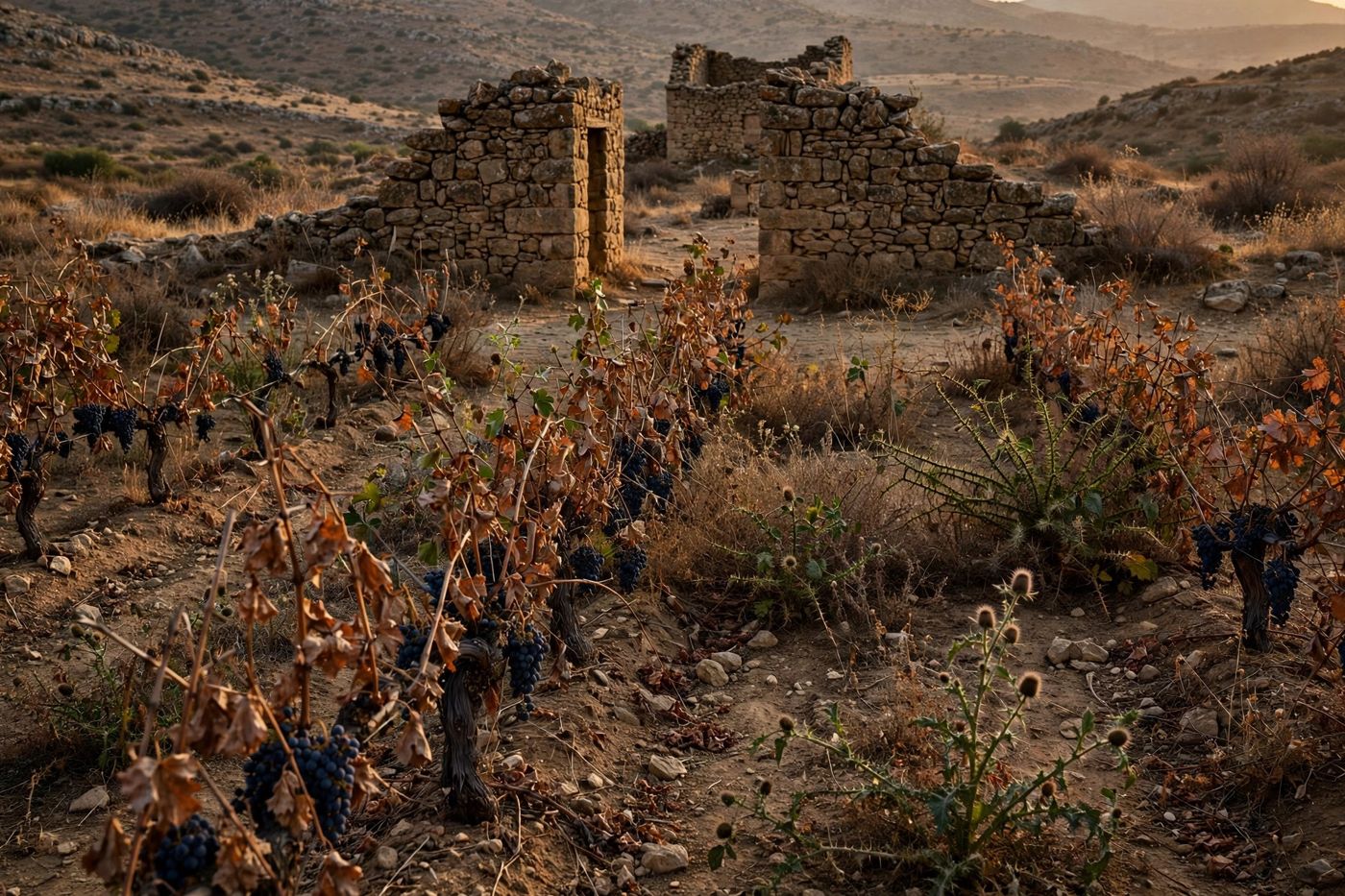
Vintage, fields, and the women at ease. Judah's wealth was agricultural: grain fields, vineyards, and the autumn vintage — the grape harvest, the year's great payday and festival season in one. A failed vintage (32:10) was an empty purse and an empty table for a year. So when Isaiah addresses "ye women that are at ease" (32:9), he is not picking on women as such — he is addressing the comfortable households of the city, pictured in the wives and daughters whose ease displayed the household's prosperity [2, 11]. This is the third time Isaiah has addressed the city's women directly (compare 3:16–4:1) 1. The pattern matters: in this book, the ease of the comfortable is a spiritual symptom. People who have never missed a vintage stop listening — and the prophet's first job, before any promise can be heard, is to make the comfortable tremble (32:11).
Siege arithmetic (33:18). One more piece of the world, or verse 18 will slip past you. An invading empire ran on clerks: the scribe wrote the assessment of what a besieged city owed, the receiver — the tribute-weigher — collected it, and others counted a city's towers to price its defence [16, 11]. These were the faces of occupation an ordinary family actually saw: not just soldiers, but accountants. Hold that picture. When 33:18 asks where they have gone, it is asking after the whole machinery of the siege — vanished like a bad dream.
That is the world: a court shopping for saviours, a city too comfortable to listen, an empire that sends accountants ahead of its army. Now watch what the text does.
3. OBSERVE — O: what the text actually does
Before meaning comes observation. Most bad interpretation is shallow reading. So look:
-
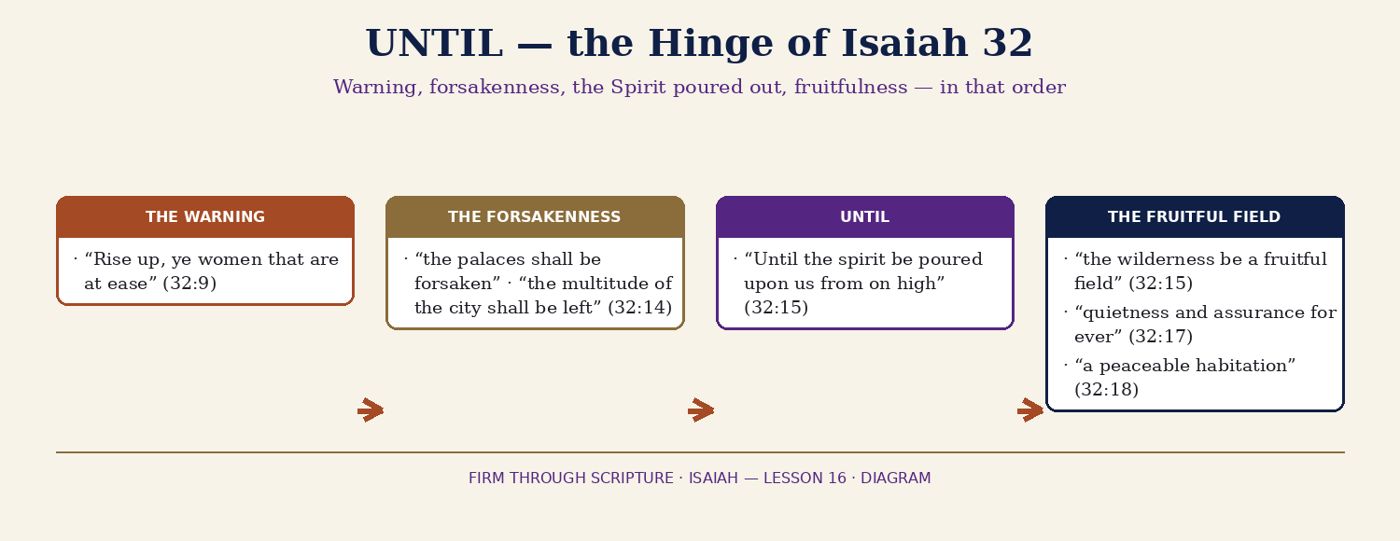
The passage is built on one hinge-word. Read 32:9–15 again slowly. Warning (vv. 9–11), loss (vv. 12–14), and then the first word of verse 15 — "Until." Nothing in the desolation is the last word, but nothing skips it either. The promise does not deny the forsaken palaces; it is dated after them. The whole lesson hangs on that word.
"Until the spirit be poured upon us from on high" (32:15) — the whole lesson in one clause. Watch for it.
-
Two chapters, one arc, run twice. Chapter 32 runs: righteous king → healed senses → warning → forsakenness → Spirit poured → quiet habitation. Chapter 33 runs: spoiler warned → prayer → desolation → the LORD rises → the fire question → the King seen → quiet habitation. Same journey, second lap — ending further on: not just a fruitful field but forgiveness itself (33:24).
- The senses are healed in order. "The eyes of them that see shall not be dim, and the ears of them that hear shall hearken" (32:3); then the heart understands, then "the tongue of the stammerers shall be ready to speak plainly" (32:4). Eyes, ears, heart, tongue — perception first, speech last. Isaiah has spent whole chapters on people whose eyes were shut and ears heavy (6:9–10; 29:9–12). Here the curse runs backwards, organ by organ. It is a reversal, not a coincidence.
- Names get healed along with senses. Verse 5 is about vocabulary: the vile person shall be no more called "liberal," and the churl no longer "said to be bountiful." Under the righteous king, flattering titles stop sticking to rotten men. A society's dictionary is a moral instrument — when the words are corrupted, the corruption is protected.
- Chapter 33 is built around a question and an answer. Verse 14 asks it in terror — who can dwell with devouring fire? Verse 15 answers it, not with a doctrine first but with a description: he that walketh righteously, speaketh uprightly, despiseth the gain of oppressions… Six participles, one portrait. Then verse 16 gives the portrait's address and provision. Question, character, dwelling — the order is the teaching.
- "Now" answers "until." In 33:10 God speaks three times in one breath: "Now will I rise… now will I be exalted; now will I lift up myself." The long until of chapter 32 meets the sudden now of chapter 33. God's timing here has two gears — a long waiting and a decisive rising — and confusing them is where most misreading starts.
- The last word is forgiveness. The passage could have ended with the lame taking the prey (33:23) — a fine ending. It ends one verse later and one level deeper: no one says "I am sick," because the people who dwell there "shall be forgiven their iniquity" (33:24). The final explanation of the healed city is not its strength. It is its pardon.
4. GENRE — N: note the genre (prophetic poetry — royal promise, woe and warning, and a temple-entry question)
These chapters are prophecy in poetry — and prophecy in Isaiah is forthtelling before it is foretelling: God's word declared into a present crisis 51. Four genre features carry this passage:
- The royal promise. Chapter 32 opens the way ancient royal announcements open — "Behold, a king shall reign" — presenting a reign as God's gift to be recognised, not a policy to be voted on. Royal promises in Isaiah look two ways at once: to David's throne as his hearers knew it, and forward to the reign the book keeps enlarging (chapters 9 and 11 stand behind this one) [4, 17]. Read it as a promise with horizons, not a party platform.
- The warning address. "Rise up, ye women that are at ease" (32:9) belongs to the woe-and-warning strain running through Isaiah 28–33: direct address, a dated trouble ("many days and years," 32:10), consequences in the concrete vocabulary of fields, palaces, and streets [51, 17]. Warning in this genre is mercy with a deadline.
- Poetry that argues in parallels. Nearly every verse here is Hebrew poetry: two lines that answer, sharpen, or complete each other. "The work of righteousness shall be peace" is completed by its second line, "the effect of righteousness" being "quietness and assurance for ever" (32:17) — not repetition for padding, but the first line cashed out. Let the second line tell you what the first one meant 52.
- The temple-entry question. "Who among us shall dwell with the devouring fire?" (33:14) has relatives in the Psalms: "LORD, who shall abide in thy tabernacle?" (Psalm 15:1), answered, exactly as here, with a portrait of the upright walker; and "Who shall ascend into the hill of the LORD?" (Psalm 24:3), answered with clean hands and a pure heart 1. Scholars call this shape an entrance liturgy — the question asked at the sanctuary door, and the character required to come near a holy God 17. Isaiah 33 raises the stakes: the dwelling in view is the presence of a God who is Himself a devouring fire.
5. TERMS — T: the words in the writer's mouth
Four terms carry this passage. Learn what they meant in Isaiah's mouth, and watch how much false teaching dies at the dictionary:
- Churl and liberal (32:5–8). These are character-words, and the KJV's "liberal" does not mean what a modern headline means by it — it means generous, princely, noble-minded: the man whose largeness of heart shows up as largeness of hand. A churl is the grasping, mean-spirited schemer, whose devices are "to destroy the poor with lying words, even when the needy speaketh right" (32:7) [19, 21]. Isaiah's contrast is exact: the churl devises wicked devices; the liberal man devises liberal things — same verb, opposite harvests — "and by liberal things shall he stand" (32:8). You stand, in the end, by what you devise. Verse 5's revolution is heaven's honesty applied to earthly reputations: under the righteous king, a man is named by his fruit, not by his flatterers.
- "The stability of thy times" (33:6). The Hebrew picture behind "stability" is firmness, what does not wobble — the word family from which Israel's "Amen" also comes [19, 21]. Now hear the promise's audacity. Eras do not usually have a stability; they have weather. Isaiah says Zion's times will be steadied, and he names the ballast: "wisdom and knowledge shall be the stability of thy times, and strength of salvation: the fear of the LORD is his treasure." Not walls first. Not tribute money. A people's real reserves are what it knows of God and how seriously it takes Him.
- "Munitions of rocks" (33:16). "Munitions" in the KJV's English means fortresses, strongholds — not ammunition in the modern sense. The righteous man's "place of defence" will be rock strongholds on high: the cliff fortresses of the hill country, where a small company could hold a crag against an army [16, 19]. The man who can dwell with God's fire dwells high and safe — not because he built the rocks, but because "bread shall be given him; his waters shall be sure." The verbs are gifts. His character is described; his provision is given.
- "The king in his beauty" (33:17). Hold this phrase whole, because it is the lesson's title and the passage's destination. Not the king in his terror, though the spoiler has met that — the king in his beauty, seen: "Thine eyes shall see the king in his beauty." After chapters of dim eyes (32:3), the healed eyes finally get their object. Beauty here is royal splendour made visible — majesty you can look at without being destroyed by it, because the chapter that asks who can dwell with the fire ends in a vision the forgiven can enjoy [52, 4].
"The fear of the LORD is his treasure" (33:6) — Zion's real reserves, in one line.
Method note — the word-study guardrail: a word means what its author uses it to mean, in its sentence, in its century — not what its oldest root once meant, and not everything it can mean anywhere. Every term above was settled by Isaiah's usage across these two chapters. That is the discipline that keeps word studies honest.
TRANSLATION NOTE — "a man shall be as an hiding place" (32:2)
Your KJV reads: "And a man shall be as an hiding place from the wind, and a covert from the tempest." The Hebrew word is ish — the ordinary word for a man, a person, anyone [19, 20]. That ordinariness is the sermon, and translators have handled it two honest ways. Some keep the plain sense: under the righteous king, a man — the princes of verse 1, and by extension the people formed by that reign — becomes shelter for others. Others, hearing verse 1's king still echoing, take the verse to describe the king himself, the royal Man who is the hiding place. The Hebrew does not force the choice, and this study will not pretend it does. What the sentence structure makes plain is the direction: reign in righteousness at the top (v. 1) produces shelter-people underneath it (v. 2). Under this king, righteousness becomes weather-protection for your neighbours.
6. ENTIRE CANON — E: where this passage sits in the whole story
No passage lives alone. Isaiah 32–33 is a knot where several of the book's own threads — and the whole Bible's — cross and tighten:
-
The healed senses answer the shut senses. Isaiah's ministry began with a dreadful commission: preach to people whose heart would be fat, ears heavy, and eyes shut (6:9–10); chapter 29 returned to the theme — deep sleep poured out, the book sealed (29:9–12) 1. Now look at 32:3–4: eyes not dim, ears hearkening, the rash heart understanding, the stammerer's tongue plain. The pattern is deliberate — FACT of the text's own patterning: the same organs, the same book, the opposite condition, in the king's day. The judgment that closed the senses is reversed by the reign that opens them.
"I will pour my spirit upon thy seed" (44:3) — the remedy, promised again.
-
The king stands in a line the book itself draws. Chapter 9 promised a child upon whose shoulder the government would rest, of whose kingdom there would be no end (9:6–7); chapter 11 promised a shoot from Jesse's stump, on whom the Spirit of the LORD rests, who judges the poor with righteousness (11:1–5) 1. Chapter 32's king — reigning in righteousness, sheltering like a rock — is read inside the royal line those chapters drew. How far the identification runs is the honest argument of section 16; that the book invites the connection is in the text itself.
-
The Spirit poured out is the book's recurring remedy. Isaiah reaches for this again: "I will pour my spirit upon thy seed" (44:3) 1; Ezekiel promises a new heart and God's Spirit within (Ezekiel 36:26–27); Joel promises the Spirit poured on all flesh (Joel 2:28) 1. The New Testament reads Joel's words as fulfilled at Pentecost, when the Spirit is "poured out" on the church (Acts 2:16–18, 33) 1. Isaiah 32 does not narrate Pentecost — but the pattern it announces, desolation ended by an outpouring from on high, is the pattern the canon keeps 4.
-
The fire question and its gospel answer. Psalm 15 and Psalm 24 ask who may dwell with God, and answer with the upright walker — as 33:15 does 1. The New Testament carries the same fire further: God is "a consuming fire" (Hebrews 12:29), and the dwelling Isaiah promises is finally described as a city where God dwells with His people and there is no more sickness or curse (Revelation 21:3–4; 22:3) 1. Isaiah 33:24's last line is the thread Revelation picks up: the inhabitants are not there because the fire found them impressive. They are there because their iniquity is forgiven.
- The three offices in one hand (33:22). "The LORD is our judge, the LORD is our lawgiver, the LORD is our king" — and then the conclusion no office-holder could pronounce: "he will save us." Israel's story had spread those offices across men — judges, Moses the lawgiver, anointed kings — and every human holder of each office failed at it somewhere. Isaiah gathers all three back into one hand. When the New Testament presents Jesus as law-fulfiller, judge, and king, it is spending, among other texts, the capital of this verse [1, 4].
7. THE MEANING — what the passage teaches
The Walk has established what the text says and where it sits. Now its payload, taught straight — the doctrines this passage actually carries, in the proportions the passage gives them.
A king shall reign in righteousness — and a man shall be a shelter
The passage opens with "Behold" — the Bible's way of putting a hand on your shoulder and turning your face. What you are turned toward is not first a judgment or a policy. It is a reign: "a king shall reign in righteousness, and princes shall rule in judgment" (32:1). Righteousness and judgment are twin words for the same straightness — righteousness is the character, judgment is the character at work in decisions: verdicts that match reality, protection that reaches the weak [4, 2]. Isaiah's hearers knew kings whose reigns ran on favour, fear, and tribute arithmetic. This king's reign runs on right.
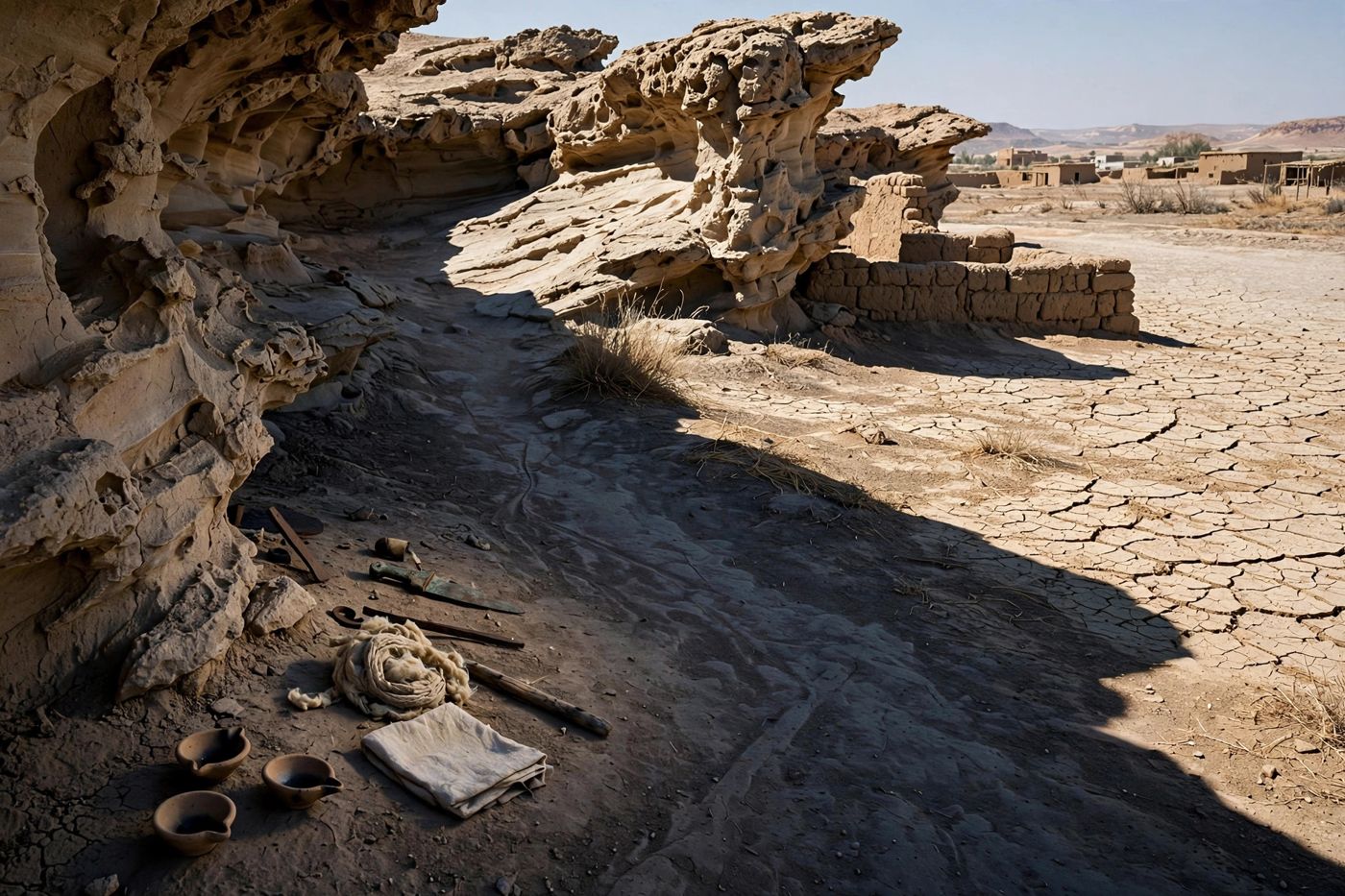
Then verse 2 tells you what that reign feels like from underneath. A man under this king is "as an hiding place from the wind, and a covert from the tempest; as rivers of water in a dry place, as the shadow of a great rock in a weary land." Four pictures, two pairs. Wind and tempest are what assault you; dryness and weariness are what drain you. The righteous reign answers both: it shelters you from what attacks and refreshes you from what exhausts [52, 16]. A "great rock" in that country is no pebble — it is the cliff-face whose shadow, at noon in a weary land, is the difference between collapse and survival. And notice who provides the shelter: in the translation note's reading, the king's righteousness multiplies into shelter-people. A righteous reign does not merely protect the righteous. It manufactures protectors. That is the first doctrine of the lesson: where God sets righteousness on a throne, ordinary men become somebody's shade.
Healed senses, healed names (32:3–8)
The king's reign reaches the organs before it reaches the institutions. Eyes un-dimmed, ears hearkening, the rash heart slowed down into understanding, and the stammerer's tongue made ready to speak plainly (32:3–4). Read the list as a diagnosis reversed: a nation that would not hear (6:9–10) becomes a nation that hearkens; a people who demanded smooth talk (30:10) become people whose own tongues tell it straight. God does not merely give His people better information under this king. He gives them back their faculties. Truth needs receivers, and the reign repairs the receivers [2, 4].
And then the repair reaches the dictionary. Verses 5–8 are the Bible's great passage on naming things truly:
| The man | What he devises | What he does | What he is called, in the king's day |
|---|---|---|---|
| The vile person | Villainy and iniquity (32:6) | Makes the hungry soul empty; lets the thirsty's drink fail | No more "liberal" — named by his fruit |
| The churl | Wicked devices (32:7) | Destroys the poor with lying words, even when the needy speak right | No more "bountiful" — named by his fruit |
| The liberal man | Liberal things (32:8) | Generosity planned, not accidental | He stands — by the very things he devises |
Look at the churl's sin closely, because it is uncomfortably modern: his deadliest instrument is words — "lying words" deployed "even when the needy speaketh right" (32:7). The needy man has the facts and loses anyway, because the churl owns the language of the room. That is why verse 5 is not cosmetic. When a culture calls grasping men "bountiful," the poor have nowhere to appeal — the dictionary itself has been bought. Under the righteous king the words are repossessed. And the positive side is just as searching: the liberal man does not drift into generosity. He devises it — plans it the way the churl plans his schemes — and "by liberal things shall he stand." Character is what you scheme at when no one is watching.
The warning: rise up, ye women that are at ease (32:9–14)
Now the passage does the thing comfortable readers wish it wouldn't. Eight verses into the loveliest royal promise in the book, the prophet turns — same voice, same chapter — to the city's comfortable households and says: Rise up. Hear my voice. Tremble. The trouble has a date on it: "Many days and years shall ye be troubled" (32:10) — a year and some days, near enough to plan by. The vintage will fail. The gathering will not come. Lament will rise for the pleasant fields and the fruitful vine (32:12).
And the desolation is an unbuilding of everything a city is proud of: thorns and briers on the people's land; the houses of joy emptied; "the palaces shall be forsaken; the multitude of the city shall be left; the forts and towers shall be for dens for ever, a joy of wild asses, a pasture of flocks" (32:13–14). Palaces to animal dens. Forts to pasture. This is not random destruction; it is ease, evicted. The comfort they are trusting is not a possession but a tenancy — and the lease can end. Why does this lesson need these verses? Because promises heard by people at ease become decoration. The warning is not the enemy of the promise; it is the promise's door [2, 11].
UNTIL — the hinge of the whole lesson (32:15–20)
Everything now turns on the first word of verse 15: "Until the spirit be poured upon us from on high." The forsakenness of verses 13–14 has an expiry date, but the date is not set by the city's recovery plan or its next king's competence. It is set by an outpouring from above: the Spirit of God, poured — liquid language, abundance language, not measured out in drops. The renewal Isaiah promises is not the city trying harder inside its own resources. It is God arriving from outside them [4, 2]. This is why skipping verse 15, as section 10 will charge, flattens the chapter into morals: without the until, all you have is a nice king, a scolded city, and your own resolve. With it, you have the book's actual sequence — judgment, forsakenness, outpouring, fruitfulness — and a God who does the decisive thing Himself.
And look at what the outpouring grows. The wilderness becomes a fruitful field; the fruitful field is counted a forest — fruitfulness so dense it changes category (32:15). Then the moral harvest arrives in the same soil: judgment dwells in the wilderness, righteousness remains in the fruitful field (32:16). Where the Spirit makes things grow, justice moves in. Then comes the sentence this lesson will ask you to memorise — peace as righteousness's work, its crop, its effect: "quietness and assurance for ever" (32:17). Not a good quarter, not a breathing space between empires, but a settledness with no expiry. And the people dwell "in a peaceable habitation, and in sure dwellings, and in quiet resting places" (32:18) — three dwellings in one verse: peaceable, sure, quiet. Hail may still flatten the proud forest (32:19) — judgment on pride is not repealed — but the chapter's last picture is farmers, blessed, sowing beside all waters, ox and ass ranging free because there is water everywhere (32:20). Scarcity, the mother of the churl, is gone.
Judgment, forsakenness, outpouring, fruitfulness. Isaiah's order is not a suggestion. A fruitful field that skips the until has not been promised anywhere in this book.
"Now will I rise, saith the LORD" (33:10) — the until arrives at its now.
The spoiler spoiled, and the prayer of the morning (33:1–6)
Chapter 33 opens facing outward: "Woe to thee that spoilest, and thou wast not spoiled" (33:1). The destroyer — Assyria in the chapter's first horizon, the empire that made treaties to break them — is told his own method will be his end: when he finishes spoiling, he will be spoiled; when he finishes dealing treacherously, men will deal treacherously with him [2, 11]. But watch what God's people do while the woe is still in the air. They pray: "O LORD, be gracious unto us; we have waited for thee" — asking for His arm "every morning," and His salvation "in the time of trouble" (33:2). Not an arm for the crisis only — daily strength for ordinary days. Waiting and prayer: that is the people's part in chapter 33, and it is worth noticing how small it is next to God's part.
God's part fills verses 3–6. At the noise of His rising the peoples flee; the spoiler's own spoil is gathered like caterpillars strip a field (33:3–4). The LORD is exalted, and has "filled Zion with judgment and righteousness" (33:5) — the same pair as 32:1, now accomplished by the LORD Himself in His city. And verse 6 lands the treasure: wisdom and knowledge as the stability of the times, the fear of the LORD as Zion's true treasury. Empires store grain and gold against a siege. Zion's siege-store is a people who know God and fear Him. That store cannot be carried off by caterpillars.
The desolation eyewitnessed — and "Now will I rise" (33:7–12)
Verse 7 drops the camera to street level, and the desolation is reported like news. The valiant ones cry in the streets. The ambassadors of peace — envoys sent to negotiate terms — come back weeping bitterly: the negotiation has failed [16, 11]. The highways lie waste and the wayfaring man ceases — no traveller, no trade. The enemy "hath broken the covenant, he hath despised the cities, he regardeth no man" (33:8): treaty, city, and human life itself, all treated as nothing. And the land joins the report — verse 9's mourning map, which section 2 laid out. Before God rises, the prophet makes you look at the empty roads.
Then verse 10 — resolve in God's own mouth, three times over: "Now will I rise, saith the LORD; now will I be exalted; now will I lift up myself." The until has arrived at its now. And the rising is not gentle on the enemy: the spoilers' grand conceptions come to chaff and stubble, their own breath the fire that devours them (33:11); the nations are burned like lime in a kiln, like cut thorns (33:12) 52. God's call goes out both ways at once — "Hear, ye that are far off, what I have done; and, ye that are near, acknowledge my might" (33:13). Which is where the chapter turns its searchlight around — from the far-off nations to the near ones, the sinners in Zion itself.
"Who among us shall dwell with the devouring fire?" (33:14) — the question the hypocrites finally ask honestly.
Who shall dwell with the devouring fire? (33:13–16)
This is the great question of the lesson, and Isaiah puts it in the mouths of the right people: "Fearfulness hath surprised the hypocrites" — and their question is the honest one: "Who among us shall dwell with the devouring fire? who among us shall dwell with everlasting burnings?" (33:14). Notice who asks. Not the Assyrians — the sinners in Zion, God's own city's religious population, who lived at the temple's address while their hands were on bribes. The fire they fear is not Assyria's burning of cities. It is God's own holiness, discovered to be a fire that does not go out. The question is the most honest sentence the hypocrites ever speak: a God like this — who of us can actually live with Him?
The answer, verse 15, is a portrait, not a price list — hold that distinction, because section 10 will defend it. "He that walketh righteously, and speaketh uprightly" — walk and speech, feet and tongue, the whole outward life straight. "He that despiseth the gain of oppressions" — he doesn't merely decline unjust profit; he despises it. "That shaketh his hands from holding of bribes" — the gesture is physical, a man shaking his hands empty as if the bribe burned them. "That stoppeth his ears from hearing of blood" — he will not sit in the room where violence is plotted and call it networking. "And shutteth his eyes from seeing evil" — he governs his own gaze [2, 4]. Hands, ears, eyes, feet, tongue — the same body whose senses chapter 32 promised to heal, now shown using its healed senses rightly. That is one of the deepest stitches in the lesson: the people the Spirit heals are the people who can dwell with the fire. The faculties God restores (32:3–4) become the instruments of the character God describes (33:15).
And the portrait's ending is pure gift: he "shall dwell on high," in the munitions of rocks, with bread given and waters sure (33:16). The fire-dweller does not climb to safety by his portrait. He is housed — in rock fortresses he did not quarry, fed bread he did not earn. Character is the description of the man; grace is the explanation of his address.
Thine eyes shall see the king in his beauty (33:17–24)
Now the chapter lifts its eyes — literally. What follows the fire question is a sequence of seeing: "Thine eyes shall see the king in his beauty" (33:17); "thou shalt not see a fierce people" (33:19); "Look upon Zion… thine eyes shall see Jerusalem a quiet habitation" (33:20). The healed eyes of 32:3 receive their reward in order: first the King, then "the land that is very far off" — a wide horizon replacing the siege's tunnel vision — then terror remembered like an old account book: "Where is the scribe? where is the receiver? where is he that counted the towers?" (33:18). The siege clerks of section 2, the whole accounting department of fear, are gone. The fierce people with the unintelligible speech will not be seen again. Terror is not denied; it is remembered from the far side, which is a very different thing.
What the eyes rest on instead is Zion remade: "a quiet habitation, a tabernacle that shall not be taken down; not one of the stakes thereof shall ever be removed, neither shall any of the cords thereof be broken" (33:20). A tent is the most movable thing in that world — stakes up, cords loosed, gone by noon. Isaiah takes the tent and makes it permanent. The reason is verse 21's reversal: the LORD Himself will be Zion's "broad rivers and streams" — the defensive water river-cities trusted in — but no war-galley will ever sail them; the River is a Person. Then verse 22 gathers the lesson into its constitutional sentence — "the LORD is our judge, the LORD is our lawgiver, the LORD is our king" — three offices in one hand, and the fruit of all three: "he will save us." The enemy's ship is disabled, its spoil divided so completely that "even the lame take the prey" (33:23): the people least able to seize anything receive their share, because the victory was never theirs to win. And the last verse falls like a benediction: no inhabitant pleading sickness, and the ground stated without embarrassment — the people who dwell there "shall be forgiven their iniquity" (33:24). The lesson that began with a king reigning in righteousness ends not with the people's record but with their pardon. Hold both, in that order, and you have the chapter.
"The LORD is our judge, the LORD is our lawgiver, the LORD is our king; he will save us" (33:22).
The Christ Thread
Now the question every reader brings to Isaiah's kings: is this king Jesus? Answer it with the honesty this book demands, evidence first. FACT: no New Testament writer quotes 32:1 or 33:17 with a "this was fulfilled" formula, the way Matthew handles 7:14 or the Servant of chapter 53 1. FACT: within Isaiah itself, this king stands in the book's own royal sequence — the child of chapter 9 whose government has no end, the shoot of chapter 11 on whom the Spirit rests and who shelters the poor by judging them righteously 1. The features rhyme too closely to be strangers: righteousness as the reign's character, shelter for the weak as its fruit, the Spirit as its enabling presence. POSITION — the program's reading, and the historic church's: the near horizon is the ideal of David's throne held up before Isaiah's own generation — what no son of David in that age, Hezekiah included, fully was; the full horizon is the Son of David in whom chapters 9 and 11 are themselves fulfilled, Jesus Christ. Nothing is forced onto Him feature by feature; the portrait is His because the book built it toward a king greater than any who had yet sat on the throne [4, 2].
Where in the Covenant Story?
These chapters are the covenant lawsuit of chapter 1 arriving at its remedy. Israel's covenant promised that obedience would mean settledness, and warned that rebellion would mean the land mourning and the cities forsaken (the pattern Deuteronomy 28 lays out) 1. Isaiah 32–33 reads like both halves coming true in sequence: the forsaken palaces are the covenant warnings landing; the fruitful field, quiet habitations, and forgiven inhabitants are the covenant blessings restored — but note the mechanism. The blessings do not return because Israel finally performed. They return "until the spirit be poured" — because God, on the far side of judgment, does a new thing from on high. That is the seed of what Jeremiah and Ezekiel will later name the new covenant: God's Spirit within, God's forgiveness as the foundation. Isaiah 33:24 is one of its earliest clear statements: a people defined, at the end, not by their record but by the sentence "forgiven their iniquity."
Father, Son, and Spirit
This passage earns a careful word here, and the care is part of the teaching. The Spirit is named outright, and named as the hinge: the desolation lasts "until the spirit be poured upon us from on high" (32:15) — God's own agent of renewal, sent from God's own height, doing what no human reform could do. The Father is not named by that title here, but the LORD who rises, fills Zion, judges, gives law, and reigns as king (33:5, 10, 22) is the God and Father of Israel acting in His covenant character. The Son is not named in these chapters either — and this study will not pretend otherwise. What the passage gives is the king, in the book's Davidic line, under the heading the Christ Thread argued honestly. Do not manufacture a three-Person tableau where the text stages a king, a Spirit, and the LORD. What is genuinely here is glorious enough: the Spirit poured out is the very gift the risen Son will send and the Father will give — one divine rescue, arriving in this chapter by its first name: until.
The Long View — what the church has believed
Across the centuries, the church's readers have treated Isaiah 32–33 as the book's great picture of God's reign breaking into a frightened nation — and read its king the way this lesson does: as David's greater Son, sketched in the ideal and fulfilled in Christ, not as a compliment to any monarch of Isaiah's day. Calvin, commenting through these chapters, dwelt on exactly the point section 10 will defend — that 33:15 pictures the citizen of God's kingdom, whose safety rests not on his description but on God's gift, since the same chapter ends in forgiveness 36. The historic argument has not been whether the promises are glorious, but over timing — how much belonged to Hezekiah's deliverance, how much to the church's present life, how much still waits.
8. THE AIM SENTENCE — X: eXplain the intent
Everything observed now compresses into one sentence — the author's intended meaning, stated before any application:
Isaiah announces that after warning and forsakenness — not instead of them — God will pour out His Spirit from on high and set righteousness reigning: a king whose rule makes shelter-people and heals the senses and the names of things, the righteous walker housed by grace before God's fire, and at the end a forgiven people seeing the King in His beauty in a quiet, unmoving Zion.
If a sermon or devotional uses Isaiah 32–33 to say something that cannot be traced back to that sentence, it is not this passage talking.
9. SAY IT BACK
Close the book and say the AIM sentence from section 8 in your own words — out loud, or written in your notes, without looking. Then say, in one more sentence, what the word until asks of you this week.
If your version quietly drops the hinge — if the king becomes only comfort, or forgiveness becomes a reward the righteous earned — open the lesson and walk it again. It is the entire course in miniature: meaning first, then — and only then — your life.
10. THE MISREAD — the guardrail, with verdicts
Three live misuses of this passage. Each gets a fair hearing, the evidence, and a verdict.
Misread 1: "Chapter 32 is a human administration plan — a good king, honest officials, sensible reform — and its optimism stands on its own." Why it sounds right: verses 1–8 really do describe a reign in concrete civic terms. It reads, at first pass, like a platform any reformer could adopt. The evidence: the chapter will not let its first eight verses stand detached. It immediately warns the comfortable that the palaces will be forsaken (32:9–14) and dates every recovery to an act no administration can perform (32:15). The reign is announced inside the warning, not instead of it, and its arrival waits on God's outpouring. Detach verses 1–8 from verses 9–20 and you have not summarised the chapter; you have reversed it [2, 4]. Verdict: the king is God's gift on God's schedule, announced between a warning and an until. Read as a human programme, the chapter's optimism is stolen — and the theft is exposed by the chapter's own order.
Misread 2: "Isaiah 33:15 is the price of heaven: walk righteously, refuse bribes, shut your eyes to evil, and you will have earned your place with God." Why it sounds right: the verse is a list of behaviours, standing directly after the question, "Who among us shall dwell with the devouring fire?" Lists after questions naturally read as entrance requirements — and the behaviours are genuinely demanded. The evidence: read the chapter whole. It opens with the people's prayer for sheer grace — "O LORD, be gracious unto us; we have waited for thee" (33:2) — and closes by grounding the inhabitants' security in forgiveness: "the people that dwell therein shall be forgiven their iniquity" (33:24). Between those grace-bookends, verse 15 describes the fire-dweller's character — and even its reward is gift-language: bread "shall be given" him (33:16). The portrait is real and required, the way fruit is required of a living tree; but fruit is not the purchase price of the orchard. Verdict: character, not purchase price. The chapter that asks who can dwell with the fire answers with a description — and frames the description, at both ends, in grace prayed for and forgiveness given.
Misread 3: "Skip the 'until the Spirit be poured' verse — it's a mystical footnote; the chapter is really about morals." Why it sounds right: the language of outpouring feels less graspable than the concrete ethics around it, and a lesson on generosity is easier to preach than a hinge about the Holy Spirit. Teachers reach for the manageable parts. The evidence: verse 15 is the chapter's pivot — the sentence the desolation of verses 9–14 waits on ("until"), and the cause of everything verses 16–20 celebrate: peace as righteousness's effect. Effects require causes, and the chapter names exactly one for the fruitful field: not human resolve. Skip the hinge and the ethics float free as self-improvement — precisely the self-salvation Misread 2 was warned against, arriving by the back door. Verdict: the until is the hinge, not a footnote. The book's sequence — judgment, forsakenness, outpouring, fruitfulness — is the teaching. Flatten it to morals and you have removed the engine and kept the paint.
11. FROM WORD TO WALK
A reflection page — the lesson is not finished until the passage has had its say.
Begin where the prophet begins his turn: with ease. Isaiah's warning was not addressed to the city's villains, but to its comfortable — households where the vintage had never yet failed and God's voice had become background noise. Ease doesn't argue with God; it just stops needing to listen. Ask yourself where your own life has arranged itself so that nothing hurts enough to make you listen. That arrangement — not your worst sin, your best-insulated comfort — may be the very place this chapter is knocking.
Then let the hinge do its slow work on you. Until the spirit be poured upon us from on high. Some of the desolation in your own life — the thorny field where a fruitful thing used to grow — will not be renovated by your resolve. Isaiah's sequence is a mercy to exhausted people: the fruitful field comes after the outpouring, not after your improvement programme. Waiting on God is not the passage's delay tactic; it is its method. What would change if your mornings began where chapter 33's people began — not with the siege arithmetic, but with the prayer: be gracious unto us; we have waited for thee?
And finally, let the fire question ask itself of you — not as a threat to run from, but as the most clarifying question a religious person can face. Who among us shall dwell with the devouring fire? You live nearer to God's address than the Assyrians ever did. The question is whether your hands shake bribes loose when no one would know, whether your ears leave the room where blood is plotted in boardroom language, whether your eyes have learned to shut. Not to buy your dwelling — the lesson has settled that — but because the forgiven are recognisable. The chapter's last mercy is that the question never has to be answered with your record. It is answered with a portrait to grow into, and a pardon already pronounced: forgiven their iniquity. Sit with those words last.
LORD, be gracious unto me; I have waited for Thee. Pour out Your Spirit from on high on the thorny places I cannot renovate. Make me a shelter for somebody, teach my hands to shake loose what they should never hold, and let me live this week as one of the forgiven. In Jesus' name, amen.
12. FOR DISCUSSION — OR FOR YOUR JOURNAL
With a group, work these aloud. Alone, they're yours — answer them in your journal or in prayer; they lose nothing in the quiet.
- Under the righteous king, a man becomes a hiding place, a covert, a rock's shadow (32:2). Who has been that for you — and for whom, specifically, could you be it this month?
- Isaiah 32:9 addresses the comfortable, not the wicked. Where has ease made you slower to hear God? Name one "vintage" you assume will never fail.
- The churl devises schemes and lying words (32:7); the liberal man "devises liberal things" (32:8). What do you devise — what do your unobserved plans say about which man you are becoming?
- Chapter 33 ends with forgiveness, not the righteous walker's record (33:24). Why does that order matter — and how would you explain it to a friend who believes 33:15 is the price of acceptance?
13. THE WALK-OUT — T: Transfer to today
Meaning is settled. Now — and only now — application. Run the five Transfer Tests on this passage:
- Same covenant? Isaiah spoke to covenant Judah, Assyria at the door. We live on the far side of the cross, the Spirit already poured out at Pentecost. So the until has, in its decisive act, already arrived 1 — while the King seen in His beauty remains the church's hope, not its current address.
- Same audience? The warnings were spoken to God's own comfortable people; the fire question was asked by sinners in Zion. The application lands first on religious insiders — on us.
- Same genre rules? Prophetic poetry announces and portrays more than it itemises commands. So this passage yields postures, portraits, and prayers before programmes. The one direct address — "rise up… hear my voice" (32:9) — crosses intact.
- Repeated or rooted? Righteousness producing peace, generosity devised, bribes refused, God's people sheltering one another, salvation resting on forgiveness — each is rooted in God's character and repeated across both Testaments. These cross. The siege setting is the passage's clothing, not its claims.
- Ten verses either side? Every application below is drawn from these forty-four verses read whole — the king with the warning, the walker with the forgiveness, the promise with its until.
| What the test examines | What it lets through here |
|---|---|
| Covenant | Living now in the poured-out Spirit; hoping still for the King seen face to face |
| Audience | Warnings and questions aimed first at comfortable insiders |
| Genre | Portraits to grow into and prayers to pray — not programmes to copy |
| Rootedness | Righteousness, shelter, generosity, refused bribes, forgiveness as the ground |
| Context | The whole arc — king, warning, until, fire, forgiveness — or nothing |
What crosses — and lands:
- Because God has poured out His Spirit, righteousness is a life the Spirit grows in ordinary people now, not only an ideal in a coming king. The first application is reception: praying "be gracious unto us" every morning, instead of running embassies to Egypt in a panic.
- Because the King's reign makes shelter-people, the measure of your spiritual health this week is somebody else's shade — the colleague covered, the neighbour refreshed, the weary given the rock's shadow.
- Because the chapter ends in forgiveness, the walk of 33:15 is practised as response, never as payment — and righteousness's effect, quietness and assurance, lets God's people practise a settledness the news cycle cannot set. Stock what steadies.
Practices — what the gate lets through, made concrete this week:
- The morning arm. For seven mornings, pray 33:2 before you check a single message — ask for God's arm this morning, by name.
- Be somebody's shade. One person being battered or drained — one name. Be verse 2 to them: cover a cost, absorb a pressure, provide rest.
- Devise one liberal thing. Plan one generous act the way a churl plans a scheme: budgeted, scheduled, quiet (32:8).
- Shake your hands. Name one compromise your hands are holding that 33:15 would make you shake loose. Loose it this week, in one concrete act, and tell one trusted person.
- Rename one thing truly. Pick one thing you call by a flattering false name — the habit called "rest," the grudge called "discernment" — and say its true name to God in prayer, daily.
"Blessed are ye that sow beside all waters" (32:20) — the fruitful field, practised.
What does not cross: treating 33:15 as a payment plan for heaven; treating 32:1–8 as a political platform to impose rather than a reign to receive; claiming the unmoving-habitation promises as a guarantee that no believer's household can ever be shaken in this age — the passage's own order forbids it; and skipping your own until — expecting a fruitful field while refusing both the trembling of verse 11 and the waiting of verse 15.
Praise Him
LORD, You are exalted, for You dwell on high — and You have filled Zion with judgment and righteousness. You are our Judge, our Lawgiver, our King, and You will save us. Your righteousness works peace; its effect is quietness and assurance for ever. Our bread is given, our waters are sure, our iniquity is forgiven, and our eyes shall see the King in His beauty. Praise be to the LORD, our stability in all our times, for ever. Amen.
14. THE RECAP CARD — this study on one page
Print it. Keep it where you'll see it this week.
- The passage: Isaiah 32:1–33:24 — the righteous king, the warning, the until of the Spirit, the fire question, and the King in His beauty.
- Say It Plain: A king will reign in righteousness and make shelter-people; the comfortable are warned that the palaces will stand forsaken — until the Spirit is poured out from on high. Then righteousness works peace for ever, the spoiler is spoiled, the righteous walker is housed by grace, and a forgiven people see the King in His beauty in a quiet Zion.
- The AIM: After warning and forsakenness, God pours out His Spirit and sets righteousness reigning, ending with a forgiven people seeing the King in His beauty.
- Key terms: churl and liberal — the schemer and the generous man, named by their fruit · "the stability of thy times" — the fear of the LORD as a people's true reserves · "munitions of rocks" — the righteous man's gift-housing: bread given, waters sure · "the king in his beauty" — the healed eyes' final object.
- The Misread, in one line: the king is God's gift, not a human programme · 33:15 is character, not purchase price · the until of 32:15 is the hinge, not a footnote.
- Memory verse: "And the work of righteousness shall be peace; and the effect of righteousness quietness and assurance for ever." — Isaiah 32:17
- This week's practice: the morning arm — pray 33:2 for seven mornings — and one devised liberal thing: generosity planned, budgeted, and quiet.
15. CHECK YOURSELF — five questions
Answer from the study, not from instinct. (Answers live in the Teacher Edition.)
"Quietness and assurance for ever" (32:17) — say it back before you check yourself.
- In your own words: what is the AIM of this passage?
- Verse 15 of chapter 32 begins with one small word. What is it, what depends on it, and what happens to the chapter's teaching if it is skipped?
- Chapter 32 says the senses will be healed. Where in the book had those same senses been shut, and what does the reversal show?
- A friend says: "Isaiah 33:15 is how I earn my place with God." Using the chapter itself, show him the two verses that frame his reading — one near its opening, one at its very end.
- In 33:18 the heart asks after the scribe, the receiver, and the counter of towers. Who were those men, and why is their absence good news?
16. GO DEEPER
Optional — the lesson is complete without it.
From the Sources — The mourning map of 33:9
FACT. The four districts of 33:9 are the land's prestige addresses: Lebanon for cedar timber, Sharon for pasture and flowers, Bashan for cattle and oaks, Carmel for the fruit-laden ridge [16, 52]. FACT. The verse's verbs are agricultural and funereal together — the earth "mourneth and languisheth," Lebanon is "ashamed and hewn down," Bashan and Carmel "shake off their fruits" like trees shedding a harvest no one will gather. Isaiah's audience heard an economic obituary. INFERENCE: that Isaiah chose one district from each direction to make the mourning total is an inference from the map itself; the text names the four and lets the geography preach.
The Honest Argument — Whose reign is it, anyway?
The king of 32:1 has been assigned three addresses, and the argument deserves the lights on. (a) A king of Isaiah's own day. Some critical readers take the chapter as an idealised portrait aimed at the reigning house of David in the Assyrian crisis — perhaps with Hezekiah in view. The woe-chain setting of chapters 28–33 supports a near address [11, 17]. (b) The Messiah, directly. The historic church's dominant reading takes the portrait as messianic, continuous with chapters 9 and 11, and notes that no merely human king ever gathered up all of verses 1–8 at once — healed senses and a poured-out Spirit are more than any one reign delivered [4, 2]. > The portrait's content is not disputed: righteousness is its character, shelter its fruit.
(c) This study's handling is POSITION, stated as such: a near horizon and a full horizon in one portrait — the ideal of David's throne in Isaiah's day, opened by the book itself toward the greater King of chapters 9 and 11, and fulfilled, on the church's reading, in Christ. DISPUTED — the proportions between the horizons are genuinely disputed among faithful and critical readers alike, and a lesson that hid that to make the portrait smoother would be lying to you about the state of the question. What is not disputed is the portrait's content: whoever's reign it describes, righteousness is its character and shelter its fruit.
The Word Underneath — "Until," and the pouring
The little word that carries the lesson is the Hebrew 'ad — "until, up to the point that" [19, 21]. It is a boundary word: it marks a period as real and as bounded. Behind "poured" stands the ordinary Hebrew verb for pouring out a liquid in quantity — used in this book both for wrath poured out (42:25) and for the Spirit promised to Jacob's seed (44:3) [1, 19]. FACT: the verb is the same family in judgment and in grace; the difference is what God pours. INFERENCE — one this study is glad to own: the expiry of desolation is an act of God measured by God's hand, not a recovery measured by ours. Desolation is dated, and God holds the calendar.
Go Read
- Oswalt, The Book of Isaiah, Chapters 1–39 (NICOT) 2 — the fullest treatment here of chapters 32–33 in their Assyrian setting.
- Motyer, The Prophecy of Isaiah 4 — especially strong on the book's internal rhymes: read chapters 9, 11, and 32 side by side and watch the royal portrait assemble itself.
- Walton, Matthews & Chavalas, The IVP Bible Background Commentary: Old Testament 16 — siege administration and the geography behind 33:9 and 33:18.
17. SOURCES & REFERENCES
Numbered citations in this lesson key to this list — the course standard: every sourced claim carries its number, and every number can be checked.
- The KJV text itself — Holy Bible, King James Version (eBible.org KJV, 1769 text). Scripture quotations are from the King James Version (KJV), which is in the public domain in the United States; the full passage is always assigned as reading. Cross-references within Scripture cite this number.
- Oswalt, The Book of Isaiah, Chapters 1–39 (NICOT) — John N. Oswalt (Eerdmans). The leading evangelical commentary on the first half; defends essential unity of authorship and reads the book as a finished theological whole. Detailed notes on the Assyrian-period history (Ahaz, Hezekiah, Sennacherib).
- Motyer, The Prophecy of Isaiah — J. Alec Motyer (IVP). A one-volume commentary by an evangelical scholar who argues the whole book breathes the mind of the eighth-century prophet; especially strong on the book's structure, its repeated refrains, and the Servant.
- Smith, Isaiah 1–39 and Isaiah 40–66 (New American Commentary) — Gary V. Smith (B&H). Evangelical commentary with strong historical notes (the Assyrian and Babylonian records) and an even-handed survey of the authorship debate.
- Walton, Matthews & Chavalas, The IVP Bible Background Commentary: Old Testament — John H. Walton, Victor H. Matthews, Mark W. Chavalas (IVP). Verse-by-verse ancient Near Eastern background: Assyrian siege practice, Babylonian religion, treaty and coronation customs, geography.
- Boda & McConville (eds.), Dictionary of the Old Testament: Prophets — Mark J. Boda and J. Gordon McConville (IVP). Articles on Isaiah's composition, the Servant, Zion, the nations oracles, and the prophetic genres, written across the scholarly spectrum.
- Brown, Driver & Briggs, Hebrew and English Lexicon of the Old Testament (BDB) — The standard older Hebrew lexicon; word senses and usage ranges for the Terms sections.
- Koehler & Baumgartner, The Hebrew and Aramaic Lexicon of the Old Testament (HALOT) — The standard modern Hebrew lexicon; the control on BDB for contested senses (e.g., 'almah).
- Harris, Archer & Waltke (eds.), Theological Wordbook of the Old Testament (TWOT) — Word studies from a conservative-evangelical hand; pastoral-theological range of key terms.
- Calvin, Commentary on Isaiah — John Calvin (public domain). Reformation exegesis; a control on interpretation and a voice in the Long View.
- Fee & Stuart, How to Read the Bible for All Its Worth — Gordon D. Fee and Douglas Stuart (Zondervan). The beginner's method book; its prophecy chapter ("a forthtelling first") undergirds the Genre sections.
- Ryken, Wilhoit & Longman (eds.), Dictionary of Biblical Imagery — Leland Ryken et al. (IVP). Isaiah's image-fields — vineyard, highway, banner, potter, watchman — traced across the canon.