
One study, one walk — the universal FIRM format. The passage first and whole; then its world; then the Walk (Context · Observe · Genre · Terms · Entire Canon); the meaning taught straight; the AIM sentence; the misread exposed and answered; and the walk-out, where application has to pass the Transfer Tests before it reaches your week. The same skeleton serves a book, a chapter, a single verse, or a whole subject. In the early studies the moves are labeled as they happen. The labels fade as the walk becomes yours.
THE WEEK WITH THIS STUDY — six bites
Day 1 — Read the passage · Say It Plain · The World (§§1–2) · Day 2 — Observe · Genre (§§3–4) · Day 3 — Terms · Entire Canon (§§5–6) · Day 4 — The Meaning · the AIM Sentence · Say It Back (§§7–9) · Day 5 — The Misread · From Word to Walk (§§10–11 — add For Discussion, §12, if you're with others) · Day 6 — The Walk-Out · the Recap Card (§§13–14). Go Deeper (§16) any evening you want the basement.
BEFORE YOU READ — Open My Eyes
LORD, You alone have carried Your people from the womb, and You alone will carry us to hoar hairs. Open my eyes to the difference between a god who must be carried and the God who carries — between Babylon on her throne and Babylon in the dust — and teach me to rest my whole weight on the Bearer who never tires and never fails.
§ means “section” — the numbered parts of your lesson. Each bite above names the sections for that day.
1. READ THE PASSAGE — Isaiah 46:1–47:15 (KJV)
Read it all, slowly, before any teaching. In this course the passage always prints once, in full, at the head of the lesson. Everything after this is commentary — this is the text.
Isaiah 46
1 Bel boweth down, Nebo stoopeth, their idols were upon the beasts, and upon the cattle: your carriages were heavy loaden; they are a burden to the weary beast.
2 They stoop, they bow down together; they could not deliver the burden, but themselves are gone into captivity.
3 Hearken unto me, O house of Jacob, and all the remnant of the house of Israel, which are borne by me from the belly, which are carried from the womb:
4 And even to your old age I am he; and even to hoar hairs will I carry you: I have made, and I will bear; even I will carry, and will deliver you.
5 To whom will ye liken me, and make me equal, and compare me, that we may be like?
6 They lavish gold out of the bag, and weigh silver in the balance, and hire a goldsmith; and he maketh it a god: they fall down, yea, they worship.
7 They bear him upon the shoulder, they carry him, and set him in his place, and he standeth; from his place shall he not remove: yea, one shall cry unto him, yet can he not answer, nor save him out of his trouble.
8 Remember this, and shew yourselves men: bring it again to mind, O ye transgressors.
9 Remember the former things of old: for I am God, and there is none else; I am God, and there is none like me,
10 Declaring the end from the beginning, and from ancient times the things that are not yet done, saying, My counsel shall stand, and I will do all my pleasure:
11 Calling a ravenous bird from the east, the man that executeth my counsel from a far country: yea, I have spoken it, I will also bring it to pass; I have purposed it, I will also do it.
12 Hearken unto me, ye stouthearted, that are far from righteousness:
13 I bring near my righteousness; it shall not be far off, and my salvation shall not tarry: and I will place salvation in Zion for Israel my glory.
Isaiah 47
1 Come down, and sit in the dust, O virgin daughter of Babylon, sit on the ground: there is no throne, O daughter of the Chaldeans: for thou shalt no more be called tender and delicate.
2 Take the millstones, and grind meal: uncover thy locks, make bare the leg, uncover the thigh, pass over the rivers.
3 Thy nakedness shall be uncovered, yea, thy shame shall be seen: I will take vengeance, and I will not meet thee as a man.
4 As for our redeemer, the LORD of hosts is his name, the Holy One of Israel.
5 Sit thou silent, and get thee into darkness, O daughter of the Chaldeans: for thou shalt no more be called, The lady of kingdoms.
6 I was wroth with my people, I have polluted mine inheritance, and given them into thine hand: thou didst shew them no mercy; upon the ancient hast thou very heavily laid thy yoke.
7 And thou saidst, I shall be a lady for ever: so that thou didst not lay these things to thy heart, neither didst remember the latter end of it.
8 Therefore hear now this, thou that art given to pleasures, that dwellest carelessly, that sayest in thine heart, I am, and none else beside me; I shall not sit as a widow, neither shall I know the loss of children:
9 But these two things shall come to thee in a moment in one day, the loss of children, and widowhood: they shall come upon thee in their perfection for the multitude of thy sorceries, and for the great abundance of thine enchantments.
10 For thou hast trusted in thy wickedness: thou hast said, None seeth me. Thy wisdom and thy knowledge, it hath perverted thee; and thou hast said in thine heart, I am, and none else beside me.
11 Therefore shall evil come upon thee; thou shalt not know from whence it riseth: and mischief shall fall upon thee; thou shalt not be able to put it off: and desolation shall come upon thee suddenly, which thou shalt not know.
12 Stand now with thine enchantments, and with the multitude of thy sorceries, wherein thou hast laboured from thy youth; if so be thou shalt be able to profit, if so be thou mayest prevail.
13 Thou art wearied in the multitude of thy counsels. Let now the astrologers, the stargazers, the monthly prognosticators, stand up, and save thee from these things that shall come upon thee.
14 Behold, they shall be as stubble; the fire shall burn them; they shall not deliver themselves from the power of the flame: there shall not be a coal to warm at, nor fire to sit before it.
15 Thus shall they be unto thee with whom thou hast laboured, even thy merchants, from thy youth: they shall wander every one to his quarter; none shall save thee.
SAY IT PLAIN — the passage in everyday words: Babylon's two great gods, Bel and Nebo, are not marching in triumph — they are luggage, loaded onto tired animals as the city flees, and they end up captured along with everyone else. Against them stands Israel's God, who does the opposite of being carried: He has carried His people since before they were born, and promises to keep carrying them into old age, because He made them and He delivers them. The gold gods men pay for, shoulder, and set down cannot move, answer, or save. God alone declares the end from the beginning, and He is already calling His eagle from the east — Cyrus — to do it. Then the camera turns: Babylon herself, the pampered queen of kingdoms, is ordered down off her throne into the dust and sent to grind flour like a slave. Her crime is named — when God handed His people over for discipline, she showed no mercy — and her boast is quoted: "I am, and none else beside me," God's own words stolen into her heart. Widowhood and loss will land in a single day, her horoscope-casters will burn like stubble, and her merchants will wander off. None shall save her. Everything after this teaches from it — nothing will change what you just read.
2. THE WORLD — C: Context & Audience
A text can never mean what it never meant — so before we ask what these verses mean, we stand where their first hearers stood.
Where we are in the book. You are deep in the Book of Comfort (Isaiah 40–55), addressed to God's people in exile. The setting: Jerusalem has fallen to Babylon (586 BC), the temple lies in ruins, and the exiles — Judahites carried off to live in the empire that conquered them — are asking the two questions exile always asks. Are Babylon's gods stronger than ours? And has our God finished with us? The last lessons answered with Cyrus (Lesson 23). This lesson answers from the other side: by showing Babylon's gods going down — onto carts — and Babylon herself going down off her throne.
Babylon, the glittering capital. Babylon stood on the Euphrates River in what is now Iraq, and under King Nebuchadnezzar II (reigned 605–562 BC) it became the showpiece of the world: massive walls, a processional way, temples staffed by the most learned men alive. Babylonian scholars — Chaldeans, the word the passage uses in 47:5 — were famous for watching the heavens; their astronomers kept centuries of star records and built the ancestor of the horoscope. [16, 11] When an exile walked Babylon's streets on a festival day, the empire did not merely outnumber him. It out-shone him. That shine is what this passage is written to.
Her gods: Bel and Nebo. The two names that open chapter 46 were Babylon's first family of heaven. Bel — the word means "lord" — was the title of Marduk, Babylon's chief god, credited with ordering the cosmos and with Babylon's supremacy. Nebo (Akkadian Nabu) was Marduk's son, god of writing, wisdom, and the scribes, templed in nearby Borsippa. [16, 11] On Babylon's New Year festival, these gods' statues were carried in splendid procession through the city — the gods on parade. 16 Hold that picture. Verse 1 is about to show you the same statues on the road again — and everything about the procession will be wrong.
Her wise men: the heaven-watchers. Babylon's other pride was intellectual. Her astrologer-priests divided the sky, tracked the planets, and issued monthly forecasts — the "monthly prognosticators" of 47:13 are the empire's scientific establishment, heirs of a genuine, centuries-old astronomy. [16, 11] Isaiah 46–47 speaks to exiles tempted to conclude that Babylon's heaven had beaten Israel's.
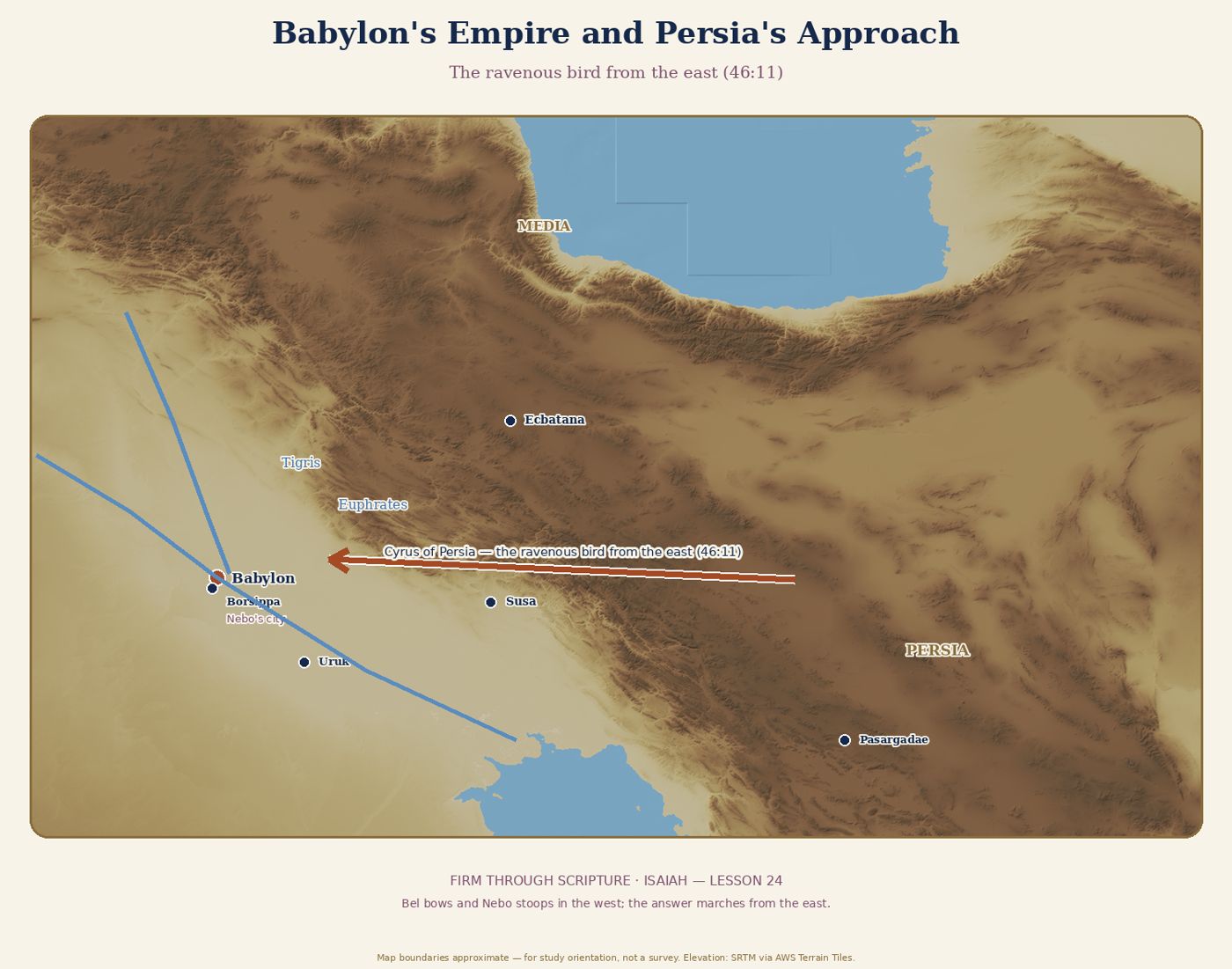
Persia rising in the east. By the time these words were heard in exile, a new name was moving through the bazaars: Cyrus of Persia. Lesson 23 lingered over God's claim to have named him in advance and called him "my anointed" (45:1). Here he appears again, still unnamed, as a "ravenous bird from the east" (46:11). The exiles did not need the name. The east had only one raptor in it.
3. OBSERVE — O: what the text actually does
Before meaning comes observation. Most bad interpretation is not deep error; it is shallow reading — people answering a text they never actually looked at. So look:
-
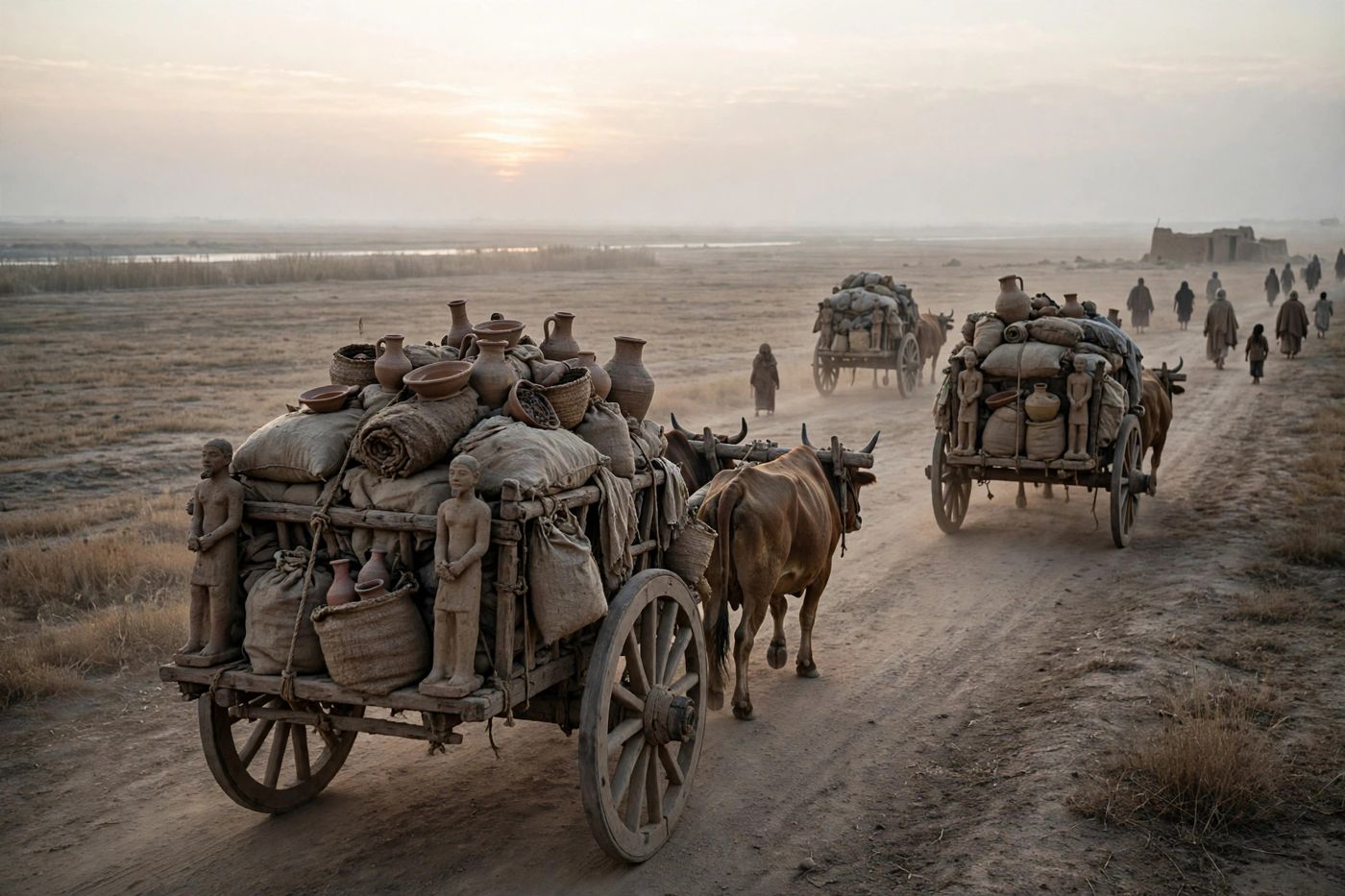
The passage opens with gods going the wrong way. Not enthroned, not processing in glory — bowing down and stooping (46:1), loaded onto animals, too heavy for the beasts that carry them. The first two verses are a photograph of a religion evacuated.
-
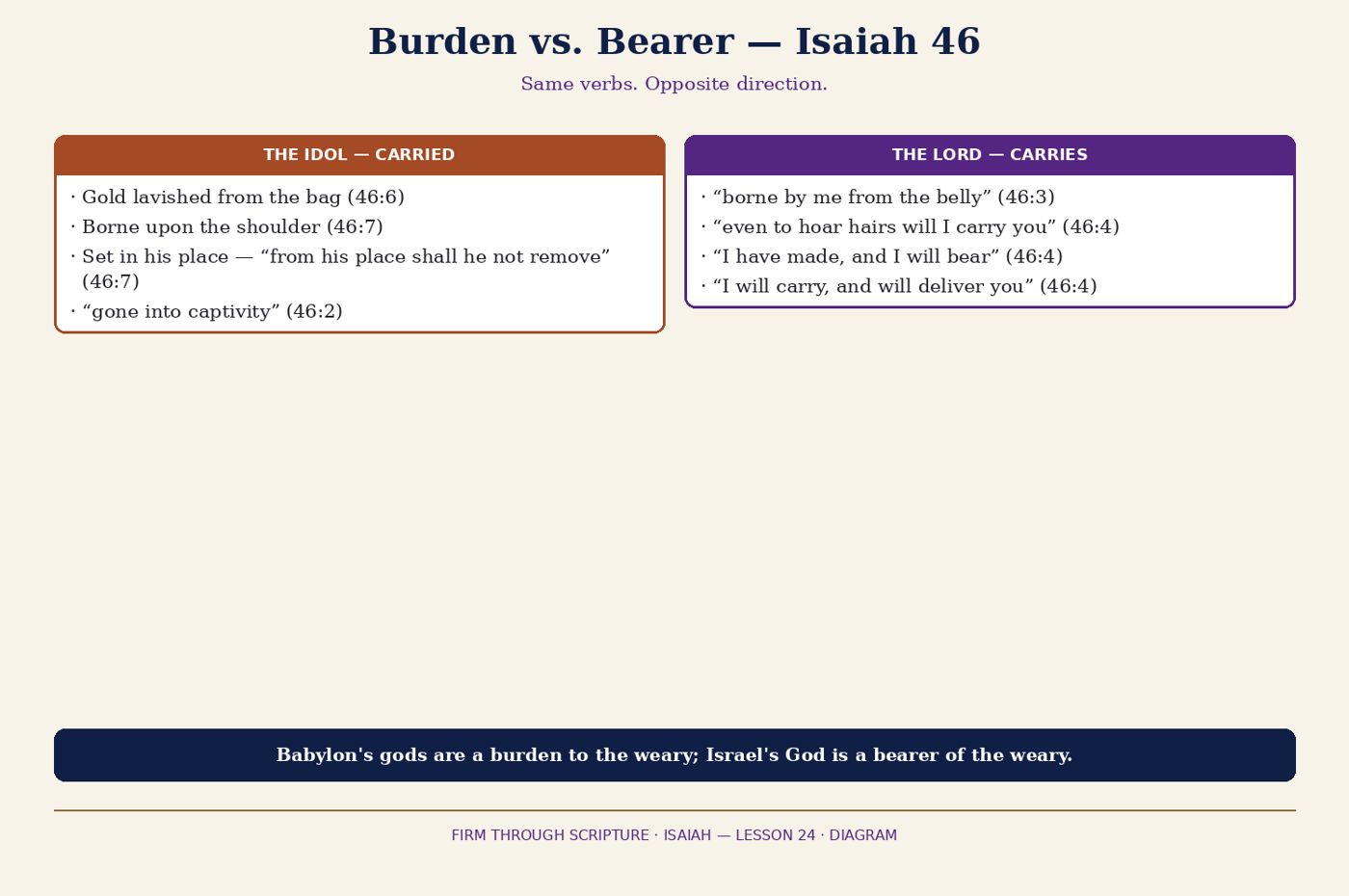
Carry, carry, carry. Read chapter 46 and keep a finger on the carrying-words. The idols "are a burden" (v. 1); they "could not deliver the burden" (v. 2); Israel is "borne by me… carried from the womb" (v. 3); God says "I will bear… I will carry" (v. 4); the gold god is borne "upon the shoulder" (v. 7). One verb-cluster runs the chapter, and its direction is the entire argument. Who carries whom?
- "Hearken unto me" sounds twice (46:3, 12) — and the two audiences could not differ more. First, "the remnant of the house of Israel," tenderly addressed as carried-from-the-womb. Second, "ye stouthearted, that are far from righteousness." The difference is in the hearer's posture, not in God's willingness.
- God introduces Himself by His record (46:9–10). "I am God, and there is none else" is cashed out in a checkable test: He alone "declares the end from the beginning." Chapter 47 will hold Babylon's heaven-watchers up against that test, and they will fail it in public.
- Babylon speaks God's sentence in her heart — twice. "I am, and none else beside me" (47:8, 10). Compare 46:9, where God says of Himself, "I am God, and there is none else." The echo is exact, and it is not an accident. The queen has been quoting God about herself.
- Chapter 47 is built of commands to one woman. Come down… sit… take the millstones… uncover… sit thou silent… get thee into darkness (47:1–5). Babylon is addressed as a single pampered lady, undressed of her royalty item by item: throne, clothing, labour, title. This is not a battle report. It is a staged demotion.
- Verse 4 interrupts everything. Mid-taunt, the singers suddenly speak in the first person: "As for our redeemer…" One verse, no command, no description of Babylon — the oppressed people's name for their God, dropped like a banner into the funeral song.
- The last word belongs to the merchants. The passage that began with gods who could not save ends with traders who will not: "none shall save thee" (47:15). Circle the negatives — could not deliver (46:2), can he not answer, nor save (46:7), none shall save thee (47:15). Three doors, all shut.
4. GENRE — N: note the genre (trial speech, then taunt-song)
These two chapters wear two different costumes, and you have to read each by its own rules.
Chapter 46 is a trial speech. All through the Book of Comfort, God conducts a lawsuit against the idols — calling witnesses, demanding evidence, setting His own record on the table (Lessons 21–23). The classic analysis of these chapters identifies the disputation — an argument built to convince, piling proof on proof — as a signature form. 15 A trial speech reads like a closing argument: every image is an exhibit. Bel on a cart is Exhibit A. The goldsmith's receipt is Exhibit B. "Declaring the end from the beginning" is the credentials of the only witness who was there. When you feel chapter 46 arguing with you, that is the genre working. Let it cross-examine.
Chapter 47 is a taunt-song — a funeral dirge sung over someone still alive. Hebrew prophecy has a shocking form in its repertoire: the mock lament, in which God's people are taught to sing a tyrant's funeral song before the funeral, in the tyrant's hearing. You sang one in Lesson 09 (Isaiah 14:4); chapter 47 is its sister. The commands to sit in dust, grind meal, and sit silent are the furniture of mourning, staged as a dirge: the queen is buried in effigy, verse by verse. Prophecy in this course is forthtelling first — a word for its own moment before it is a prediction of a later one — and the taunt's first work is done in the exiles' hearts the day they learn to sing it: their oppressor's throne is already, in God's court, a grave.
READ THE TAUNT BEFORE YOU JUDGE IT
A funeral song for the oppressed to sing is a different act from cruelty enjoyed. Chapter 47's singers are the people of 47:6 — the ones who received no mercy. The song gives victims a verdict to sing instead of a vengeance to take. Keep hold of that in section 7: the taunt's moral centre is a charge sheet, and its first charge is mercy refused.
5. TERMS — T: the words in the writer's mouth
Four sets of words carry these chapters. Learn what they meant in Babylon, and watch how much false teaching dies at the dictionary:
- Bel and Nebo. Bel ("lord") is the title of Marduk, Babylon's chief god — the god of the great temple Esagila, credited with defeating chaos and organising the world, and therefore with Babylon's right to rule it. Nebo (Akkadian Nabu) is his son: god of the stylus and the tablet, of writing and learned wisdom, worshipped at Borsippa. [16, 11] Together they are the empire's throne and the empire's mind. When both end up on ox-carts in verse 1, Isaiah announces the evacuation of Babylon's sovereignty and scholarship in one image.
- Carry / bear — the verb-cluster of 46:1–7. Hebrew has a family of load-bearing words, and this chapter gathers them like a fist: words for lifting a load onto the shoulder, for bearing a burden as a porter or a beast bears it, and for carrying something precious as a nurse carries a child. 19 The KJV's English — borne, carried, bear, burden, loaden — keeps the family resemblance if you read slowly. The cluster is the thesis: in Babylon, worshippers carry their gods, and the gods are the heaviest item on the cart; in Israel, God carries the worshippers, and He calls the carrying deliverance (46:4). Same verbs. Opposite direction. That reversal is the argument.
- "The lady of kingdoms" (47:5). A royal title — Babylon addressed as queen-regnant over the kingdoms of the earth. The phrase matters because of its tense: "thou shalt no more be called" it. The title is being formally revoked, the way a deposed queen's name comes off the palace gate. And note her private version of the claim in 47:7 — "I shall be a lady for ever" — the public title and the heart's boast are one sentence, and God has heard both.
- The heaven-watchers (47:13). Astrologers — the sky-readers who divided the heavens into their signs. Stargazers — the watchers who kept the nightly records. Monthly prognosticators — the forecasters who issued month-by-month predictions for king and country. Babylonian sky-science was real, disciplined, and centuries deep [16, 11] — which is why its failure in verse 14 lands so hard. This is the ancient world's greatest observatory, invited to perform its one office — foresee, and so save — and burning like stubble in the attempt.
Method note — the word-study guardrail: a word means what its author uses it to mean, in its sentence, in its century — not what its oldest root once meant, and not everything it can mean anywhere. Every term above was settled by Isaiah's usage in Isaiah 46–47. That discipline keeps word studies honest.
TRANSLATION NOTE — "burden": a load, or an oracle?
Verse 1 calls the idols "a burden to the weary beast," and underneath the English sits the Hebrew word massa' — a word with a double life. In its everyday sense it means a load, something lifted and carried; in the prophets it is also the technical word for an oracle, a weighty utterance from God — it stands in the first line of the Babylon prophecies you studied in Lesson 09: "The burden of Babylon, which Isaiah the son of Amoz did see" (Isaiah 13:1). 19 Isaiah 46:1 lets both senses be heard at once. Babylon's gods, who were supposed to deliver oracles, have been reduced to delivering nothing; they are simply weight, a dead load on a tired animal. The only massa' still speaking in the chapter is God's: "My counsel shall stand" (46:10). When a word's two senses preach together like this, this study flags it — because here, the pun is part of the sermon.
6. ENTIRE CANON — E: where this passage sits in the whole story
No verse lives alone. Isaiah 46–47 is a knot where the Bible's threads cross:
- Behind it: the God who has always carried. Chapter 46's promise is not a new personality God tries on in exile. Moses told the wilderness generation that God "bare thee, as a man doth bear his son" (Deuteronomy 1:31), and mounted Israel up "on eagles' wings" (Exodus 19:4). 1 The psalmist blesses the Lord who daily bears us (Psalm 68:19). Isaiah has shown you the Shepherd who carries lambs "in his bosom" (Isaiah 40:11, Lesson 20), and ahead in this book God will say, "he bare them, and carried them all the days of old" (Isaiah 63:9 — Lesson 34). Carrying is what God has done at every stage — which is why 46:4 can stretch across a whole lifespan without stretching the truth.
- Beside it: the Bible's standing idol-test. Isaiah's workshop scene (46:6–7) belongs to a canon-wide chorus. The psalmist's idols have mouths and speak not, eyes and see not (Psalm 115:5–8). Jeremiah's idol "cannot speak: they must needs be borne, because they cannot go" (Jeremiah 10:5). 1 Habakkuk asks what a graven image profits when its maker must overlay it with gold (Habakkuk 2:18). The test is always the same three questions: can it move, can it speak, can it save? Isaiah 46:7 fails the gold god on all three in one verse. This is not Isaiah's private opinion. It is the Bible's.
- Ahead of it: Babylon falls again — in Revelation. When the last book of the Bible stages the fall of the final Babylon, John reaches for Isaiah 47 and quotes its heart. The harlot-queen says in her heart that she sits a queen and is no widow and shall see no sorrow (Revelation 18:7) — Babylon's 47:8 boast, nearly word for word. Her merchants withdraw from her ruin (Revelation 18:11–17), as 47:15's merchants wander "every one to his quarter." An angel even seals her fall by throwing a great millstone into the sea (Revelation 18:21) — the slave's tool of 47:2 become the instrument of the verdict. 1 FACT: Revelation 17–18 is built substantially on Isaiah 47 (with Jeremiah 50–51 and Ezekiel 27). The first Babylon is the pattern; the last is the pattern at world scale.
- Ahead of it: the Bearer on His own shoulders. The New Testament's Jesus gives Isaiah's carrying-God a face. He invites the heavy laden to come to Him for rest (Matthew 11:28). He tells of a shepherd who, finding the lost sheep, "layeth it on his shoulders, rejoicing" (Luke 15:5). And Peter, for the cross, lands in Isaiah: Christ "bare our sins in his own body on the tree" (1 Peter 2:24, quoting Isaiah 53). 1 The direction never reverses in the canon. Men carry their gods to the grave. God carries His people through it.
Laid out flat, the argument looks like this:
| Babylon's gods (46:1–2, 6–7) | Israel's God (46:3–4, 9–11) | |
|---|---|---|
| Who carries whom? | Worshippers shoulder the god | God shoulders the worshippers |
| For how long? | Until the beast tires | From the womb to hoar hairs |
| Can it move itself? | "From his place shall he not remove" | "I will also bring it to pass" |
| Can it answer prayer? | "Can he not answer" | "Hearken unto me" — He speaks first |
| Can it save? | "Nor save him out of his trouble" | "I will carry, and will deliver you" |
| How does it end? | "Gone into captivity" with its people | Salvation placed in Zion (46:13) |
7. THE MEANING — what the passage teaches
The Walk has established what the text says and where it sits. Now its payload, taught straight.
Gods that have to be carried (46:1–2)
The opening picture is not a temple in peacetime. It is a city emptying ahead of an enemy. When an ancient city fell or fled, its god-statues were its most precious evacuees — carried out on carts and beasts, exactly as Isaiah draws them. 16 And Isaiah's verbs strip the dignity step by step. Bel boweth down. Nebo stoopeth — the postures of men bowing in worship, now performed by the gods themselves, doubled over their carts like sacks of grain. The loads are "heavy loaden"; the beasts are "weary"; and the punchline of verse 2 is surgical: "they could not deliver the burden, but themselves are gone into captivity." The gods cannot deliver the load — or themselves. [3, 4]
Sit with the reversal, because Babylon's religion ran the other way. In the New Year procession, carrying the gods through the streets was an honour, the empire's proudest parade. 16 Isaiah shows the identical act as defeat. The trial of the gods comes down to this: not a finer temple, but a road, a cart, a tired animal, and a deity that is freight. A god who must be carried by his worshippers in a crisis is confessing that the carrying was always going the wrong way.
The God who carries (46:3–4)
Now hear the address change key. "Hearken unto me, O house of Jacob, and all the remnant of the house of Israel" — and then, instead of a command, a biography: you are the people "borne by me from the belly… carried from the womb." Before Israel could walk, work, worship, or even want God, God was carrying Israel. The birth-imagery is deliberate: not a contract between adults, but a child carried before it could choose anything. [3, 4]
And verse 4 stretches that biography across the whole of life. "Even to your old age I am he; and even to hoar hairs will I carry you." Hoar hairs are grey hairs — the white frost of old age. The promise is bookended by the two seasons when a human being cannot carry himself: the womb, and old age. Between those bookends God states His credentials in a chain of verbs no idol can match: "I have made, and I will bear; even I will carry, and will deliver you." Maker, bearer, carrier, deliverer — four verbs, one subject, zero assistance. 3 And notice the anchor: not Israel's grip on God, which exile had loosened, but God's making of Israel. He carries because He made. The people who cannot hold on are held.
Hold the address firmly, because section 10 will need it: this promise is spoken to a people, across its whole corporate lifespan. Its nearness to you runs through your belonging to that people, gathered now in Christ. That does not shrink the promise. It tells you where it lives.
The workshop, one more time (46:5–7)
God opens the cross-examination with a challenge — "To whom will ye liken me, and make me equal, and compare me…?" (v. 5) — and then, instead of describing Himself, walks us through the competition's factory. You have been in this workshop before: Lesson 22 (Isaiah 44:9–20) lingered there for twenty verses. Here the scene is replayed in two verses, faster and colder. Watch what this telling adds:
- The money comes first. "They lavish gold out of the bag, and weigh silver in the balance, and hire a goldsmith" (v. 6). The god begins as an expense: before he is worshipped he is purchased — lavishly, as if the outlay could purchase size of god.
- The worship is of their own workmanship. "And he maketh it a god: they fall down, yea, they worship" (v. 6). The bowing of verse 1 returns — Bel bowing on his cart, worshippers bowing before their purchase. In Babylon everyone is stooping.
- The stillness is total. Set in his place, the god "standeth; from his place shall he not remove" (v. 7). He cannot leave, cannot approach, cannot flee. And the prayer test closes the file: "one shall cry unto him, yet can he not answer, nor save him out of his trouble" (v. 7). Motionless, speechless, powerless — section 6's three failures, run in a single verse. [3, 11]
Remember: the credentials (46:8–11)
Twice the chapter says remember (vv. 8–9), and the remembering is not nostalgia — it is evidence-handling. "Bring it again to mind, O ye transgressors": the forgetful are summoned to lay two things side by side. Behind them, "the former things of old" — God's past acts, the exodus at their head. Ahead of them, the claim that separates this God from every rival: He is the one "declaring the end from the beginning," who says, "My counsel shall stand, and I will do all my pleasure" (v. 10). [3, 4]
Understand what kind of claim this is. It is a testable self-description: this God announces outcomes in advance — in writing, in public, generations deep — and stakes His deity on the correspondence. That is the trial-test of the whole Book of Comfort (Lessons 21–23). An idol manufactured last Tuesday cannot declare "the end from the beginning." A God who can be checked against history can be trusted with the future — and verse 11 submits a fresh exhibit.
"Calling a ravenous bird from the east, the man that executeth my counsel from a far country" (v. 11). A ravenous bird is a bird of prey, stooping fast on something that does not see it coming. The man from the far country in the east, in the arc of these chapters, is the man Lesson 23 named from God's own lips: Cyrus of Persia, called God's shepherd and His anointed (44:28; 45:1). INFERENCE — the identification is the text's own arc across chapters 41–46 (the one "raised up" from the east in 41:2 and 41:25 is named as Cyrus in 44:28 and 45:1), applied here to a figure the verse deliberately leaves unnamed; commentators across the spectrum read the raptor as Cyrus. [3, 11] And mark the doubled resolve that seals the verse: "I have spoken it, I will also bring it to pass; I have purposed it, I will also do it." The idols cannot do the second half of any sentence. This God does both halves of all of them.
Righteousness brought near (46:12–13)
The chapter's last summons is its sternest and its most tender, aimed at the same people. "Ye stouthearted, that are far from righteousness" (v. 12) — stouthearted here is not a compliment; it means stubborn-hearted, people who stand by their own choice at a distance from God's righteousness. God's answer to distance is not to wait for them to cross it: "I bring near my righteousness; it shall not be far off, and my salvation shall not tarry" — and He will "place salvation in Zion for Israel my glory" (v. 13). 4
Three gifts in one verse, and not one of them is earned. Righteousness brought near — God closes the gap Himself. Salvation that shall not tarry — God refuses delay. Salvation placed in Zion — God gives His straying people an address for it, the city Babylon burned. The stouthearted are not told to become less stout before approaching; they are told that what they are far from has already been put within reach. The chapter that opened with gods carried away into captivity closes with salvation carried in, to Zion.
The queen sent to the mill (47:1–5)
Chapter 47 changes the camera. Babylon is now addressed as one woman — "virgin daughter of Babylon," a cherished princess of a city — and the verbs dismantle her royalty in sequence. Come down — off the throne; indeed "there is no throne" anymore, only the seat left for her: sit in the dust… sit on the ground (v. 1). The titles of pampering are revoked in the same breath: she shall "no more be called tender and delicate." [3, 11]
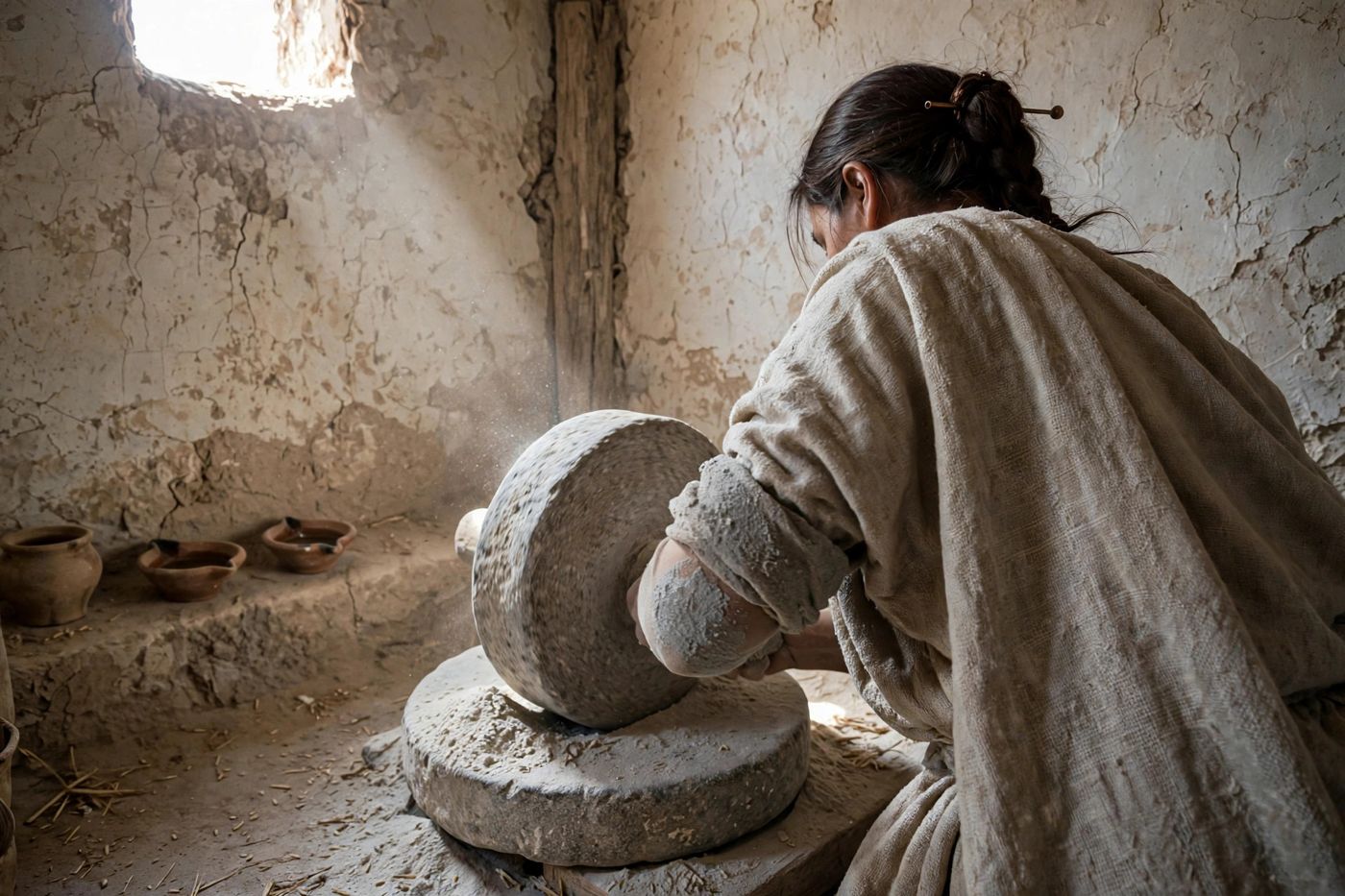
Then verse 2 sends the princess to a slave's work, and every detail is a demotion. "Take the millstones, and grind meal" — hand-grinding grain was the labour of slave-girls and captives, hours of stooping over stone; it is the work of Samson blinded in the prison house. 16 "Uncover thy locks, make bare the leg, uncover the thigh, pass over the rivers" — the robes of rank are hitched up like a labourer wading a ford; in her world, bared legs and uncovered hair on a woman of rank were public shame, the treatment of a captive being marched away. 16 Verse by verse: throne gone, title gone, wardrobe gone, leisure gone. The lady of kingdoms is being made to taste, item by item, the life of the peoples she processed before her.
Verse 3 states the sentence and its terrible formality: "I will take vengeance, and I will not meet thee as a man." However the hard phrase is unpacked (the teachers have argued it for centuries), its courtroom sense is plain in context: no one will step between God and Babylon to plead her down — no intercessor to soften the meeting. And then — before the darkness of verse 5 falls — the singers interrupt their own taunt with the banner-verse, naming "our redeemer" — "the LORD of hosts is his name, the Holy One of Israel" (v. 4). Redeemer is the family word of this whole book — the kinsman who buys his people back (Lesson 22). The oppressed interrupt the funeral to name the One buying them out of it. Then the dirge resumes: "Sit thou silent, and get thee into darkness… for thou shalt no more be called, The lady of kingdoms" (v. 5). The title comes off the gate.
The charge sheet (47:6–11)
Now the taunt does what relish never does: it files charges, and they are specific. Verse 6 is the first count. God owns His side of it first — "I was wroth with my people… and given them into thine hand" — and then the charge lands: "thou didst shew them no mercy; upon the ancient hast thou very heavily laid thy yoke." The crime is not that Babylon disciplined Judah — God handed His people over, and owns it. The crime is that Babylon enjoyed it: no mercy shown, and the cruelest weight reserved for the ancient — the aged, the least able to bear it. The God who carries His people to hoar hairs (46:4) now prosecutes the empire that crushed hoar hairs under its yoke: the same old people, carried by God, crushed by Babylon. That contrast is the moral architecture of the lesson. [3, 11] This is Habakkuk's problem — how can God use a wicked nation and then judge it? — answered in God's own voice: the instrument is judged for the spirit of its work. God ordains the rod; He does not ordain its cruelty.
Count two is the permanence-boast: "I shall be a lady for ever" (v. 7) — a throne that assumes eternity and therefore "did not lay these things to thy heart, neither didst remember the latter end of it." Count three is the deepest, and Isaiah returns to it twice so you cannot miss it: in her heart, in the dark, Babylon has been saying of herself the sentence God said of Himself — "I am, and none else beside me" (vv. 8, 10; compare 46:9). 4 This is the lesson's blasphemy detail, named precisely. Cruelty is her crime against man. This is her crime against God: self-deification in God's own formula. She has seized the divine self-description, worn it in private, and built her policy on it — "I shall not sit as a widow, neither shall I know the loss of children" (v. 8). A god, after all, cannot be bereaved.
So bereavement is the sentence, fitted to the boast with terrible exactness: "these two things shall come to thee in a moment in one day, the loss of children, and widowhood: they shall come upon thee in their perfection" (v. 9) — in full measure, both at once — "for the multitude of thy sorceries, and for the great abundance of thine enchantments." The arts she trusted to manage the future are the reason the future arrives unannounced. Verse 10 digs to the root: "Thy wisdom and thy knowledge, it hath perverted thee" — Babylon's famed learning became the instrument of her corruption, because knowledge about the heavens taught her to say "None seeth me" (v. 10). And verse 11 lands the verdict in her own professional vocabulary: evil is coming "which thou shalt not know" — the not-knowing tolls three times in the verse. The empire that sold knowledge of the future will be the last to know its own. 3
"Thou didst shew them no mercy." — the first charge on the sheet, and the one that governs all the rest. Babylon is not condemned for being Babylon. She is condemned for the yoke.
Let the stargazers stand up (47:12–15)
The taunt ends with an invitation, the coldest paragraph in the passage. "Stand now with thine enchantments, and with the multitude of thy sorceries, wherein thou hast laboured from thy youth" (v. 12) — stand: take your position, do your office. Then the establishment itself is summoned by name: "Let now the astrologers, the stargazers, the monthly prognosticators, stand up, and save thee" (v. 13). [3, 16]
They are given every advantage a defendant could want. Their arts are ancient ("from thy youth"). Their counsels are many — the queen is "wearied in the multitude of thy counsels" (v. 13). Their science is genuine. And the verdict arrives in the same sentence as the summons: "Behold, they shall be as stubble; the fire shall burn them; they shall not deliver themselves from the power of the flame" (v. 14). Note the precision of the last image: Babylon's fires will not even leave a hearth's comfort — "there shall not be a coal to warm at, nor fire to sit before it." The fire that consumes her experts warms no one. It only burns. 4
And the merchants close the book. The trading partners who profited from Babylon "from thy youth" do not rally, do not rescue, do not even stay: "they shall wander every one to his quarter; none shall save thee" (v. 15). Every support system the queen trusted is audited and found one-way. Her gods are carried off. Her scholars burn. Her merchants wander off. The final tally of Babylon's saviours is the tally kept since 46:2: none.
History's echo — the night the throne fell
Isaiah spoke to exiles for whom Babylon looked eternal. What happened next belongs in this lesson, with its labels on. FACT: In October 539 BC, Babylon fell to Cyrus of Persia; the Babylonian Chronicle records Cyrus's army entering Babylon and Cyrus himself arriving days later, with the dynasty of Nabonidus ended. 30 The last king was Nabonidus, who had spent years away at Teima in Arabia, leaving his son Belshazzar governing in Babylon as regent — the standard resolution of why Daniel 5 calls Belshazzar "king," and why he can offer Daniel only the place of third ruler (Daniel 5:16): the first two places were already taken. [11, 30] POSITION — that resolution is the one the evidence best supports: Daniel's title reflects a regent exercising royal power in the capital. The Greek historians tell the fall as a single dramatic night — Herodotus describes the city taken while a feast was on 32 — a telling whose broad stroke matches the chronicle's date even where its details outrun verification. FACT: what ended in 539 was the throne: Babylon ceased that autumn and never reigned again. The place remained a great city for generations and dwindled across centuries toward ruin. [32, 16] The stones took centuries. The sovereignty took a night. "In a moment in one day" (47:9) is the language of the throne — and the throne is exactly what fell in a moment.
The Christ Thread
Handle this passage's road to Christ with the honesty this course requires: there is no portrait of Jesus in Isaiah 46–47, and we invent none. What the passage gives the New Testament is three solid things. First, a name: the Redeemer of 47:4 is the same Redeemer whose work the whole Book of Comfort unfolds, who takes flesh in the One of whom the angel said, "he shall save his people from their sins" (Matthew 1:21). Second, a pattern of bearing: the God who carries from womb to grave is the God whose Son carries sheep on His shoulders and sins on a tree (section 6) — the apostles' own vocabulary for Christ's work. 1 Third, a blueprint of the end: Revelation rebuilds the last Babylon from this chapter's stones (section 6). The thread is real because the New Testament draws it; where it does not, we do not sew.
Where in the Covenant Story?
These chapters stand at the covenant's darkest hinge — and hold it open toward dawn. Israel is in exile because of the covenant: the curses Moses warned of have fallen (Deuteronomy 28), and 47:6 has God Himself saying so. But watch what the covenant God does at the hinge. He does not divorce His people and take up with their conqueror, as every ancient theology expected. Instead He prosecutes the conqueror for cruelty, announces the conqueror's fall, and places His salvation in Zion (46:13) for the very people He disciplined. The covenant survives its own curses because the covenant-keeper carries the covenant-breakers. The carrying of 46:3–4 is not a metaphor laid over the covenant. It is the covenant, working.
The Long View — what the church has believed
Stand back and notice how the centuries have read these chapters, because you are not their first reader. Among the church's oldest readings of this passage is also its most beloved use of it: 46:3–4 has been prayed at bedsides and gravesides for as long as there have been Christian old people — Calvin, commenting on the verse, presses exactly the text's lifespan argument, that God's carrying does not expire with our strength, because it rests on His making, not ours. 36 On chapter 47, the church has read Babylon both ways at once: as the historical empire whose fall the records confirm, and — following Revelation — as the standing pattern of every proud world-order that says "I am, and none else beside me." Where the centuries have honestly differed is at the edges: 47:3's hard phrase, the Belshazzar regency, and the dating debate (Go Deeper argues the last two in the open). The centre has held: gods are carried, God carries, and the lady of kingdoms does not sit for ever.
That is the payload. The next section compresses it into the one sentence you are meant to carry out of this study.
8. THE AIM SENTENCE — X: eXplain the intent
Everything observed now compresses into one sentence — the author's intended meaning, stated before any application is allowed near it:
Isaiah 46–47 announces that Babylon's gods are a burden who must be carried and cannot save, while the LORD alone — who carries His people from the womb to hoar hairs, declares the end from the beginning, and brings His salvation near — brings the proud, merciless lady of kingdoms, who stole His "I am, and none else beside me," down from her throne in a day, leaving her stargazers and her merchants unable to save her or themselves.
If a sermon, a post, or a devotional uses Isaiah 46–47 to say something that cannot be traced back to that sentence, it is not this passage talking. That is the whole skill this course exists to build — and the next section is where you watch it work.
9. SAY IT BACK
Close the book and say the AIM sentence from section 8 in your own words — out loud, or in your notes, without looking. Then say, in one more sentence, what it asks of you this week.
If your version quietly changes the meaning — if the God who carries becomes only a feeling, or Babylon's fall becomes gossip about other people's pride — open the lesson and walk it again. This exercise feels small. It is the entire course in miniature: meaning first, then — and only then — your life.
10. THE MISREAD — the guardrail, with verdicts
Three live misuses of this passage. Each gets a fair hearing, the evidence, and a verdict.
Misread 1: "Chapter 47 is cruelty relished — God gloating over a stripped, shamed woman, and a church that sings it is learning to enjoy other people's humiliation." Why it sounds right: the imagery of verses 2–3 is deliberately shaming, and the tone is triumphant. Read cold, it can feel like a victor's jeer at a victim. The evidence: the chapter files its charge sheet before it sings its sentences, and the first charge is moral — "thou didst shew them no mercy; upon the ancient hast thou very heavily laid thy yoke" (47:6). The taunt is a recognised prophetic form — a victory-lament taught to the oppressed to sing over the oppressor whose cruelty is named in the text (see §4; its sister song is Isaiah 14, Lesson 09). The stripping imagery is the staged revocation of royalty in a personification of an empire. And the decisive control stands inside the book: this God disciplines even His own instruments for this sin. Babylon is condemned not for being Babylon but for mercilessness — and in Isaiah 10 (Lesson 07) Assyria, the previous rod, was condemned from the same bench. The moral centre is not an ethnicity condemned. It is mercy refused, prosecuted. Verdict: the taunt is a verdict sung for the mercilessly treated, not cruelty enjoyed by the strong. Read it as relish and you have mistaken the courtroom for a mob — and missed that the first people comforted by this chapter were the ones under the yoke of 47:6.
Misread 2: "'Even to hoar hairs will I carry you' is God's private promise to me personally — a comfort text for my individual life, full stop." Why it sounds right: the verse is tender, beloved, and prayed personally by the church for centuries (§7, the Long View). Verses this warm feel addressed to whoever holds the book. The evidence: look at the address on the envelope. The promise is spoken to "the house of Jacob, and all the remnant of the house of Israel" (46:3) — a people, and the carrying spans that people's whole corporate lifespan, from its national birth ("the belly… the womb") to its aged survival in exile. It is first a word about God's faithfulness to Israel across centuries — a promise no individual lifetime can contain. Its road to the individual believer is real, but it runs on rails the text itself lays: through belonging to the people God carries — Israel's remnant then, and in the New Covenant, all who are grafted into that people and are Christ's (Romans 11:17; Galatians 3:29). 1 Read the verse as a private horoscope and you shrink it to a mood for a bad week. Read it as the text gives it — the God of a carried nation, into whose carrying you are gathered in Christ — and it becomes something no bad week can exhaust. Verdict: right comfort, wrong address — and the correction strengthens it. The promise reaches you not by being detached from Israel, but by your being attached, in Christ, to the people it was spoken to.
Misread 3: "47:9 says Babylon falls 'in a moment in one day,' but Babylon declined slowly for centuries after 539 BC — so the prophecy missed." Why it sounds right: the history is real. Babylon remained a large, inhabited city long after Cyrus; its fade into ruin took centuries, and a one-day fall sounds falsified by a long decline. The evidence: the objection dissolves with level-precision — asking what the text says falls in a day. Chapter 47 addresses the lady of kingdoms: a throne, a sovereignty. That entity fell in precisely the text's terms: in October 539 BC the dynasty ended and Babylon's empire passed in a single campaign season 30, and Babylon never reigned again. The city's stones are a different subject, treated in a different place: chapter 13 (Lesson 09) prophesies the site's long desolation, which the centuries then performed at their own pace. Sovereignty falls in a moment (ch. 47); the city's occupation dwindles across ages (ch. 13). Pitting the moment against the centuries forces both texts onto one level, which neither claims. Verdict: no contradiction — a category error. The throne fell in a night; the stones fell for centuries; Isaiah predicted both, each in its place.
11. FROM WORD TO WALK
A reflection page — the lesson is not finished until the passage has had its say with you.
Do the arithmetic of your own carrying this week. Somewhere in your life there is a cart, and on it sits something you call your security — money, a reputation, a plan, a person, a version of yourself — and you are the beast under the load. You know the weight of it at 3 a.m. It cannot answer. It cannot move toward you. When the road gets bad, it will not carry you an inch; you will carry it, heavier than ever. Isaiah 46 is not mocking you for having a cart. It is asking why the one carrying it is you.
And then the chapter turns, and its sentence over the carried people is almost embarrassingly simple: "I have made, and I will bear." God does not offer to help you carry your life, the way a friend grabs one end of a couch. He claims the whole weight, from before you were born to the season when your hair goes white. Many believers accept being carried at the start (we call it grace, and we are right) and quietly resign from it in the middle (we call it maturity, and we are wrong). The Bearer does not retire. Neither does the need.
Sit, last, with Babylon's real sin, because it may be nearer home than empire. Her deepest charge was a sentence in the heart: "I am, and none else beside me" — spoken where "none seeth me." Most self-deification never builds a throne room. It builds a private conviction that I am the fixed point, the one who cannot be widowed, cannot be bereaved, cannot be wrong. Isaiah's antidote is not humility exercises. It is memory: "Remember the former things of old: for I am God, and there is none else." The throne of the universe is occupied, and the occupant carries His people. You are free to climb down from a seat that was never yours — and be carried.
Bearer of Your people — You carried Israel from the womb and You have not set me down. Forgive me for the carts I pull and call them faith; teach me to put my whole weight where Your promise puts it. Make me merciful with whatever little power I hold, since You prosecute the merciless; and when my hair is hoar and my strength is gone, be to me then what You have been from the beginning — my Maker, my Bearer, my Deliverer. In Jesus' name, amen.
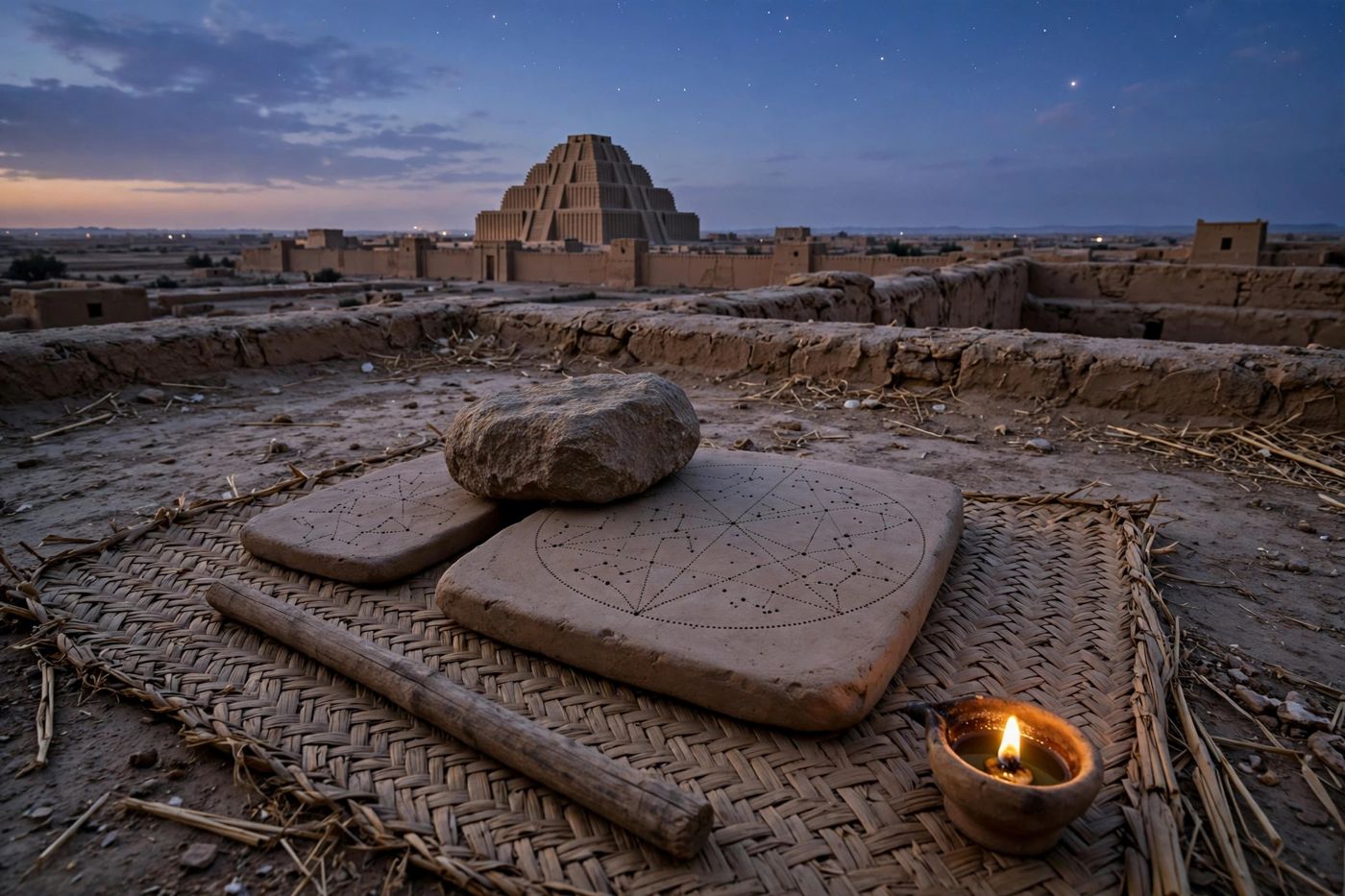
12. FOR DISCUSSION — OR FOR YOUR JOURNAL
With a group, work these aloud. Alone, they're yours — answer them in your journal or in prayer; they lose nothing in the quiet.
- In 46:1–7, who carries whom is the whole argument. Name the things in your life that you carry which were supposed to carry you. What does the chapter's reversal say to that arrangement?
- God's first charge against Babylon is not idolatry but mercilessness (47:6). Where do you hold even small power over people, and what would showing mercy with it look like this month?
- Babylon's boast was private before it was public: "thou hast said in thine heart, I am, and none else beside me." What are the respectable modern forms of that sentence — and what has God used in your life to answer it?
- The astrologers are told to "stand up, and save thee" — and cannot. Where do people still go to have the future managed, and how would you point a friend to the God who declares the end from the beginning?
13. THE WALK-OUT — T: Transfer to today
Meaning is settled. Now — and only now — application, and it must cross the bridge honestly. Run the five Transfer Tests:
- Same covenant? The carrying promise is spoken under the old covenant to national Israel in exile; we receive it on the far side of the cross, grafted into that people in Christ (Romans 11:17) — it crosses with its address intact, reaching persons as members of that people. Babylon's judgment crosses as God's standing pattern against proud, merciless world-power (Revelation 18).
- Same audience? The exiles were a disciplined nation under a pagan empire; we are not commanded to sing taunts over modern nations. What reaches us directly is the pattern the passage shares with the whole canon: God's carrying of His people, His prosecution of mercilessness, His exposure of every rival saviour.
- Same genre rules? A trial speech argues doctrine; a taunt-song delivers a verdict. So this passage yields convictions and postures — trust the Bearer, refuse the stolen "I am," show mercy — not scripts to re-enact. Nobody is assigned to compose funeral songs for their enemies (Proverbs 24:17).
- Repeated or rooted? God's carrying of His people (Deuteronomy 1:31; Psalm 68:19; Luke 15:5), the idol-test (Psalm 115; Jeremiah 10), judgment fitted to the boast (Daniel 4), and mercy demanded of power-holders (Micah 6:8; Matthew 5:7) — each reappears across Scripture, rooted in God's character. These cross.
- Ten verses either side? Every application below is drawn from these twenty-eight verses read whole. Nothing hangs on a torn-out line.
The bridge, at a glance:
| What we carry across | Why it crosses |
|---|---|
| Trust in the Bearer (46:3–4) | Rooted in God's character; repeated across the canon |
| Mercy with whatever power we hold (47:6) | Commanded under both covenants |
| The taunt as a personal weapon | Does not cross — it is God's verdict, sung by the oppressed |
What crosses — and lands:
Led by what God has done (the indicative), before anything you do:
- You are carried — that is the indicative under everything. Before any practice: God made His people, bore them from the womb, and pledged Himself to hoar hairs (46:3–4). Christian obedience is not the fee for the carrying. It is life lived while being carried.
- Mercy is the moral centre of power. The empire God prosecutes is prosecuted first for showing no mercy (47:6). Whatever authority you hold — over employees, children, students, a spouse — will be audited by this standard.
- Every rival saviour will be audited and will fail the same three tests. Gods that must be carried cannot carry you (46:1–7); experts who cannot foresee cannot save (47:13–14); partners who profit from you will wander to their own quarter (47:15). The application is a transfer of trust — from every cart to the one Bearer who passes all three tests in one verse (46:4).
"I have made, and I will bear; even I will carry, and will deliver you." — the indicative under every practice that follows. The doing grows out of the being-carried, never the reverse.
Practices — what the gate lets through, made concrete this week:
- The cart inventory. Twenty unhurried minutes. List what you are currently carrying that was meant to carry you. Pray 46:4 over the list item by item, and hand each one to the Bearer in a sentence out loud.
- Pray the lifespan promise for someone at its far end. Choose one ageing believer and pray 46:4 for them this week by name: made, borne, carried, delivered, to hoar hairs. Then tell them you did.
- One act of deliberate mercy with power you hold. Identify one place this week where you could exact the full measure — a debt, a standard, a consequence, a reply — and where mercy is yours to give without betraying justice. Give it, concretely, once, toward the person who can least repay it. Babylon's yoke on the ancient is the anti-pattern.
- Close the observatory. If you check a horoscope or a "what the month holds for you" forecast — delete the app, skip the page, unsubscribe the feed this week. Replace the glance with one look at 46:9–10: the future is held by a Person who has published His record, not by a chart.
- Memorize Isaiah 46:4 (printed in full on the Recap Card, §14). The whole lesson in one verse — the Bearer, the lifespan, the deliverance.
What does not cross: treating 46:4 as a private charm detached from belonging to God's people (Misread 2); singing chapter 47 as personal glee over anyone's downfall; reading 47:9's "in a moment" as a timetable for modern nations; and concluding from 47:13 that learning itself is suspect — Babylon's astronomy was real knowledge, condemned not for being knowledge but for being trusted as a saviour (47:10). The gate makes sure the claims that land are the ones God actually made.
Praise Him
I am God, and there is none else — so says the Bearer of Israel, and there is none like Him: who carried His people from the womb and will not set them down at the grave's edge; who declares the end from the beginning; who brings His righteousness near; who hears the cry of the ancient under the yoke. Our Redeemer — the LORD of hosts is His name, the Holy One of Israel. To Him who carries and delivers, be glory for ever. Amen.
14. THE RECAP CARD — this study on one page
Print it. Keep it where you'll see it this week.
- The passage: Isaiah 46:1–47:15 — Babylon's gods carried into captivity; her queen dethroned.
- Say It Plain: Bel and Nebo end up as luggage while God carries His people from the womb to old age; the gold god cannot move, answer, or save; Babylon, who showed no mercy and stole God's "I am," loses her throne in a day, and no one can save her.
- The AIM: Babylon's gods are a burden who must be carried and cannot save; the LORD alone carries His people from the womb to hoar hairs, declares the end from the beginning, brings His salvation near — and brings the proud, merciless lady of kingdoms down in a day, her experts and merchants unable to save her or themselves.
- Key terms: Bel — "lord," title of Marduk, Babylon's chief god · Nebo (Nabu) — his son, god of writing · carry / bear — the verb-cluster whose direction is the argument · "the lady of kingdoms" — Babylon's royal title, revoked · massa' — "burden": a load, and an oracle.
- The Misread, in one line: the taunt is a verdict for the oppressed, not relish · "I will carry you" is spoken to a people, reaching you through belonging in Christ · "in a moment" names the throne's fall in 539 BC, not the city's slow fade.
- Memory verse: "And even to your old age I am he; and even to hoar hairs will I carry you: I have made, and I will bear; even I will carry, and will deliver you." — Isaiah 46:4
- This week's practice: the cart inventory — name what you carry that was meant to carry you, and hand it to the Bearer — plus one deliberate act of mercy.
15. CHECK YOURSELF — five questions
Answer from the study, not from instinct. (Answers live in the Teacher Edition.)
- In your own words: what is the AIM of Isaiah 46–47?
- Chapter 46 turns on one verb-cluster. State the reversal it performs — who carries whom, in Babylon and in Israel — and name the two seasons of life that bookend God's promise in 46:4.
- Babylon says in her heart, "I am, and none else beside me" (47:8, 10). Whose sentence is she quoting, and where does God say it of Himself in this passage? Why is this the lesson's blasphemy detail?
- A friend says: "'Even to hoar hairs will I carry you' is just God's private promise to me — nothing to do with Israel." Run the study's verdict. What is the address on the promise, and by what road does it reach an individual believer?
- "Babylon took centuries to decline, so 47:9's 'in a moment in one day' failed." Answer with the study's level-precision: what fell in a moment, when, and which Isaiah chapter carries the city's long desolation instead?
16. GO DEEPER
Optional — for readers who want the machinery. The lesson is complete without it.
From the Sources — The Chronicle of the Fall
The most quietly devastating witness against Babylon's gods is Babylon's own record-keeping. The Babylonian Chronicle — from the scribal world Nebo patronised — records for 539 BC that Cyrus's army entered Babylon, that Nabonidus was taken, and that Cyrus himself entered days later and proclaimed peace to the city. 30 FACT: thrones changed hands in one autumn, with no record of the great siege Babylon's walls were built to make impossible. Set beside it the Cyrus Cylinder, in which Cyrus credits Marduk with choosing him and boasts of returning captured god-statues to their shrines. 29 The gods he restored went home the way gods in this story always travel: carried, by permission of a king. The ravenous bird himself is flown by a hand he does not know (45:4, Lesson 23).
The Honest Argument — Belshazzar, and the Dating Beneath Everything
The Belshazzar question. Daniel 5 calls Belshazzar king of Babylon on the night the city fell; the chronicles name Nabonidus as the last king and never crown his son. Critics once filed this as a plain biblical error. The records have since complicated the file: Nabonidus spent years absent at Teima, and the texts place Belshazzar in Babylon exercising royal functions. [11, 30] POSITION — the standard resolution, taught in §7: Belshazzar was regent in the capital, "king" in Daniel by function, and Daniel 5:16's offer of the third place fits a court where the first two were occupied. DISPUTED — the regency's exact legal form remains debated. What is no longer sustainable is the older claim that Belshazzar never existed; the name is in Babylon's own records.
The dating beneath everything. These chapters picture Cyrus's rise (46:11), and the chapters around them name him (44:28; 45:1), roughly a century and a half before he took Babylon. Mainstream scholarship since Duhm 40 commonly concludes that chapters 40–55 were therefore composed in the exile itself — an INFERENCE from the premise that specific advance naming does not occur. The historic church, reading the book as one Isaiah (the Great Isaiah Scroll is already one scroll of all 66 chapters 22), received the naming as the book's boldest claim — and the text frames advance declaration as the very test of deity (46:9–10). POSITION — the program's reading: Isaiah's, one prophet's witness read whole, with the naming as predictive prophecy. DISPUTED — and named as disputed, because a course that hides the argument teaches you to fear it. Weigh both premises in the open: "it must be late, because prophecy cannot name kings in advance" assumes its conclusion; the church's reading assumes a God who can declare the end from the beginning — the sentence under examination in 46:10.
The Word Underneath — massa', the burden that speaks
Follow the Translation Note's word one step further. Massa' heads the oracles against the nations all through Isaiah's middle: "The burden of Babylon" (13:1), of Moab (15:1), of Damascus (17:1), of Egypt (19:1). 19 In each case the prophet carries the word as a porter carries a load — an oracle is a weight delivered. Now set 46:1–2 beside the headings: in the end, the only burden Babylon produces is her gods, a dead load on a weary animal that "could not deliver the burden." 19 FACT: the lexical double sense (load / oracle) is standard in the lexica. INFERENCE — the wordplay reading of 46:1 against 13:1 is this study's; the argument stands without the pun. With it, the chapter gains its quietest joke: the empire of oracles ends with nothing to say and everything to carry.
Go Read
- Oswalt, The Book of Isaiah, Chapters 40–66 (NICOT) 3 — the fullest slow treatment of chapters 46–47 in this registry.
- Motyer, The Prophecy of Isaiah 4 — on 46:9–10 and the "I am" formula Babylon steals.
- Walton, Matthews & Chavalas, The IVP Bible Background Commentary: Old Testament 16 — Bel and Nebo, the procession, the millstone labour, the sky-watchers.
- Grayson, Assyrian and Babylonian Chronicles 30 — the fall of Babylon in Babylon's own records.
17. SOURCES & REFERENCES
Numbered citations in this lesson key to this list — the course standard: every sourced claim carries its number, and every number can be checked.
- The KJV text itself — Holy Bible, King James Version (eBible.org KJV, 1769 text). Scripture quotations are from the King James Version (KJV), which is in the public domain in the United States; the full passage is always assigned as reading. Cross-references within Scripture cite this number.
- Oswalt, The Book of Isaiah, Chapters 40–66 (NICOT) — John N. Oswalt (Eerdmans). The second volume: the comfort section, the Servant Songs, Cyrus, and the new-creation chapters, read as the deliberate answer to chapters 1–39.
- Motyer, The Prophecy of Isaiah — J. Alec Motyer (IVP). A one-volume commentary by an evangelical scholar who argues the whole book breathes the mind of the eighth-century prophet; especially strong on the book's structure, its repeated refrains, and the Servant.
- Smith, Isaiah 1–39 and Isaiah 40–66 (New American Commentary) — Gary V. Smith (B&H). Evangelical commentary with strong historical notes (the Assyrian and Babylonian records) and an even-handed survey of the authorship debate.
- Westermann, Isaiah 40–66 (Old Testament Library) — Claus Westermann (Westminster). The classic critical commentary on the comfort chapters; foundational for the genre analysis of the trial speeches and salvation oracles.
- Walton, Matthews & Chavalas, The IVP Bible Background Commentary: Old Testament — John H. Walton, Victor H. Matthews, Mark W. Chavalas (IVP). Verse-by-verse ancient Near Eastern background: Assyrian siege practice, Babylonian religion, treaty and coronation customs, geography.
- Brown, Driver & Briggs, Hebrew and English Lexicon of the Old Testament (BDB) — The standard older Hebrew lexicon; word senses and usage ranges for the Terms sections.
- The Great Isaiah Scroll (1QIsaᵃ) and the Dead Sea Scrolls Bible — The complete Isaiah scroll from Qumran Cave 1 (c. 125 BC), in Abegg, Flint & Ulrich, The Dead Sea Scrolls Bible (HarperSanFrancisco). The oldest substantial witness to Isaiah's text — already a single scroll of all 66 chapters centuries before Christ.
- The Cyrus Cylinder (British Museum) — Cyrus of Persia's own proclamation of his restoration policy (539 BC onward) — the pagan parallel and backdrop to Isaiah 44:28–45:13 and Ezra 1.
- Grayson, Assyrian and Babylonian Chronicles — A. Kirk Grayson (J.J. Augustin). The Babylonian Chronicle series, including the fall of Babylon to Cyrus in 539 BC and the reign of Nebuchadnezzar.
- Herodotus, Histories — The Greek historian on Babylon's city and fall, Cyrus, and the customs of the Persian world (used with his known limits as a storyteller).
- Calvin, Commentary on Isaiah — John Calvin (public domain). Reformation exegesis; a control on interpretation and a voice in the Long View.
- Duhm, Das Buch Jesaia (1892) — Bernhard Duhm. The commentary that named the "Servant Songs" as a distinct set and crystallized the "Deutero-Isaiah" division — the historical origin of the modern authorship debate, cited as fact about scholarship.